Hey Ron, I hear Teegeeack wilI be full of suckers one day

A friend passed along the Modern Library’s list of the 100 best novels. There were actually 2 lists, one was from their Board and the other attributed to Readers. Aside from the great Graham Greene not making an appearance until #40, the list from the Board was reasonable, albeit depressing — every time I see a list like that, the likelihood that I’m not going to read most gets harder to ignore.

But the Readers list was the problem. It was marred by 3 sci-fi novels in the top 10 from the founder of the Scientology scam, L. Ron Hubbard. I immediately suspected that voting for the Hubbard novels had been part of some campaign to earn Scientologists a weekend away from their audit machines. Scientology resembles cockroaches, in that the only effective way to combat is through the airing of their beliefs [or just fresh air in the case of roaches].

That is exactly what Janet Reitman does in her new book Inside Scientology – a few excerpts:
Continue reading

Posted in Books & Reading | Tagged , , , , , , | Leave a comment

What If C-SPAN Produced MTV’s Cribs?

Alt Text

McCullough taunting Costales

Since no man is tempted to every sin, I’ll take credit for having kept envy in check for the most part. But after I saw the great David McCullough’s writing shed on his HBO documentary, Painting With Words–the Shed is discussed here [see Part 3 [of 4] @ 8:50]–I must admit that envy quickly caught up to my six other deadlies.

But it also made me wonder …

Continue reading

Posted in Books & Reading | Tagged , , | Leave a comment

Why Milton Friedman Was Right

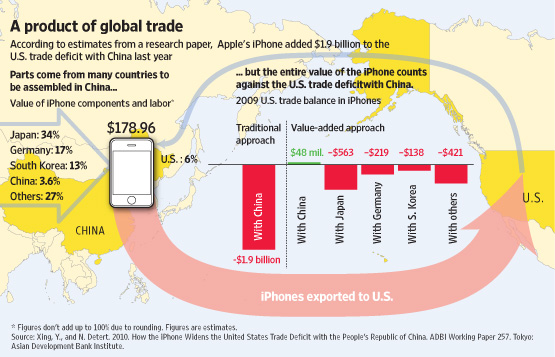
Milton Friedman’s most famous example of how free markets operate began with a pencil, but today’s iPhone is just a more sophisticated version of a product whose DNA is made possible by free markets.  Take a look at the graphic below.  No government’s industrial policy would have resulted in producing today’s iPhone.  It is a great reminder of why the lessons of Milton Friedman still matter.

A WSJ article highlights problems with reporting trade statistics. The entire WSJ article is copied at end of post.

How the financial impact of an iPhone can be measured

Continue reading

Posted in Business & Economics | Tagged , , | Leave a comment

Milton Friedman Gets Updated

On July 31st, 2012, in the midst of the next Presidential campaign, one of my American heroes, Milton Friedman, will have his centennial celebrated. Whoever the Republican presidential candidate is at the time should be attempting to join themselves at the hip with Friedman’s advocacy of free markets.

As part of that celebration, Sweden’s [really] own Johan Norberg, has revisited Friedman’s classic documentary ‘Free to Choose’ and updated it.

The entire Charlottesville Libertarian article about Johan Norberg’s work is copied at end of post.

Continue reading

Tagged , , | Leave a comment

When The Dead Are Just Missing?

When are the dead just missing? When describing them as dead constitutes admission that abortion is the taking of a human life. So if you are a supporter of abortion rights and evidence is presented to document a shortage of 163,000,000 females and that the shortage arose in large part due to women and their families choosing to abort pregnancies when they learn that the fetus is a girl; do you drop to your knees in disbelief or move on to yet another public policy prescription [limiting sonograms] to address the unintended consequences of your last public policy prescription?

Mara Hvistendahl’s book–Unnatural Selection: Choosing Boys Over Girls, and the Consequences of a World Full of Men–and Foreign Policy magazine article provides the evidence for how the abortion and population control movements advanced abortion and choice under the banner of women’s rights, only to now realize that it is unborn girls who have largely been aborted.

Jonathan V. Last wrote the following [his entire review is copied at end of post]:

“Unnatural Selection” might be one of the most consequential books ever written in the campaign against abortion. It is aimed, like a heat-seeking missile, against the entire intellectual framework of “choice.” For if “choice” is the moral imperative guiding abortion, then there is no way to take a stand against “gendercide.” Aborting a baby because she is a girl is no different from aborting a baby because she has Down syndrome or because the mother’s “mental health” requires it. Choice is choice.

Continue reading

Posted in Books & Reading, Catholic Faith & Inspiration, Current Affairs & History | Tagged , , , , , | Leave a comment

Recap of Forbes Reporting on the Florida Marlins Since 2002

Recap of Forbes view on the Marlins based on their 2002 finances — Operating loss of $14 million and an *estimated franchise valuation of $136 million . [*Jeffrey Loria purchased the team prior to the 2002 season for for $158 million] — as of April 2003:

Shoddy marketing delivered second lowest attendance in baseball. The Florida Marlins play in Pro Player Stadium.

Recap of Forbes view on the Marlins based on their 2003 finances — Operating loss of $11 million and an estimated franchise valuation of $172 million — as of April 2004:

Last year’s World Series title brought glory and slightly more revenue to the Florida Marlins. Give management credit. Unlike some other low-revenue owners who pocket the payouts from high-revenue teams, Jeffrey Loria invested in players like Pudge Rodriguez (since departed to the Detroit Tigers). But the long-term viability of this franchise in south Florida remains in question, unless the team can convince legislators and taxpayers to help finance a new ballpark.

Recap of Forbes view on the Marlins based on their 2004 finances — Operating income of $3 million and an estimated franchise valuation of $206 million — as of April 2005:

The Marlins are getting very close to getting a new ballpark that could add more than $30 million a year to the team’s top line. In March the Miami-Dade County Commission approved financing for a $420 million stadium in time for the 2008 season. The Marlins have pledged $192 million of the financing, taxpayers would be on the hook for $166 million, and parking revenue would contribute $32 million. But the stadium deal is far from a lock. The Florida legislature, which has voted down new stadium proposals in the past, needs to approve a $30 million sales tax rebate to complete the funding package.

Recap of Forbes view on the Marlins based on their 2005 finances — Operating loss of $12 million and an estimated franchise valuation of $226 million — as of April 2006:

The Marlins agonizing search for a new ballpark continues either in southern Florida or a new city (Portland, Las Vegas and San Antonio are the top relocation possibilities). The team offered $200 million towards a $425 million, 38,000 seat retractable dome stadium. But the team won’t pay for land or infrastructure costs. Miami-Dade County officials have balked at this deal. Meanwhile the team had a dramatic fire sale on players after the 2005 season. Team payroll dropped from $75 million to less than $20 for the 2006 season, by far the lowest in baseball. When season ticket holders wanted a refund on paying major league prices for minor league players, they were rebuffed by the team.

Recap of Forbes view on the Marlins based on their 2006 finances — Operating income of $43 million and an estimated franchise valuation of $244 million — as of April 2007:

The Florida Marlins, who are second-class tenants in a stadium owned by Miami Dolphins owner Wayne Huizenga, are getting close to building a new ballpark of their own. The team, city and county have committed to paying $460 million of the $490 million estimated cost to build a retractable-roof stadium. Supporters of the stadium are asking the state to pay an additional $60 million over 30 years to finance the remainder. If owner Jeffrey Loria gets his new digs the value of the team should increase by at least $40 million the first season.

Recap of Forbes view on the Marlins based on their 2007 finances — Operating income of $36 million and an estimated franchise valuation of $256 million — as of April 2008.  This estimate proved to be almost exact [click here]:

The Marlins, who have the lowest revenue in baseball, are inching closer to getting final approvals for a new retractable-roof, baseball-only stadium for the 2011 season. The stadium would have 37,000 seats and cost $525 million, of which the Marlins would kick in $155 million. Meanwhile, team owner Jeff Loria continues to debase his franchise by not using the $30 million-plus revenue-sharing check he gets each year from baseball to keep talent. In December Miguel Cabrera and Dontrelle Willis were traded to the Tigers for six prospects. The deal cut $20 million from the Marlins 2008 payroll, sending it to the absurdly low $10 million range.

Recap of Forbes view on the Marlins based on their 2008 finances — Operating income of $44 million and an estimated franchise valuation of $277 million — as of April 2009:

It is official. Florida Marlins owner Jeffrey Loria got the team for free. Before the 2002 season Loria, who then owned the Montreal Expos, bought the Marlins for $158 million while MLB paid $120 million to take ownership of the Expos. The Marlins price was later reduced to $143 million, as stipulated in the purchase agreement, when the Marlins did not get a new stadium within five years. But during his seven years of owning the Marlins, Loria has received more money from baseball’s revenue redistribution system than the amount he paid for the team. Now that is real money ball.

Recap of Forbes view on the Marlins based on their 2009 finances — Operating income of $46 million and an estimated franchise valuation of $317 million — as of April 2010:

The Marlins should move into their new ballpark in Miami in April 2012. Miami-Dade commissioners voted 9-4 to finance a $515 million ballpark and $94 million in parking lots in March 2009. The county will own the 37,000-seat domed ballpark but the Marlins will get revenue from suites and advertising that they currently do not get at Sun Life Stadium, which is owned by Miami Dolphins owner Stephen Ross. The Marlins will contribute $155 million, which includes rent, to the project. The county will pay $297 million in county hotel bed taxes and a $50 million general obligation bond. The city is to donate the land and $13 million in bed taxes and build $94 million in parking lots that the team will repay by selling parking spaces each game. Team owner Jeff Loria will rename the team the Miami Marlins as part of an agreement to get the financing for the new stadium.

Recap of Forbes view on the Marlins based on their 2010 finances — Operating income of $20 million and an estimated franchise valuation of $360 million — as of April 2011:

The Marlins are scheduled to move into their new, $515 million ballpark by the beginning of the 2012 season. The team is contributing only $155 million of the domed ballpark’s financing, with taxpayers funding the rest. Although the county will own the ballpark, the Marlins will get revenue from suites and advertising that they currently do not get at Sun Life Stadium, which is owned by Miami Dolphins owner Stephen Ross. Forbes has been showing for years that the Marlins have been among the most profitable teams in baseball, but politicians who voted for the publicly financed stadium said they were surprised to learn that the team was making so much money after the Marlins’ financial documents were leaked. Owner Jeffrey Luria had been lining his pockets with money he has gotten from the league’s revenue-sharing system instead of signing good players. Politicians could have saved taxpayers hundreds of millions of dollars with a little more due diligence.

Other useful posts:

Posted in Marlins Ballpark & Finances | Tagged | Leave a comment

President Reagan on 40th Anniversary of D-Day

From remarks delivered by President Reagan celebrating the 40th Anniversary of D-Day, June 6, 1984 Normandy, France:

The men of Normandy had faith that what they were doing was right, faith that they fought for all humanity, faith that a just God would grant them mercy on this beachhead, or on the next. It was the deep knowledge — and pray God we have not lost it — that there is a profound moral difference between the use of force for liberation and the use of force for conquest. You were here to liberate, not to conquer, and so you and those others did not doubt your cause. And you were right not to doubt.

You all knew that some things are worth dying for. One’s country is worth dying for, and democracy is worth dying for, because it’s the most deeply honorable form of government ever devised by man. All of you loved liberty. All of you were willing to fight tyranny, and you knew the people of your countries were behind you.

The Americans who fought here that morning knew word of the invasion was spreading through the darkness back home. They fought — or felt in their hearts, though they couldn’t know in fact, that in Georgia they were filling the churches at 4:00 am., in Kansas they were kneeling on their porches and praying, and in Philadelphia they were ringing the Liberty Bell.

Something else helped the men of D-day; their rock-hard belief that Providence would have a great hand in the events that would unfold here; that God was an ally in this great cause. And so, the night before the invasion, when Colonel Wolverton asked his parachute troops to kneel with him in prayer, he told them: Do not bow your heads, but look up so you can see God and ask His blessing in what we’re about to do. Also, that night, General Matthew Ridgway on his cot, listening in the darkness for the promise God made to Joshua: “I will not fail thee nor forsake thee.”

Check out Douglas Brinkley’s book about the assault on Normandy and how Reagan and his speechwriter, Peggy Noonan, combined to make a tribute 40 years later – The Boys of Pointe du Hoc: Ronald Reagan, D-Day, and the U.S. Army 2nd Ranger Battalion

President Reagan’s entire Normandy speech referenced is copied in full at end of post.

—————————————————-
Remarks delivered by President Reagan celebrating the 40th Anniversary of D-Day, June 6, 1984 Normandy, France

We’re here to mark that day in history when the Allied armies joined in battle to reclaim this continent to liberty. For four long years, much of Europe had been under a terrible shadow. Free nations had fallen, Jews cried out in the camps, millions cried out for liberation. Europe was enslaved, and the world prayed for its rescue. Here, in Normandy, the rescue began. Here, the Allies stood and fought against tyranny, in a giant undertaking unparalleled in human history.

We stand on a lonely, windswept point on the northern shore of France. The air is soft, but forty years ago at this moment, the air was dense with smoke and the cries of men, and the air was filled with the crack of rifle fire and the roar of cannon. At dawn, on the morning of the 6th of June, 1944, 225 Rangers jumped off the British landing craft and ran to the bottom of these cliffs. Their mission was one of the most difficult and daring of the invasion: to climb these sheer and desolate cliffs and take out the enemy guns. The Allies had been told that some of the mightiest of these guns were here, and they would be trained on the beaches to stop the Allied advance.

The Rangers looked up and saw the enemy soldiers at the edge of the cliffs, shooting down at them with machine guns and throwing grenades. And the American Rangers began to climb. They shot rope ladders over the face of these cliffs and began to pull themselves up. When one Ranger fell, another would take his place. When one rope was cut, a Ranger would grab another and begin his climb again. They climbed, shot back, and held their footing. Soon, one by one, the Rangers pulled themselves over the top, and in seizing the firm land at the top of these cliffs, they began to seize back the continent of Europe. Two hundred and twenty-five came here. After two days of fighting, only ninety could still bear arms.

Behind me is a memorial that symbolizes the Ranger daggers that were thrust into the top of these cliffs. And before me are the men who put them here. These are the boys of Pointe du Hoc. These are the men who took the cliffs. These are the champions who helped free a continent. These are the heroes who helped end a war. Gentlemen, I look at you and I think of the words of Stephen Spender’s poem. You are men who in your “lives fought for life and left the vivid air singed with your honor.”

I think I know what you may be thinking right now — thinking “we were just part of a bigger effort; everyone was brave that day.” Well, everyone was. You remember the story of Bill Millin of the 51st Highlanders? Forty years ago today, British troops were pinned down near a bridge, waiting desperately for help. Suddenly, they heard the sound of bagpipes, and some thought they were dreaming. Well, they weren’t. They looked up and saw Bill Millin with his bagpipes, leading the reinforcements and ignoring the smack of bullets into the ground around him.

Lord Lovat was with him — Lord Lovat of Scotland, who calmly announced when he got to the bridge, “Sorry, I’m a few minutes late,” as if he’d been delayed by a traffic jam, when in truth he’d just come form the bloody fighting on Sword Beach, which he and his men had just taken.

There was the impossible valor of the Poles who threw themselves between the enemy and the rest of Europe as the invasion took hold, and the unsurpassed courage of the Canadians who had already seen the horrors of war on this coast. They knew what awaited them there, but they would not be deterred. And once they hit Juno Beach, they never looked back.

All of these men were part of a roll call of honor with names that spoke of a pride as bright as the colors they bore; The Royal Winniped Rifles, Poland’s 24th Lancers, the Royal Scots Fusiliers, the Screaming Eagles, the Yeomen of England’s armored divisions, the forces of Free France, the Coast Guard’s “Matchbox Fleet,” and you, the American Rangers.

Forty summers have passed since the battle that you fought here. You were young the day you took these cliffs; some of you were hardly more than boys, with the deepest joys of life before you. Yet, you risked everything here. Why? Why did you do it? What impelled you to put aside the instinct for self-preservation and risk your lives to take these cliffs? What inspired all the men of the armies that met here? We look at you, and somehow we know the answer. It was faith and belief. It was loyalty and love.

The men of Normandy had faith that what they were doing was right, faith that they fought for all humanity, faith that a just God would grant them mercy on this beachhead, or on the next. It was the deep knowledge — and pray God we have not lost it — that there is a profound moral difference between the use of force for liberation and the use of force for conquest. You were here to liberate, not to conquer, and so you and those others did not doubt your cause. And you were right not to doubt.

You all knew that some things are worth dying for. One’s country is worth dying for, and democracy is worth dying for, because it’s the most deeply honorable form of government ever devised by man. All of you loved liberty. All of you were willing to fight tyranny, and you knew the people of your countries were behind you.

The Americans who fought here that morning knew word of the invasion was spreading through the darkness back home. They fought — or felt in their hearts, though they couldn’t know in fact, that in Georgia they were filling the churches at 4:00 am., in Kansas they were kneeling on their porches and praying, and in Philadelphia they were ringing the Liberty Bell.

Something else helped the men of D-day; their rock-hard belief that Providence would have a great hand in the events that would unfold here; that God was an ally in this great cause. And so, the night before the invasion, when Colonel Wolverton asked his parachute troops to kneel with him in prayer, he told them: Do not bow your heads, but look up so you can see God and ask His blessing in what we’re about to do. Also, that night, General Matthew Ridgway on his cot, listening in the darkness for the promise God made to Joshua: “I will not fail thee nor forsake thee.”

These are the things that impelled them; these are the things that shaped the unity of the Allies.

When the war was over, there were lives to be rebuilt and governments to be returned to the people. There were nations to be reborn. Above all, there was a new peace to be assured. These were huge and daunting tasks. But the Allies summoned strength from the faith, belief, loyalty, and love of those who fell here. They rebuilt a new Europe together. There was first a great reconciliation among those who had been enemies, all of whom had suffered so greatly. The United States did its part, creating the Marshall Plan to help rebuild our allies and our former enemies. The Marshall Plan led to the Atlantic alliance — a great alliance that serves to this day as our shield for freedom, for prosperity, and for peace.

In spite of our great efforts and successes, not all that followed the end of the war was happy or planned. Some liberated countries were lost. The great sadness of this loss echoes down to our own time in the streets of Warsaw, Prague, and East Berlin. Soviet troops that came to the center of this continent did not leave when peace came. They’re still there, uninvited, unwanted, unyielding, almost forty years after the war. Because of this, allied forces still stand on this continent. Today, as forty years ago, our armies are here for only one purpose: to protect and defend democracy. The only territories we hold are memorials like this one and graveyards where our heroes rest.

We in America have learned bitter lessons from two world wars. It is better to be here ready to protect the peace, than to take blind shelter across the sea, rushing to respond only after freedom is lost. We’ve learned that isolationism never was and never will be an acceptable response to tyrannical governments with an expansionist intent. But we try always to be prepared for peace, prepared to deter aggression, prepared to negotiate the reduction of arms, and yes, prepared to reach out again in the spirit of reconciliation. In truth, there is no reconciliation we would welcome more than a reconciliation with the Soviet Union, so, together, we can lessen the risks of war, now and forever.

It’s fitting to remember here the great losses also suffered by the Russian people during World War II: 20 million perished, a terrible price that testifies to all the world the necessity of ending war. I tell you from my heart that we in the United States do not want war. We want to wipe from the face of the earth the terrible weapons that man now has in his hands. And I tell you, we are ready to seize that beachhead. We look for some sign from the Soviet Union that they are willing to move forward, that they share our desire and love for peace, and that they will give up the ways of conquest. There must be a changing there that will allow us to turn our hope into action.

We will pray forever that someday that changing will come. But for now, particularly today, it is good and fitting to renew our commitment to each other, to our freedom, and to the alliance that protects it.

We’re bound today by what bound us 40 years ago, the same loyalties, traditions, and beliefs. We’re bound by reality. The strength of America’s allies is vital to the United States, and the American security guarantee is essential to the continued freedom of Europe’s democracies. We were with you then; we are with you now. Your hopes are our hopes, and your destiny is our destiny.

Here, in this place where the West held together, let us make a vow to our dead. Let us show them by our actions that we understand what they died for. Let our actions say to them the words for which Matthew Ridgway listened: “I will not fail thee nor forsake thee.”

Strengthened by their courage, heartened by their valor and borne by their memory, let us continue to stand for the ideals for which they lived and died.

Thank you very much, and God bless you all.
Page Printed from: http://www.realclearpolitics.com/articles/2010/06/06/the_boys_of_pointe_du_hoc_105873.html at June 06, 2010 – 06:52:14 PM PDT
———————————————-


Tagged , | Leave a comment

Lucy In The Diamond With Skies

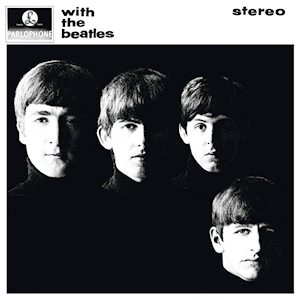
I went to a Marlins game with my brother on Saturday and our childhood broke out. We walked into a cavernous stadium for a MLB game and by the time we left I had wandered into a Little Havana apartment mere blocks from the Orange Bowl circa 1967. It was there that my pre-teen hormones found themselves in the room of a teenage neighbor girl who showed me her ‘With the Beatles’ album and played it on her plastic white General Electric portable record player. I knew and cared nothing about the music, but she was thrilled and I wasn’t moving.

I couldn’t figure why they would use a picture that didn’t even show all their faces

This magical mystery tour came after another Marlins one run loss to Milwaukee and courtesy of a Beatles tribute band named The Fab Four [go figure], who wandered in from the outfield with the same urgency as Hanley chasing down a bloop double.  Oh Shea, can’t you see?

Continue reading

Posted in 2TG Favorites, Miami Marlins & MLB | Tagged , , , | 1 Comment

The Meeting That Made The Decision Possible

DISSOLVE TO: A garden, somewhere outside Schenectady:

PAT O’RILEY
So … Reinsdorf will move against you first. He’ll set up a meeting with someone that you absolutely trust … guaranteeing your ability to speak freely. And at that meeting, you’ll be setup over this whole tampering business [Pat drinks from a glass of wine as Dwyane watches him]. I like to drink wine more than I used to, anyways, I’m drinking more….

DWYANE
It’s good for you, Pat.

PAT O’RILEY (after a long pause)
I hope you don’t mind the way I … I keep going over this Reinsdorf business…

Continue reading

Posted in 2TG Favorites, Sports | Tagged , , , , , , | Leave a comment

Mother Teresa, Grace And Existential Hamsters

Hamster with mini-generator and no self-awareness

By the end of this post, a part of you might be envying that hamster for the following reason.  It remains blissfully unaware of its inability to out-run the treadmill, let alone the fact that it may be generating electricity through “irregular biomechanical energy.”

From a very narrow perspective, we humans are not as fortunate as the hamster in that we are aware of our limitations.  For us Christians, we typically become more aware of our responsibilities to try and do great things in the faith as we mature.  Maturing in our secular lives usually means confronting and accepting our limitations. The maturation process seems to pull us in opposite directions from spiritual and secular perspectives. For as we confront and accept our limitations in our secular lives, we are called by our faith to do great things, despite our growing awareness that in most walks of life greatness is not our destiny.

Continue reading

Posted in Catholic Faith & Inspiration | Tagged , | 2 Comments