Our African-American and Calibrated President

While I’m no fan, I have to give President Obama some credit. He fought giving the appearance of wanting to be the first African-American president as long as he could. He fought it at times I thought he shouldn’t, namely his nomination speech on the 45th anniversary of MLK’s ‘I Have a Dream’ speech. That’s discipline, a real and important skill which I put at the top of his attributes which most impress me.

But the temptation in the form of the arrest of an Ivy-league college employed, African-American intellectual in his own home was borderline unfair. It’s like making 365 gambling-free days while working at an online-betting service, a condition of Pete Rose’s return to MLB.

I actually agree that it is messed up that someone could end up being arrested in their own home. But the particulars of the arrest itself does not interest me as much as the politics involved. In fact, the details of the incident are so delicious, I briefly worried that I actually brought about the incident through some bizarre form of telekinesis. Only when I was able to confirm that the person who accompanied Gates that evening wasn’t Cornell West, was I sure that the event occurred on its own and not some wacked-out, Billy Mumy inspired, Twilight Zone-ish contrivance of my imagination.

You see Henry Louis Gates Jr. is not just any African-American intellectual from any Ivy-league school. No he is the most prestigious African-American scholar from Harvard. This from his Wikipedia page:

As a literary theorist and critic, Gates has combined literary techniques of deconstruction with native African literary traditions; he draws on structuralism, post-structuralism, and semiotics to textual analysis and matters of identity politics. As a black intellectual and public figure, Gates has been an outspoken critic of the Eurocentric literary canon. He has insisted that black literature must be evaluated by the aesthetic criteria of its culture of origin, not criteria imported from Western or European cultural traditions that express a “tone deafness to the black cultural voice” and result in “intellectual racism.”

The underlined stuff basically means that he reserves himself the right to give anything whatever meaning he prefers and if you disagree, … well, y’know. In short, he is an expert in all things ‘victim.’ The odds that Mr Gates would had seen anything but racism in the actions of the police were non-existent.

And who was the arresting police officer? Before we answer that, put yourself in the shoes [sandals?] of every non-God-fearing liberal you know. ‘Please, please, [insert a spiritual, but non-religious symbol], let him be a racist. Let him make Theophilus Eugene “Bull” Connor look like a Black Panther sympathizer.’

That the arresting officer appeared a reasonable sort in early interviews was bad enough. When it was revealed that he had spent the past five years teaching police cadets about how to avoid racial profiling, that was a vicious blow to their solar plexus. Think of the truly primal scream uttered by The Enemy at the conclusion of The Passion of The Christ, and you would be at about 60% of the disappointment level felt by liberals at that news.

Enter the president, stage left. This was one issue he would have no use for a teleprompter [he initially assumed]. In giving his thoughts, he would be in effect summarizing the conversation at every other dinner party he attended during his adult life. So spoketh President Obama:

… the Cambridge police acted stupidly in arresting somebody when there was already proof that they were in their own home.

Obama, a few days later, his non-apology apology [hey wasn’t that Bush’s problem?]:

… I wanted to make clear that in my choice of words, I think, I unfortunately, I think, gave an impression that I was maligning the Cambridge Police Department or Sergeant Crowley specifically,” Mr. Obama said. “And I could have calibrated those words differently.

But we still have not gotten to my favorite part of the incident. Obama further calibrates through his ‘people’:

Mr. Obama called his senior adviser, David Axelrod. “I’m going to call Sergeant Crowley and then I think I ought to step into the press room and address it,” Mr. Axelrod said he said.

In other words, his senior adviser wants us to believe that the president didn’t call his senior adviser for advice, but merely to inform him of what he was about to do. [Note to Editor: Let’s hold off on that Axelrod genius piece.]

Because you know, the president wouldn’t want to give the impression that he finds himself under the biggest microscope in the world with the least amount of executive experience than all his predecessors. All in an impossible job whose potential for achievement is front-loaded. In other words, his best opportunity for achieving his goals comes at the time when he is least prepared. To paraphrase Leon Wieseltier:

… the learning curve of an American president is the insult that history adds to their injury.

Tagged | 1 Comment

When Today’s Headlines Were Yesterday’s Jokes

There was an old joke about how a socialist [or centrally planned] economy worked:

What would have happened had the first socialist country been established in the Sahara desert instead of the Soviet Union? It would have run out of sand.

The joke reflects a basic economic truth about why socialist economies fail. There is a real item in Reuters news recently which reminds us of the truth in that joke.

Venezuela to Import Coffee 1st Time Ever

Caracas, July 22 – Venezuela, a traditional coffee exporter that boasts one of the best cups of java in South America, may have to import coffee for the first time ever this year or face shortages, industry experts said.

Producers say rising costs and prices fixed by the government have caused production to fall and illegal exports to rise. The government says poor climate and speculation by growers and roasters is to blame.

I googled whether any government had ever responded to poor economic news by confessing, ‘Man we are so over our heads here … we’re actually OK with those disastrous figures.’ Nyet. And so it goes with Latin America’s Petro-dictatorship.

Hey, did you hear the one about the supposed savings in government-run health care?

Soviet jokes compiled by David Frum are copied in full at end of post.

—————————————————————————-
Commie Jokes, Another Round – David Frum – 06/27/08

Ben Zycher of the Manhattan Institute sends this:

Stalin decided to honor the great Russian poet Aleksandr Pushkin by erecting a monument to Pushkin in his home town. What was the monument? It was a huge bronze statue of Stalin reading from a book of Pushkin’s poetry.

Peter Bogucki, associate dean at Princeton, sends these from Poland’s Solidarity period:

The express train is running from Warsaw to Legnica (site of a big Soviet Airforce Base in the communist years) when it suddenly jumps the tracks and runs off into the woods. After a while going through the woods, it returns to the tracks and somehow gets back on. The conductor goes up to the engineer and says, “What are you, nuts? Running off into the woods like that.” The engineer replies, “There was a Russian general standing on the tracks.” The conductor berates him, “Then why didn’t you just run the #%$$^%$ over?” to which the engineer replies, “That’s just it, he ran into the woods.”

and

Edward Gierek, first secretary of the Party from 1970 to 1980, goes down to Silesia to visit the miners and see how they live. He goes up to one block of flats, and goes to the door of one on the ground floor.It’s open, so he enters and finds that it’s furnished very luxuriously: color TV, refrigerator, plush sofas, and a little boy is sitting on the couch. Gierek says to him, “Son, do you know who I am?” The little boy shakes his head no, looking scared. Gierek spreads his arms and says, “Son, thanks to me, you have all this!” The little boy’s face brightens and calls out to his parents in the next room, “Mommy, daddy, Uncle Hans from West Germany is here!”

Finally – and I think this is final – Prof. Jay Bergman who teaches Soviet history at the Central Connecticut State University sends this collection:

1) What do you call a Soviet quartet that goes abroad? A trio.

2) One day in the 1970’s the Politburo was discussing a plan to send Soviet cosmonauts to the sun. When someone expressed the concern that if they did so, they’d be burned alive, Brezhnev casually responded: “Don’t worry. They’ll land at night.”

3) Three men in a Soviet labor camp are sitting around the barrel stove one night and the subject of what they are incarcerated for comes up. The first one says: “I am here because I voted for Comrade Petrov in 1934.” The second one says: “I am here because I voted against Comrade Petrov in 1934.” The third one says: “I am Comrade Petrov.”

4) A Frenchman, a Brit, and a Russian are admiring a painting of Adam and Eve in the garden of Eden. The Frenchman says, “they must be French, they’re naked and they’re eating fruit.” The Englishman says, “clearly they’re English. Observe how politely the man is offering the woman the fruit.” The Russian notes, “they are Russian of course. They have nothing to wear, nothing to eat, and they think they are in paradise.”

5) Two Muscovites, Ivan and Piotr, are waiting in line on a Moscow street in the Gorbachev era, waiting to buy bread. The line is long and it hardly moves. Finally, Piotr says to Ivan in exasperation, “I’ve had it. I’m going to shoot Gorbachev.” Off he goes to shoot Gorbachev. Several hours pass. Ivan is still in line. At last Piotr appears and Ivan asks him if he’s shot Gorbachev. Piotr replies: “I couldn’t. The line was too long.”

6) In Moscow there are two workmen with shovels walking along the edge of a city street, stopping every five yards so that one of them can dig a hole in the dirt. As soon as it is dug, his comrade fills the hole back in. Then they move along another five yards and repeat the exercise. A Soviet citizen observing this scene loses his temper and stomps up to the two workers. “Comrades,” he shouts, “what kind of craziness is this? You dig a hole, then the other fellow fills it right up. You’re accomplishing nothing at all. We’re wasting good money paying you.” “No, no”, one of the workers replies, “you don’t understand. Usually we work with a third lad, Volodya, but he’s home drunk today. Volodya plants trees. I dig the hole, he sticks in the tree, and Ivan here fills the hole back in. Just because Voldoya’s off drunk, does that mean Ivan and I have to stop working?”

7) Brezhnev and Kosygin are discussing what would happen if the Soviet Union truly adhered to the Helsinki Accords and adopted an open emigration policy. Brezhnev says to Kosygin that “you and I will be the only two citizens left in the Soviet Union.” To which Kosygin replies, “Speak for yourself.”

8) There was the Russian who bought a car and was told it would be delivered ten years from the purchase date. “Morning or afternoon?” he inquired. “What does it matter?” asked the salesman. “The plumber is coming in the morning.”

9) A train stalled on the Trans-Siberian Railway. On board were Tsar Nicholas II, Lenin, Stalin, Khrushchev, Brezhnev, Chernenko, Andropov, Gorbachev, and Yeltsin.

Tsar Nicholas stands up and says, “I shall make this train move.” He gets off the train, mounts his horse, and rides off to Paris.

Lenin then stands up and says, “I shall make this train move.” He leaves the car and returns a few minutes later. “I’ve instituted a new 8-day work week.” The train doesn’t move.

Stalin stands up and says, I shall make this train move.” He leaves the car and returns a few minutes later.” “I’ve shot the engineer.” The train doesn’t move.

Khrushchev then stands up and says, “I shall make this train move.” He leaves the car and returns a few minutes later. “I’ve reinstated the engineer posthumously,” he says as he sits down. The train still doesn’t move.

Brezhnev then stands up and says, “I shall make this train move.” He then instructs everyone on the train to act as if it is moving. The train doesn’t move.

Chernenko and Andropov then stand up and say, “We shall make this train move.” They then get off the train. The train still does not move.

Gorbachev, with a sigh, then stands up and says. “I will make this train move.” He stands up, and pulling the window open, yells outside, “This train doesn’t move.” The train still doesn’t move.

Yeltsin, quite put out, stands up and says, I Shall change this train for one that works.” He leaves and returns shortly with a new train. As the passengers board it, they notice that it is an old American steam train which is owned by the Germans and has no wheels. Is this train going to move.”

10) A group of rabbits appear at the Soviet-Polish frontier in the 1930’s, applying for admission to Poland. When asked why they want to leave the Soviet Union they say that the NKVD has given orders to arrest all camels in the Soviet Union. “But you are not camels,” the border guards say to them. They reply: “Just try telling that to the NKVD.”

11) Asked in 2004 whether Russian democracy under Putin was dead or dying, Gregorii Yavlinskii, the head of the liberal party, Iabloko, repeated an old joke about an ambulance driver taking a man to the morgue. “Why,” the man asked. “I’m not dead yet.” “well,” the driver replied, “we’re not there yet.”

12) What’s the difference between perestroika and chess? In chess you think before you move.

13) There are two ways for resolving the crisis in the Soviet economy. One of them is realistic, the other is fantastic. The realistic way is to call on people from outer space. The fantastic way is to let the Soviet government do it.

14) Stalin was having a meeting in his office with the Central Committee one afternoon. After they all left, he realized that his pipe was missing. He called Beria and told him to question every member of the Committee about his pipe. The next day, Stalin found his pipe and called Beria to tell him to stop the questioning. Upon hearing this, Beria answered, “I am sorry Comrade Stalin but half of the Committee already admitted to taking the pipe, and the other half died during questioning.”

15) A conversation in the GULAG. How many years did they give you? Twenty. How about you? Also twenty. What are you in for? Nothing. Liar. For nothing they give you ten.

16) Define a secure Soviet border. One with Soviet soldiers on both sides of it.

17) What would have happened had the first socialist country been established in the Sahara desert instead of the Soviet Union? It would have run out of sand.

18) Why is communism superior to capitalism? Because it heroically overcomes problems that do not exist in any other system.

19) What are the main obstacles obstructing Soviet agriculture? Spring, summer, autumn, and winter.

20) Brezhnev instructs his clever assistant to write him a ten minute speech. “Remember, just ten minutes,” he admonishes. After returning, Brezhnev is furious and berates the assistant mercilessly. “You fool, I told you to write me a ten minute speech but it took twenty minutes to deliver. The assistant replies: “But comrade general secretary I gave you two copies.
———————————————————————

Posted in Current Affairs & History | Tagged , , , | Leave a comment

The Zero-Star Toss

I am a political conservative and a baseball fan. Knowing that our ubiquitous President would be all over the All-Star game [first pitch and part of the Fox broadcast] was in effect a tax placed on my viewership, but one I would willingly pay to watch the Midsummer Classic.

The tax turned into a rebate. How to describe the pleasure in watching President Obama’s version of a first pitch. He exhibited the most feminine pitching motion ever displayed by a heterosexual. In comparison, his bowling skills would now equate to a Don Carter level of excellence. His pitching motion can only be described as pure Hyde Park, aka ‘Berkeley with snow.’ To be more precise, it was exactly how you would expect someone who never played baseball in his life and had recently suffered extensive ligament damage in both wrists to throw a baseball.

You can’t really blame him though. It was tough getting his Hyde Park neighbors to go to a game. His friend and literary consultant, Bill Ayers, was always terrified he’d run into a former bombing victim at the games. He’d stop asking Louis Farrakhan a while back, he couldn’t get a hot dog without hearing a speech from that guy.

But perhaps there are more innocent explanations for ‘The Toss.’ Maybe he misread his teleprompter, mixing up something to do with ‘bender’ and ‘gender’. He threw left-handed. Maybe he’s actually right-handed and was reaching out to the left-handed community, ensuring them that their blood runs through him as well. He empathizes like most people breathe, this guy.

My sources across the web have gathered the following unconfirmed reactions to ‘The Toss’:

  • Mahmoud Ahmadinejad called Kim Jong-il and asked, ‘Kimmy, are you watching this? Brother, I say we move on those weak infidels TOMORROW!’
  • David Cassidy, watching at home is said to have jumped off his Misty Pink Folding Bed and yelled, ‘I can take that bitch.’
  • Jack McFarland, from Will and Grace, is said to have muttered at a sex-toy party, ‘Jeez, grow a pair why don’t you.’

A note about the classiest move of the All-Star game that went unnoticed on the Fox broadcast

Fittingly it came from the game’s MVP, Carl Crawford. In the top of the 5th inning, when he was on first, Ichiro hit a ground ball which Utley bobbled, but still tried to get the force out at 2B. Crawford purposely slid past the base to avoid hurting an exposed Hanley Ramirez, who was forced to wait for the throw while standing on 2B. Classy move by the deserved MVP. Note to Jimmy Rollins, watch your back [or knees].

Posted in Current Affairs & History | Tagged , , , | Leave a comment

Who is Francis Collins?

If you don’t know who Francis Collins is, a better question would be why don’t you? He was recently nominated to the position of Director of the National Institutes of Health by President Obama. On occasion [sarcasm intended], I have criticized the President, but I give him credit here, the selection is not a popular one in leftist circles.

Some highlights from Dr. Collins life and scientific accomplishments.

  • His parents came from New York City but checked out of urban life to run a back-to-nature farm, and to produce a professional summer Shakespeare theatrical company.
  • Folk singers often showed up when he was a boy, and Bob Dylan spent his 18th birthday in the Collins farmhouse.
  • He was was home schooled by his mother until the sixth grade.
  • Initially trained as a chemist, he changed fields and earned an M.D.
  • At the University of Michigan, his interest in DNA earned him a reputation as a gene hunter.
  • Collins’ team at Michigan discovered the gene mutations responsible for cystic fibrosis, Huntington’s disease and other diseases.
  • Collins oversaw the Human Genome Project, the multidisciplinary, multi-institutional, international effort to map and sequence the 3 billion letters in the human DNA instruction book. Many consider this project to have been the most significant scientific undertaking of our time.
  • In 2007, President Bush awarded Dr. Collins the Congressional Medal of Freedom — along with Milton Friedman protege, economist Gary Becker and Cuban Human Rights activist Oscar Elias Biscet [if I had known, I would have paid to be there for that crowd].

An atheist as a young adult, his experience with dying patients led him to question his religious views, and he investigated various faiths. He familiarized himself with the evidences for and against God in cosmology, and used Mere Christianity by C. S. Lewis as a foundation to re-examine his religious view. Collins is now an evangelical Christian who believes strongly in evidence-based science and evolution. How strong? Below is a portion of a Collins interview in Discover magazine:

The media often portray the religious right in the United States as antiscience. Is that a fair characterization?

I don’t think it’s fair to blame believers for getting defensive about attacks on the Bible when they see their whole belief system is under attack from some members of the scientific community who are using the platform of science to say, “We don’t need God anymore, that was all superstition, and you guys should get over it.” Believers then feel some requirement to respond, and this has led to an unfortunate escalation of charges and countercharges. As a result of the tensions over evolution, I think we see an increasing tendency for believers to dig in about things like Genesis 1 and 2, claiming that there is just one acceptable interpretation. That’s not a strong position. St. Augustine, for example, came to the conclusion that we really don’t know what the writer of Genesis was trying to describe in the creation story, and we should be careful about drawing conclusions about the nature of the world based on what those verses say. He was concerned that science would ultimately prove specific narrow interpretations to be incorrect, and then faith would be put up to scorn. It was as if he was sending us a warning 16 centuries ago, saying, “Guys, watch out for this.”

What motivates those who polarize the debate?

I think the people who are most fervently opposed to evolution are not doing so on a political basis. I think that many of those folks have been brought up to believe that if you accept evolution, you lose your faith. If you’re presented with only that option, then as a believer you have to resist Darwin with every fiber of your being. You’ll congregate with people who believe as you do, you’ll listen to radio shows that agree with you, and you’ll try to hold it together against what’s perceived as an onslaught of Godless, secularized science that threatens your core beliefs.

Do you believe that personhood begins at conception?

You mean, is that when we get a soul?

Now we’re into theology, and it’s an area where science isn’t really going to give you an answer. The only thing that science can say is that whatever line you draw between the fusion of sperm and egg and the birth of the baby is somewhat arbitrary. On the other hand, that doesn’t prove that the soul exists right at that moment of fusion. Identical twins do not have the same soul, yet they started out as the same union of sperm and egg.

We keep hearing that the middle ground between science and faith is increasingly difficult to maintain. Do you feel that your position is precarious?

I think it’s rock solid. If God chose to use the mechanism of evolution to create human beings, who are we to say He wouldn’t have done it that way? It’s unfortunate that this potential harmony between worldviews is perceived by some as delicate or fragile. Much of what seems to threaten this view are the ultraliteral interpretations of Genesis 1 and 2, as I mentioned, which are fairly recent arrivals on the scene and which many other theologians down through the centuries have not been comfortable accepting anyway.

Doesn’t Scripture sometimes explicitly contradict science?

I don’t find any troubling examples of that in the Bible, as long as you recognize that the point of Scripture was not to teach science. Can you imagine God lecturing to his chosen people about radioactive decay?

And yet people have been burned at the stake over this issue.

Before we start trashing religion, we should recognize that religion down through history has been misused by lots of people in terrible ways. But it’s also done some profoundly good things. What has atheism done to help people? The worst examples of human carnage in the 20th century came from the atheist regimes of Stalin and Mao. The principles of faith are generally altruistic, gentle, and loving. The problem is when someone takes those principles and twists them to suit their own purposes—that was the Inquisition, and that is suicide bombers.

So what would you say to the scientists who are fervently opposed to religious thought and practice?

Is there any dogma more unsupported by the facts than from the scientist who stands up and says, “I know there is no God”? Science is woefully unsuited to ask the question of God in the first place. So give the religious folks a break. They are seeking the kind of spiritual truths that have always interested humankind but that science cannot really address.

It’s 5 minutes long, but I would highly recommend watching the video from Collins’ 2007 Commencement at the University of Michigan. If a Congressional Medal of Honor winning, DNA-decoding geneticist and dedicated defender of people of faith doesn’t take himself that seriously, who should?

Collins debate with Richard Dawkins in Time Magazine from 2006 is copied in full at end of post.

—————————————————————————-
Sunday, Nov. 05, 2006 – God vs. Science – By Dan Cray

There are two great debates under the broad heading of Science vs. God. The more familiar over the past few years is the narrower of the two: Can Darwinian evolution withstand the criticisms of Christians who believe that it contradicts the creation account in the Book of Genesis? In recent years, creationism took on new currency as the spiritual progenitor of “intelligent design” (I.D.), a scientifically worded attempt to show that blanks in the evolutionary narrative are more meaningful than its very convincing totality. I.D. lost some of its journalistic heat last December when a federal judge dismissed it as pseudoscience unsuitable for teaching in Pennsylvania schools.

But in fact creationism and I.D. are intimately related to a larger unresolved question, in which the aggressor’s role is reversed: Can religion stand up to the progress of science? This debate long predates Darwin, but the antireligion position is being promoted with increasing insistence by scientists angered by intelligent design and excited, perhaps intoxicated, by their disciplines’ increasing ability to map, quantify and change the nature of human experience. Brain imaging illustrates–in color!–the physical seat of the will and the passions, challenging the religious concept of a soul independent of glands and gristle. Brain chemists track imbalances that could account for the ecstatic states of visionary saints or, some suggest, of Jesus. Like Freudianism before it, the field of evolutionary psychology generates theories of altruism and even of religion that do not include God. Something called the multiverse hypothesis in cosmology speculates that ours may be but one in a cascade of universes, suddenly bettering the odds that life could have cropped up here accidentally, without divine intervention. (If the probabilities were 1 in a billion, and you’ve got 300 billion universes, why not?)

Roman Catholicism’s Christoph Cardinal Schönborn has dubbed the most fervent of faith-challenging scientists followers of “scientism” or “evolutionism,” since they hope science, beyond being a measure, can replace religion as a worldview and a touchstone. It is not an epithet that fits everyone wielding a test tube. But a growing proportion of the profession is experiencing what one major researcher calls “unprecedented outrage” at perceived insults to research and rationality, ranging from the alleged influence of the Christian right on Bush Administration science policy to the fanatic faith of the 9/11 terrorists to intelligent design’s ongoing claims. Some are radicalized enough to publicly pick an ancient scab: the idea that science and religion, far from being complementary responses to the unknown, are at utter odds–or, as Yale psychologist Paul Bloom has written bluntly, “Religion and science will always clash.” The market seems flooded with books by scientists describing a caged death match between science and God–with science winning, or at least chipping away at faith’s underlying verities.

Finding a spokesman for this side of the question was not hard, since Richard Dawkins, perhaps its foremost polemicist, has just come out with The God Delusion (Houghton Mifflin), the rare volume whose position is so clear it forgoes a subtitle. The five-week New York Times best seller (now at No. 8) attacks faith philosophically and historically as well as scientifically, but leans heavily on Darwinian theory, which was Dawkins’ expertise as a young scientist and more recently as an explicator of evolutionary psychology so lucid that he occupies the Charles Simonyi professorship for the public understanding of science at Oxford University.

Dawkins is riding the crest of an atheist literary wave. In 2004, The End of Faith, a multipronged indictment by neuroscience grad student Sam Harris, was published (over 400,000 copies in print). Harris has written a 96-page follow-up, Letter to a Christian Nation, which is now No. 14 on the Times list. Last February, Tufts University philosopher Daniel Dennett produced Breaking the Spell: Religion as a Natural Phenomenon, which has sold fewer copies but has helped usher the discussion into the public arena.

If Dennett and Harris are almost-scientists (Dennett runs a multidisciplinary scientific-philosophic program), the authors of half a dozen aggressively secular volumes are card carriers: In Moral Minds, Harvard biologist Marc Hauser explores the–nondivine–origins of our sense of right and wrong (September); in Six Impossible Things Before Breakfast (due in January) by self-described “atheist-reductionist-materialist” biologist Lewis Wolpert, religion is one of those impossible things; Victor Stenger, a physicist-astronomer, has a book coming out titled God: The Failed Hypothesis. Meanwhile, Ann Druyan, widow of archskeptical astrophysicist Carl Sagan, has edited Sagan’s unpublished lectures on God and his absence into a book, The Varieties of Scientific Experience, out this month.

Dawkins and his army have a swarm of articulate theological opponents, of course. But the most ardent of these don’t really care very much about science, and an argument in which one party stands immovable on Scripture and the other immobile on the periodic table doesn’t get anyone very far. Most Americans occupy the middle ground: we want it all. We want to cheer on science’s strides and still humble ourselves on the Sabbath. We want access to both MRIs and miracles. We want debates about issues like stem cells without conceding that the positions are so intrinsically inimical as to make discussion fruitless. And to balance formidable standard bearers like Dawkins, we seek those who possess religious conviction but also scientific achievements to credibly argue the widespread hope that science and God are in harmony–that, indeed, science is of God.

Informed conciliators have recently become more vocal. Stanford University biologist Joan Roughgarden has just come out with Evolution and Christian Faith, which provides what she calls a “strong Christian defense” of evolutionary biology, illustrating the discipline’s major concepts with biblical passages. Entomologist Edward O. Wilson, a famous skeptic of standard faith, has written The Creation: An Appeal to Save Life on Earth, urging believers and non-believers to unite over conservation. But foremost of those arguing for common ground is Francis Collins.

Collins’ devotion to genetics is, if possible, greater than Dawkins’. Director of the National Human Genome Research Institute since 1993, he headed a multinational 2,400-scientist team that co-mapped the 3 billion biochemical letters of our genetic blueprint, a milestone that then President Bill Clinton honored in a 2000 White House ceremony, comparing the genome chart to Meriwether Lewis’ map of his fateful continental exploration. Collins continues to lead his institute in studying the genome and mining it for medical breakthroughs.

He is also a forthright Christian who converted from atheism at age 27 and now finds time to advise young evangelical scientists on how to declare their faith in science’s largely agnostic upper reaches. His summer best seller, The Language of God: A Scientist Presents Evidence for Belief (Free Press), laid out some of the arguments he brought to bear in the 90-minute debate TIME arranged between Dawkins and Collins in our offices at the Time & Life Building in New York City on Sept. 30. Some excerpts from their spirited exchange:

TIME: Professor Dawkins, if one truly understands science, is God then a delusion, as your book title suggests?

DAWKINS: The question of whether there exists a supernatural creator, a God, is one of the most important that we have to answer. I think that it is a scientific question. My answer is no.

TIME: Dr. Collins, you believe that science is compatible with Christian faith.

COLLINS: Yes. God’s existence is either true or not. But calling it a scientific question implies that the tools of science can provide the answer. From my perspective, God cannot be completely contained within nature, and therefore God’s existence is outside of science’s ability to really weigh in.

TIME: Stephen Jay Gould, a Harvard paleontologist, famously argued that religion and science can coexist, because they occupy separate, airtight boxes. You both seem to disagree.

COLLINS: Gould sets up an artificial wall between the two worldviews that doesn’t exist in my life. Because I do believe in God’s creative power in having brought it all into being in the first place, I find that studying the natural world is an opportunity to observe the majesty, the elegance, the intricacy of God’s creation.

DAWKINS: I think that Gould’s separate compartments was a purely political ploy to win middle-of-the-road religious people to the science camp. But it’s a very empty idea. There are plenty of places where religion does not keep off the scientific turf. Any belief in miracles is flat contradictory not just to the facts of science but to the spirit of science.

TIME: Professor Dawkins, you think Darwin’s theory of evolution does more than simply contradict the Genesis story.

DAWKINS: Yes. For centuries the most powerful argument for God’s existence from the physical world was the so-called argument from design: Living things are so beautiful and elegant and so apparently purposeful, they could only have been made by an intelligent designer. But Darwin provided a simpler explanation. His way is a gradual, incremental improvement starting from very simple beginnings and working up step by tiny incremental step to more complexity, more elegance, more adaptive perfection. Each step is not too improbable for us to countenance, but when you add them up cumulatively over millions of years, you get these monsters of improbability, like the human brain and the rain forest. It should warn us against ever again assuming that because something is complicated, God must have done it.

COLLINS: I don’t see that Professor Dawkins’ basic account of evolution is incompatible with God’s having designed it.

TIME: When would this have occurred?

COLLINS: By being outside of nature, God is also outside of space and time. Hence, at the moment of the creation of the universe, God could also have activated evolution, with full knowledge of how it would turn out, perhaps even including our having this conversation. The idea that he could both foresee the future and also give us spirit and free will to carry out our own desires becomes entirely acceptable.

DAWKINS: I think that’s a tremendous cop-out. If God wanted to create life and create humans, it would be slightly odd that he should choose the extraordinarily roundabout way of waiting for 10 billion years before life got started and then waiting for another 4 billion years until you got human beings capable of worshipping and sinning and all the other things religious people are interested in.

COLLINS: Who are we to say that that was an odd way to do it? I don’t think that it is God’s purpose to make his intention absolutely obvious to us. If it suits him to be a deity that we must seek without being forced to, would it not have been sensible for him to use the mechanism of evolution without posting obvious road signs to reveal his role in creation?

TIME: Both your books suggest that if the universal constants, the six or more characteristics of our universe, had varied at all, it would have made life impossible. Dr. Collins, can you provide an example?

COLLINS: The gravitational constant, if it were off by one part in a hundred million million, then the expansion of the universe after the Big Bang would not have occurred in the fashion that was necessary for life to occur. When you look at that evidence, it is very difficult to adopt the view that this was just chance. But if you are willing to consider the possibility of a designer, this becomes a rather plausible explanation for what is otherwise an exceedingly improbable event–namely, our existence.

DAWKINS: People who believe in God conclude there must have been a divine knob twiddler who twiddled the knobs of these half-dozen constants to get them exactly right. The problem is that this says, because something is vastly improbable, we need a God to explain it. But that God himself would be even more improbable. Physicists have come up with other explanations. One is to say that these six constants are not free to vary. Some unified theory will eventually show that they are as locked in as the circumference and the diameter of a circle. That reduces the odds of them all independently just happening to fit the bill. The other way is the multiverse way. That says that maybe the universe we are in is one of a very large number of universes. The vast majority will not contain life because they have the wrong gravitational constant or the wrong this constant or that constant. But as the number of universes climbs, the odds mount that a tiny minority of universes will have the right fine-tuning.

COLLINS: This is an interesting choice. Barring a theoretical resolution, which I think is unlikely, you either have to say there are zillions of parallel universes out there that we can’t observe at present or you have to say there was a plan. I actually find the argument of the existence of a God who did the planning more compelling than the bubbling of all these multiverses. So Occam’s razor–Occam says you should choose the explanation that is most simple and straightforward–leads me more to believe in God than in the multiverse, which seems quite a stretch of the imagination.

DAWKINS: I accept that there may be things far grander and more incomprehensible than we can possibly imagine. What I can’t understand is why you invoke improbability and yet you will not admit that you’re shooting yourself in the foot by postulating something just as improbable, magicking into existence the word God.

COLLINS: My God is not improbable to me. He has no need of a creation story for himself or to be fine-tuned by something else. God is the answer to all of those “How must it have come to be” questions.

DAWKINS: I think that’s the mother and father of all cop-outs. It’s an honest scientific quest to discover where this apparent improbability comes from. Now Dr. Collins says, “Well, God did it. And God needs no explanation because God is outside all this.” Well, what an incredible evasion of the responsibility to explain. Scientists don’t do that. Scientists say, “We’re working on it. We’re struggling to understand.”

COLLINS: Certainly science should continue to see whether we can find evidence for multiverses that might explain why our own universe seems to be so finely tuned. But I do object to the assumption that anything that might be outside of nature is ruled out of the conversation. That’s an impoverished view of the kinds of questions we humans can ask, such as “Why am I here?”, “What happens after we die?”, “Is there a God?” If you refuse to acknowledge their appropriateness, you end up with a zero probability of God after examining the natural world because it doesn’t convince you on a proof basis. But if your mind is open about whether God might exist, you can point to aspects of the universe that are consistent with that conclusion.

DAWKINS: To me, the right approach is to say we are profoundly ignorant of these matters. We need to work on them. But to suddenly say the answer is God–it’s that that seems to me to close off the discussion.

TIME: Could the answer be God?

DAWKINS: There could be something incredibly grand and incomprehensible and beyond our present understanding.

COLLINS: That’s God.

DAWKINS: Yes. But it could be any of a billion Gods. It could be God of the Martians or of the inhabitants of Alpha Centauri. The chance of its being a particular God, Yahweh, the God of Jesus, is vanishingly small–at the least, the onus is on you to demonstrate why you think that’s the case.

TIME: The Book of Genesis has led many conservative Protestants to oppose evolution and some to insist that the earth is only 6,000 years old.

COLLINS: There are sincere believers who interpret Genesis 1 and 2 in a very literal way that is inconsistent, frankly, with our knowledge of the universe’s age or of how living organisms are related to each other. St. Augustine wrote that basically it is not possible to understand what was being described in Genesis. It was not intended as a science textbook. It was intended as a description of who God was, who we are and what our relationship is supposed to be with God. Augustine explicitly warns against a very narrow perspective that will put our faith at risk of looking ridiculous. If you step back from that one narrow interpretation, what the Bible describes is very consistent with the Big Bang.

DAWKINS: Physicists are working on the Big Bang, and one day they may or may not solve it. However, what Dr. Collins has just been–may I call you Francis?

COLLINS: Oh, please, Richard, do so.

DAWKINS: What Francis was just saying about Genesis was, of course, a little private quarrel between him and his Fundamentalist colleagues …

COLLINS: It’s not so private. It’s rather public. [Laughs.]

DAWKINS: … It would be unseemly for me to enter in except to suggest that he’d save himself an awful lot of trouble if he just simply ceased to give them the time of day. Why bother with these clowns?

COLLINS: Richard, I think we don’t do a service to dialogue between science and faith to characterize sincere people by calling them names. That inspires an even more dug-in position. Atheists sometimes come across as a bit arrogant in this regard, and characterizing faith as something only an idiot would attach themselves to is not likely to help your case.

TIME: Dr. Collins, the Resurrection is an essential argument of Christian faith, but doesn’t it, along with the virgin birth and lesser miracles, fatally undermine the scientific method, which depends on the constancy of natural laws?

COLLINS: If you’re willing to answer yes to a God outside of nature, then there’s nothing inconsistent with God on rare occasions choosing to invade the natural world in a way that appears miraculous. If God made the natural laws, why could he not violate them when it was a particularly significant moment for him to do so? And if you accept the idea that Christ was also divine, which I do, then his Resurrection is not in itself a great logical leap.

TIME: Doesn’t the very notion of miracles throw off science?

COLLINS: Not at all. If you are in the camp I am, one place where science and faith could touch each other is in the investigation of supposedly miraculous events.

DAWKINS: If ever there was a slamming of the door in the face of constructive investigation, it is the word miracle. To a medieval peasant, a radio would have seemed like a miracle. All kinds of things may happen which we by the lights of today’s science would classify as a miracle just as medieval science might a Boeing 747. Francis keeps saying things like “From the perspective of a believer.” Once you buy into the position of faith, then suddenly you find yourself losing all of your natural skepticism and your scientific–really scientific–credibility. I’m sorry to be so blunt.

COLLINS: Richard, I actually agree with the first part of what you said. But I would challenge the statement that my scientific instincts are any less rigorous than yours. The difference is that my presumption of the possibility of God and therefore the supernatural is not zero, and yours is.

TIME: Dr. Collins, you have described humanity’s moral sense not only as a gift from God but as a signpost that he exists.

COLLINS: There is a whole field of inquiry that has come up in the last 30 or 40 years–some call it sociobiology or evolutionary psychology–relating to where we get our moral sense and why we value the idea of altruism, and locating both answers in behavioral adaptations for the preservation of our genes. But if you believe, and Richard has been articulate in this, that natural selection operates on the individual, not on a group, then why would the individual risk his own DNA doing something selfless to help somebody in a way that might diminish his chance of reproducing? Granted, we may try to help our own family members because they share our DNA. Or help someone else in expectation that they will help us later. But when you look at what we admire as the most generous manifestations of altruism, they are not based on kin selection or reciprocity. An extreme example might be Oskar Schindler risking his life to save more than a thousand Jews from the gas chambers. That’s the opposite of saving his genes. We see less dramatic versions every day. Many of us think these qualities may come from God–especially since justice and morality are two of the attributes we most readily identify with God.

DAWKINS: Can I begin with an analogy? Most people understand that sexual lust has to do with propagating genes. Copulation in nature tends to lead to reproduction and so to more genetic copies. But in modern society, most copulations involve contraception, designed precisely to avoid reproduction. Altruism probably has origins like those of lust. In our prehistoric past, we would have lived in extended families, surrounded by kin whose interests we might have wanted to promote because they shared our genes. Now we live in big cities. We are not among kin nor people who will ever reciprocate our good deeds. It doesn’t matter. Just as people engaged in sex with contraception are not aware of being motivated by a drive to have babies, it doesn’t cross our mind that the reason for do-gooding is based in the fact that our primitive ancestors lived in small groups. But that seems to me to be a highly plausible account for where the desire for morality, the desire for goodness, comes from.

COLLINS: For you to argue that our noblest acts are a misfiring of Darwinian behavior does not do justice to the sense we all have about the absolutes that are involved here of good and evil. Evolution may explain some features of the moral law, but it can’t explain why it should have any real significance. If it is solely an evolutionary convenience, there is really no such thing as good or evil. But for me, it is much more than that. The moral law is a reason to think of God as plausible–not just a God who sets the universe in motion but a God who cares about human beings, because we seem uniquely amongst creatures on the planet to have this far-developed sense of morality. What you’ve said implies that outside of the human mind, tuned by evolutionary processes, good and evil have no meaning. Do you agree with that?

DAWKINS: Even the question you’re asking has no meaning to me. Good and evil–I don’t believe that there is hanging out there, anywhere, something called good and something called evil. I think that there are good things that happen and bad things that happen.

COLLINS: I think that is a fundamental difference between us. I’m glad we identified it.

TIME: Dr. Collins, I know you favor the opening of new stem-cell lines for experimentation. But doesn’t the fact that faith has caused some people to rule this out risk creating a perception that religion is preventing science from saving lives?

COLLINS: Let me first say as a disclaimer that I speak as a private citizen and not as a representative of the Executive Branch of the United States government. The impression that people of faith are uniformly opposed to stem-cell research is not documented by surveys. In fact, many people of strong religious conviction think this can be a morally supportable approach.

TIME: But to the extent that a person argues on the basis of faith or Scripture rather than reason, how can scientists respond?

COLLINS: Faith is not the opposite of reason. Faith rests squarely upon reason, but with the added component of revelation. So such discussions between scientists and believers happen quite readily. But neither scientists nor believers always embody the principles precisely. Scientists can have their judgment clouded by their professional aspirations. And the pure truth of faith, which you can think of as this clear spiritual water, is poured into rusty vessels called human beings, and so sometimes the benevolent principles of faith can get distorted as positions are hardened.

DAWKINS: For me, moral questions such as stem-cell research turn upon whether suffering is caused. In this case, clearly none is. The embryos have no nervous system. But that’s not an issue discussed publicly. The issue is, Are they human? If you are an absolutist moralist, you say, “These cells are human, and therefore they deserve some kind of special moral treatment.” Absolutist morality doesn’t have to come from religion but usually does.

We slaughter nonhuman animals in factory farms, and they do have nervous systems and do suffer. People of faith are not very interested in their suffering.

COLLINS: Do humans have a different moral significance than cows in general?

DAWKINS: Humans have more moral responsibility perhaps, because they are capable of reasoning.

TIME: Do the two of you have any concluding thoughts?

COLLINS: I just would like to say that over more than a quarter-century as a scientist and a believer, I find absolutely nothing in conflict between agreeing with Richard in practically all of his conclusions about the natural world, and also saying that I am still able to accept and embrace the possibility that there are answers that science isn’t able to provide about the natural world–the questions about why instead of the questions about how. I’m interested in the whys. I find many of those answers in the spiritual realm. That in no way compromises my ability to think rigorously as a scientist.

DAWKINS: My mind is not closed, as you have occasionally suggested, Francis. My mind is open to the most wonderful range of future possibilities, which I cannot even dream about, nor can you, nor can anybody else. What I am skeptical about is the idea that whatever wonderful revelation does come in the science of the future, it will turn out to be one of the particular historical religions that people happen to have dreamed up. When we started out and we were talking about the origins of the universe and the physical constants, I provided what I thought were cogent arguments against a supernatural intelligent designer. But it does seem to me to be a worthy idea. Refutable–but nevertheless grand and big enough to be worthy of respect. I don’t see the Olympian gods or Jesus coming down and dying on the Cross as worthy of that grandeur. They strike me as parochial. If there is a God, it’s going to be a whole lot bigger and a whole lot more incomprehensible than anything that any theologian of any religion has ever proposed.

http://www.time.com/time/magazine/article/0,9171,1555132,00.html
———————————————————————

Posted in 2TG Favorites, Science & Technology | Tagged , , | 3 Comments

Marlins Comeback, Irrational Fears and Rick Camp

I enjoy following, listening, but not always watching MLB and the Marlins. I also enjoy the emphasis in the field of economics which assumes that human behavior is rational and based on incentives and try to find that logic in my everyday activities. Being an active fan and having an overall goal to make efficient use of my time are at obvious odds. David Allen makes a nice living preaching to the likes of me.

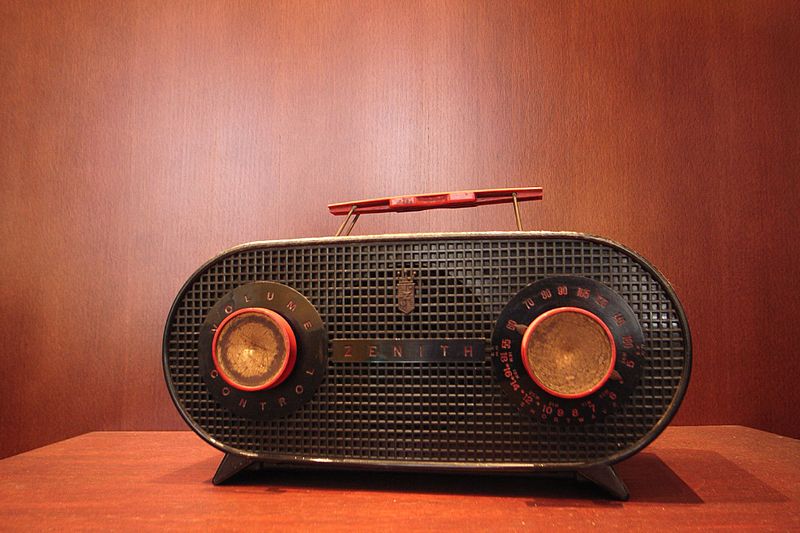
Old_Zenith_Radio_receiver_01But the habit’s initial entry point–the family’s Zenith radio [not the one pictured, but close]–which I once loved but now equate to the method of attacking civilization used in Stephen King’s novel, Cell. i.e., an entry point for evil.

In the early 1970’s I would sit alone and carefully calibrate the dial to pick up 1360 WKAT which carried the Atlanta Braves. My favorite scenario was when they were on the west coast to play the LA Dodgers, as I had the kitchen to myself with no pesky human witnesses to impede my assault on the fridge [the roaches were unamused]. If we are keeping score, that’s two more bad habits–staying up late and snacking–which arrived through the portal.

Over the years, the disease host [Zenith] easily morphed its way onto cable television. In the early morning hours of July 5th 1985, I experienced a crack-like hit. The glorious baseball game which began with and endured two hours of rain delays, lasted an actual six hours, ended at 4 am, had a player hit for the cycle and saw the Atlanta Braves hit two two-out game-tying home runs in extra innings. Afterwards, the Braves stadium people, clearly in a sleep-deprived decision-making mode, went ahead and emptied out their fireworks, which resulted in numerous 911 calls in the Atlanta area.

The second of those two-out home runs was hit by a middle relief pitcher who had the worst career batting average of any active MLB player when he stepped up to the plate in the bottom of the 18th inning, his name was Rick Camp. Camp hit the home run on an 0-2 count. Often, when I hear one of those jokes about people wasting their Genie-granted wishes on less than miraculous things, I think of that home run.

I was watching and I knew I had just seen one of the most amazing sports-related things ever. But it must have been around 3:30 am, there was no one who I could turn to or call. I walked outside my Little Havana house on the possibility that there was someone else watching who needed to have another human being confirm what they had just seen. There was no one and besides that, I was quickly reminded that I didn’t live in the safest of neighborhoods.

What I saw when I walked back inside made this the greatest game ever. The Mets scored 5 runs in the top of the 19th inning. Now I know the Camp 18th inning home run is the main thing here, so if the game had ended with the Braves going 3-up and 3-down, it’s still gotta be one of the top 5 games ever, no doubt. But what happened next makes it #1 and if you disagree you’re probably the type of person who thinks public employee unions are a good thing for democracy.

The Braves had two outs with a runner on second. Then, walk, walk, single and the tying run comes up to the plate in the person of Rick Camp. Again an 0-2 count. This time he strikes out. I was standing up and not breathing during his at-bat. Greatest game ever, case closed.

The unproductive activity I alluded to earlier is watching or listening to the end of sporting events involving teams I root for which will almost certainly [98% probability] result in defeat, i.e. I’m not even counting close or interesting games. The irrational fear is the fear of missing any comeback. Missing any comeback is annoying, missing a great comeback is anathema. Fortunately, I have only one other irrational [plenty of rational ones] fear in life, that is being outside of Miami the day Fidel Castro suffers a violent and agonizing [OK, … any kind of] death.

Recently the Marlins had one of those comebacks against the Arizona Diamondbacks. It was a comeback on steroids with 14 unanswered runs, culminated with a 10-run eight inning. It was the 3rd time in MLB history that a team had come from 7 runs down and won by at least 7 runs. I missed the comeback. I didn’t just miss it, I missed it in the most egregious of manners. I gave up on the game based on the time and score [down 7 in the 5th]. I turned my back on what may be the highlight of the season for what? A little extra sleep? Taking the easy way out has left an empty feeling. This must be what it feels like to vote for Democrats.

Thank goodness Bluto and Otter weren’t around to see it:

D-Day (Bruce McGill): War’s over, man. Wormer dropped the big one.

Bluto: Over? Did you say “over”? Nothing is over until we decide it is! Was it over when the Germans bombed Pearl Harbor? Hell no!

Otter (Tim Matheson): [whispering] Germans?

Boon (Peter Riegert): Forget it, he’s rolling.

Bluto: And it ain’t over now. ‘Cause when the goin’ gets tough… [thinks hard] the tough get goin’! Who’s with me? Let’s go! [runs out, alone; then returns] What happened to the Delta I used to know? Where’s the spirit? Where’s the guts, huh? “Ooh, we’re afraid to go with you Bluto, we might get in trouble.” Well just kiss my ass from now on! Not me! I’m not gonna take this. Wormer, he’s a dead man! Marmalard, dead! Niedermeyer –

Otter: Dead! Bluto’s right. Psychotic, but absolutely right. We gotta take these bastards. Now we could do it with conventional weapons that could take years and cost millions of lives. No, I think we have to go all out. I think that this situation absolutely requires a really futile and stupid gesture be done on somebody’s part.

Bluto: We’re just the guys to do it.

D-Day: Let’s do it.
Bluto: LET’S DO IT!!
[Chaos ensues–for most of the rest of the movie]

Posted in Miami Marlins & MLB | Tagged , , | Leave a comment

The Blood Within Us: Name That Plasma

President Obama declared that he “has the blood of Africa within” him. This raises a number of troubling, but interesting, questions. How can he differentiate the plasma running through him? Is that part of his specialness or just a gift which most bi-racial or bi-cultural or bifurcating people are born with? Or is this something they test presidents for specifically? Is this a thinly veined slap in the face of those who have had blood transfusions, since they are ignorant as to the origins of their blood? Does he have the blood of Islam running in him as well? Does it hurt? Is it too much blood for one man to bear, even Obama?

My parents and I were born in Cuba and I forcibly exiled [with retroactive assent] at the age of 2. I became a proud US citizen in time to vote for Ronald Reagan in the Republican primary of 1980. Since then, as a O negative blood type, I have given blood on average at least twice a year. The tally of the blood my body has had to reproduce as as an American citizen must be over 50 pints. The average male human body holds about ten pints of blood. Is the blood of the Caribbean which initially ran through me gone forever? Or does some blood not circulate as readily, sticking to certain areas or arteries like mayonnaise to the round part near the top of the jar which cannot be reached with a knife? Is this why my wife thinks I need an EKG? Could a good frijoles diet bring it back?

But enough about me. Can Obama sense when his Kansas blood is trying to take the lead? Can he will it back to a secondary role? Does he fear black people when that happens. Does he regret criticizing his Grandmother for electoral benefits when his own K-blood is ascendant? Which Continent’s blood typically doesn’t boil? Can Michelle tell what kind of bloody mood he’s in? Is he literally paler on those occasions? Deep down, is he afraid of Michael Jackson comparisons at that point?

Can Obama have cleverly stumbled upon a new ad campaign to encourage blood donations? Say someone has Spanish blood, but wish to be rid of it, to protest Alberto Contador’s attack on Lance Armstrong at the end of the 7th stage of the Tour de France. Could Blood Banks pretend to assure that person that they would only withdraw that Spanish blood? Who could prove otherwise?

It is so much fun having a transformational leader as president. The possibilities — like his need to speak in somber tones in front of people who aren’t really listening, but just thinking, ‘holy shit, that black guy is the President of the United States!’ — are endless.

Tagged , | Leave a comment

Houduran Policy Failure: Lack of Imagination?

I had earlier posts which pointed out absurdity of the Obama administration getting tough with Honduras while appeasing Iran and how they were in effect advocating that Hondurans, who opposed the Zelaya and Chavez efforts to undermine their democracy, should stand down and hope that the illegal referendum would fail.

The Obama administration’s rationale for their decision was supposedly based on the legality of how Zelaya was removed, i.e. deported to Costa Rica. In an opinion article in the Los Angeles Times, Honduran-born attorney Miguel Estrada points out something which should have been evident as well to the Obama administration, namely that Zelaya has the right to return to Honduras, but not the presidency. Estrada’s argument:

It would seem from this that Zelaya’s arrest by the military was legal, and rather well justified to boot. But, unfortunately, the tale did not end there. Rather than taking Zelaya to jail and then to court to face charges, the military shipped him off to Costa Rica. No one has yet explained persuasively why summarily sending Zelaya into exile in this manner was legal, and it most likely wasn’t.

This illegality may entitle Zelaya to return to Honduras. But does it require that he be returned to power?

No. As noted, Article 239 states clearly that one who behaves as Zelaya did in attempting to change presidential succession ceases immediately to be president. If there were any doubt on that score, the Congress removed it by convening immediately after Zelaya’s arrest, condemning his illegal conduct and overwhelmingly voting (122 to 6) to remove him from office. The Congress is led by Zelaya’s own Liberal Party (although it is true that Zelaya and his party have grown apart as he has moved left). Because Zelaya’s vice president had earlier quit to run in the November elections, the next person in the line of succession was Micheletti, the Liberal leader of Congress. He was named to complete the remaining months of Zelaya’s term.

It cannot be right to call this a “coup.” Micheletti was lawfully made president by the country’s elected Congress. The president is a civilian. The Honduran Congress and courts continue to function as before. The armed forces are under civilian control. The elections scheduled for November are still scheduled for November. Indeed, after reviewing the Constitution and consulting with the Supreme Court, the Congress and the electoral tribunal, respected Cardinal Oscar Andres Rodriguez Maradiaga recently stated that the only possible conclusion is that Zelaya had lawfully been ousted under Article 239 before he was arrested, and that democracy in Honduras continues fully to operate in accordance with law. All Honduran bishops joined Rodriguez in this pronouncement.

True, Zelaya should not have been arbitrarily exiled from his homeland. That, however, does not mean he must be reinstalled as president of Honduras. It merely makes him an indicted private citizen with a meritorious immigration beef against his country.

That strikes me as a very good argument, the kind of argument that an American administration should have been making to avoid aligning themselves with Ortega, Chavez and Castro on this issue. The question is, did the Obama administration reject this argument or is it that they didn’t have the smarts or experience to make it in the first place?

As Leon Wieseltier has pointed out, ‘the learning curve of an American president is the insult that history adds to the injury of those who are dependent upon that leadership.’ In this case, the best possible interpretation of how the Obama administration acted with respect to Honduras is that they were unprepared. Otherwise, their actions reflect an unfortunate degree of comfort in siding with our enemies in the region.

Post-post – July 13 – Estrada’s article was also highlighted by Jennifer Rubin from Pajamas Media.

Estrada’s opinion article is copied in full at end of post.

—————————————————————————-
Los Angeles Times
Opinion / Honduras’ non-coup
Under the country’s Constitution, the ouster of President Manuel Zelaya was legal.
By Miguel A. Estrada
July 10, 2009

Honduras, the tiny Central American nation, had a change of leaders on June 28. The country’s military arrested President Manuel Zelaya — in his pajamas, he says — and put him on a plane bound for Costa Rica. A new president, Roberto Micheletti, was appointed. Led by Cuba and Venezuela (Sudan and North Korea were not immediately available), the international community swiftly condemned this “coup.”

Something clearly has gone awry with the rule of law in Honduras — but it is not necessarily what you think. Begin with Zelaya’s arrest. The Supreme Court of Honduras, as it turns out, had ordered the military to arrest Zelaya two days earlier. A second order (issued on the same day) authorized the military to enter Zelaya’s home to execute the arrest. These orders were issued at the urgent request of the country’s attorney general. All the relevant legal documents can be accessed (in Spanish) on the Supreme Court’s website. They make for interesting reading.

What you’ll learn is that the Honduran Constitution may be amended in any way except three. No amendment can ever change (1) the country’s borders, (2) the rules that limit a president to a single four-year term and (3) the requirement that presidential administrations must “succeed one another” in a “republican form of government.”

In addition, Article 239 specifically states that any president who so much as proposes the permissibility of reelection “shall cease forthwith” in his duties, and Article 4 provides that any “infraction” of the succession rules constitutes treason. The rules are so tight because these are terribly serious issues for Honduras, which lived under decades of military rule.

As detailed in the attorney general’s complaint, Zelaya is the type of leader who could cause a country to wish for a Richard Nixon. Earlier this year, with only a few months left in his term, he ordered a referendum on whether a new constitutional convention should convene to write a wholly new constitution. Because the only conceivable motive for such a convention would be to amend the un-amendable parts of the existing constitution, it was easy to conclude — as virtually everyone in Honduras did — that this was nothing but a backdoor effort to change the rules governing presidential succession. Not unlike what Zelaya’s close ally, Hugo Chavez, had done in Venezuela.

It is also worth noting that only referendums approved by a two-thirds vote of the Honduran Congress may be put to the voters. Far from approving Zelaya’s proposal, Congress voted that it was illegal.

The attorney general filed suit and secured a court order halting the referendum. Zelaya then announced that the voting would go forward just the same, but it would be called an “opinion survey.” The courts again ruled this illegal. Undeterred, Zelaya directed the head of the armed forces, Gen. Romeo Vasquez, to proceed with the “survey” — and “fired” him when he declined. The Supreme Court ruled the firing illegal and ordered Vasquez reinstated.

Zelaya had the ballots printed in Venezuela, but these were impounded by customs when they were brought back to Honduras. On June 25 — three days before he was ousted — Zelaya personally gathered a group of “supporters” and led it to seize the ballots, restating his intent to conduct the “survey” on June 28. That was the breaking point for the attorney general, who immediately sought a warrant from the Supreme Court for Zelaya’s arrest on charges of treason, abuse of authority and other crimes. In response, the court ordered Zelaya’s arrest by the country’s army, which under Article 272 must enforce compliance with the Constitution, particularly with respect to presidential succession. The military executed the court’s order on the morning of the proposed survey.

It would seem from this that Zelaya’s arrest by the military was legal, and rather well justified to boot. But, unfortunately, the tale did not end there. Rather than taking Zelaya to jail and then to court to face charges, the military shipped him off to Costa Rica. No one has yet explained persuasively why summarily sending Zelaya into exile in this manner was legal, and it most likely wasn’t.

This illegality may entitle Zelaya to return to Honduras. But does it require that he be returned to power?

No. As noted, Article 239 states clearly that one who behaves as Zelaya did in attempting to change presidential succession ceases immediately to be president. If there were any doubt on that score, the Congress removed it by convening immediately after Zelaya’s arrest, condemning his illegal conduct and overwhelmingly voting (122 to 6) to remove him from office. The Congress is led by Zelaya’s own Liberal Party (although it is true that Zelaya and his party have grown apart as he has moved left). Because Zelaya’s vice president had earlier quit to run in the November elections, the next person in the line of succession was Micheletti, the Liberal leader of Congress. He was named to complete the remaining months of Zelaya’s term.

It cannot be right to call this a “coup.” Micheletti was lawfully made president by the country’s elected Congress. The president is a civilian. The Honduran Congress and courts continue to function as before. The armed forces are under civilian control. The elections scheduled for November are still scheduled for November. Indeed, after reviewing the Constitution and consulting with the Supreme Court, the Congress and the electoral tribunal, respected Cardinal Oscar Andres Rodriguez Maradiaga recently stated that the only possible conclusion is that Zelaya had lawfully been ousted under Article 239 before he was arrested, and that democracy in Honduras continues fully to operate in accordance with law. All Honduran bishops joined Rodriguez in this pronouncement.

True, Zelaya should not have been arbitrarily exiled from his homeland. That, however, does not mean he must be reinstalled as president of Honduras. It merely makes him an indicted private citizen with a meritorious immigration beef against his country.

Miguel A. Estrada is a partner at the Washington office of Gibson, Dunn & Crutcher. A native of Honduras, he was a member of the official U.S. delegation to President Zelaya’s 2006 inauguration.
http://www.latimes.com/news/opinion/la-oe-estrada10-2009jul10,0,1570598.story
———————————————————————

Tagged , , | Leave a comment

Hondurans of Faith: Into the Breech

I watched HBO’s ‘Into the Storm‘ over the weekend. The film is a historical drama about British Prime Minister Sir Winston Churchill during World War II. The part of the film which presented the dilemma facing Churchill as to whether to negotiate with the Germans or fight against great odds was especially moving. Churchill’s answer:

Even though large tracts of Europe and many old and famous States have fallen or may fall into the grip of the Gestapo and all the odious apparatus of Nazi rule, we shall not flag or fail. We shall go on to the end, we shall fight in France, we shall fight on the seas and oceans, we shall fight with growing confidence and growing strength in the air, we shall defend our Island, whatever the cost may be, we shall fight on the beaches, we shall fight on the landing grounds, we shall fight in the fields and in the streets, we shall fight in the hills; we shall never surrender, and even if, which I do not for a moment believe, this Island or a large part of it were subjugated and starving, then our Empire beyond the seas, armed and guarded by the British Fleet, would carry on the struggle, until, in God’s good time, the New World, with all its power and might, steps forth to the rescue and the liberation of the old.

People of a similar faith in democracy — Hondurans who opposed former President Zelaya’s efforts to replicate a Chavez-stlye subversion of their democracy in Honduras — faced a difficult decision recently. They also choose to fight. Fighting in their case meant acting — although the Honduran constitution did not offer direction over how to handle a standoff between the president and other parts of the government — rather than hoping that Zelayo and his ally Chavez would either act with restraint or fail.

What happened? In what irresponsible way did they act so as to cause the American president to label their actions ‘not legal’ and place the US on the side of Ortega, Chavez and Castro in the dispute?

Here are the list of events:

  • In Honduras, a constituent assembly can only be called through a national referendum approved by its Congress.
  • Then President Zelaya, declared a national referendum on his own and had Hugo Chávez ship him ballots from Venezuela.
  • The Honduran Supreme Court ruled his referendum unconstitutional, and it instructed the military not to carry out the logistics of the vote as it normally would do.
  • The attorney general also made clear that the referendum was illegal, and he announced that he would prosecute anyone involved in carrying it out.
  • The top military commander, Gen. Romeo Vásquez Velásquez, told the president that he would have to comply.
  • Mr. Zelaya fired him.
  • The Supreme Court ordered him reinstated. Mr. Zelaya refused.
  • Mr. Zelaya led a mob that broke into the military installation where the ballots from Venezuela were being stored and then had his supporters distribute them in defiance of the Supreme Court’s order.
  • Mr. Zelaya was arrested by the military and exiled to Costa Rica.

So why aren’t the Hondurans who acted being celebrated like those who stood up to Nixon in the Saturday Night Massacre? The reason is that the Honduran constitution does not offer a clear direction on how to handle disputes between the president and other branches of the government. So what were they supposed to do? Please pay special attention to those who criticize Honduras for their actions. What are they suggesting should have occurred?

Here is an example from the Economist magazine, which criticized the removal of Zelaya. Here is their recap and criticism:

Even so, there is no evidence of Hondurans clamouring for the president’s return with anything like the enthusiasm of outsiders.

That is because most have tired of his rule, and blame him for the constitutional crisis that preceded the coup. It was precipitated by his attempt to emulate Mr Chávez by organising a referendum to call a constituent assembly, which he seemed to hope would allow him to remain in power beyond January, when his four-year term ends. Under Honduras’s constitution, only Congress can call referendums and it was against one. Mr Zelaya went ahead anyway. When the head of the armed forces refused to carry out an order to distribute the ballot papers, the president sacked him. The Supreme Court reinstated the general, and the electoral tribunal ordered the ballots to be confiscated. In response, Mr Zelaya led a group of supporters to an air force base where they carted off the ballots. He instructed public employees to collect signatures for the constituent assembly. Hours before voting was to begin, the army seized the president.

The army said he was arrested for defying the Supreme Court, though no explanation has been given for why he was not brought before a Honduran judge. The legislature then voted almost unanimously to install Mr Micheletti, a Liberal rival of Mr Zelaya, as his successor. Congress has no constitutional power to remove the president. Mr Micheletti produced a curiously worded resignation letter which Mr Zelaya denies having written or signed.

That’s it, they go no further in their analysis. Even in a magazine editorial, the left seems to lack the courage of their convictions. The Economist, like our President, are oh so gutless in this case. Gutless because they step up to the breech in their criticism and then fall back silently. Knowing the political pitfalls of spelling out their alternative.

So most critics implicitly suggest what they realize would look and sound terrible if spelled out. Here it is; What they believe Hondurans should have done was to not act, allow events to unfold and hope that Zelaya and Chavez would fail in their efforts. That is the position of the Miami Herald as well – they editorialized:

Congress could have ignored the outcome and stepped up preparations for scheduled presidential elections in November. It could have impeded the referendum by less drastic means that upheld the rule of law.

Maybe. If you are a Honduran who believes in democracy, that ‘maybe’ is not as appealing as it to those who sit in genteel offices overlooking the Arsht Center and Biscayne Bay. Given the examples of Nicaragua and Venezuela, Hondurans understandably moved to act with something more definite than ‘ignoring outcomes of elections.’ The spirit of Lord Halifax is alive and well in many places today, unfortunately, that includes our White House. That is not bad news everywhere, Iranian religious zealots and tyrants are thrilled.

The WSJ’s Mary Anastasia O’Grady, writes of the primary phrase found in the hundreds of emails from Hondurans, ‘please pray for us.’ We would do well to do so for many reasons, not the least of which would be Pastor Martin Niemöller’s rationale:

In Germany, they came first for the Communists, And I didn’t speak up because I wasn’t a Communist;

And then they came for the trade unionists, And I didn’t speak up because I wasn’t a trade unionist;

And then they came for the Jews, And I didn’t speak up because I wasn’t a Jew;

And then… they came for me… And by that time there was no one left to speak up.

Tagged , , , | 1 Comment

Obama: The Un-Ugly American Wannabe

When I read Leon Wieseltier’s description of President Obama’s mindset, it was one of those moments when you realize that someone who had been seeing and reading the same things I had, was able to articulate it in a way that helped me make sense of what at times seems incomprehensible. Leon Wieseltier on Barack Obama:

I do not agree that Obama’s diffidence about liberation and human rights is owed entirely to a fear of nuclear proliferation. He has another commitment. He is determined to be the un-ugly American. This excites him. He is consecrated to an engagement with the Muslim world, which is not entirely consistent with a consecration to democracy. Even as the brutality of the ayatollahs was increasing, Obama made a point of referring graciously to “the Islamic Republic of Iran,” as if it would be a slander against Islam or Iran to refer to the regime in a less legitimating manner. (The commentators are declaring a “crisis of legitimacy” in Iran, but there can be no crisis of legitimacy where there is no legitimacy.) Why does Obama care so much for Khamenei’s good opinion? Khamenei will blame the West whatever the West does, because he believes that the West is forever to blame. Khamenei responded to Obama’s rapture in Cairo with this. And soon, if he is to act according to his plan, Obama will have to sit down with Ahmadinejad. Perhaps he will shake his hand. Perhaps he will he wear a green tie. There are many ways for an American to be ugly or un-ugly. The hearts of millions are about to be broken. They will look to the president of the United States. Will his mincing cease? Will the realist get real? In recent days Obama has begun–not under pressure, of course–to “condemn” and to “deplore.” The oppressed people of Iran may now endure what other oppressed peoples have endured: the learning curve of an American president. It is the insult that history adds to their injury.

Wieseltier’s article is copied in full at end of post.

—————————————————————————-
The Long Arc – Leon Wieseltier – The New Republic – Published: July 15, 2009

On a rainy day in 1993, I sat with my parents at the opening ceremonies of the Holocaust Museum and heard President Clinton, who was doing nothing to stop the genocide in Bosnia, suggest that the genocide in Bosnia must be stopped, because never again can we allow genocide to occur. My mother laconically whispered that “he talks about Bosnia as if he is somebody else.” I was reminded of her distinction between the president and the rest of us when I read a piece on this magazine’s website by my haver Michael Walzer, who made the same distinction but for the opposite end. He wished to exonerate the president. His subject was President Obama’s stony reluctance to condemn the Iranian regime’s theft of the election and its repression in the streets. “What Obama says must be guided by what he has to do,” Walzer wrote, referring to the challenge of the nuclearization of Iran. “The rest of us are much freer.” And so “we need to be clear about who we are and what we stand for and why we oppose the religious zealots and tyrants who have ruled Iran for the last decades.” But the president need express, or teach, no such clarity. “Heads of state,” who can “defend political principles” if they wish, “have other things to do.” This was the stirring slogan of Walzer’s exemption of the president from moral leadership in the midst of one of the greatest explosions of democratic energy in our time: “For liberals and leftists–opposition and nothing else; for state diplomats–handshakes and negotiations.”

March, for that? I admit that the condition of the American left matters less to me than the condition of the Iranian resistance. And Walzer was hardly the only liberal making bleak excuses for Obama’s zealous refusal to show any zeal. We shall not be moved, indeed. But Walzer got it exactly backward. If all of us support the dissidents but the president does not, the dissidents have an American problem. If none of us support the dissidents but the president does, the dissidents do not have an American problem. And either way, the president is “meddling.” Obama’s parsimonious performance in the first weeks of the rebellion in Tehran, the disappearance of his eloquence and his championship of change, was an attempt by the president to impersonate the rest of us, to be just another saddened consumer of tweets and feeds. Hence his refrains about “bearing witness” and “the world is watching.” That is uplift for a demonstration, or a vigil. Witnessing and watching are varieties of passivity. The rest of us witness and watch, because we can do little else. (Hitting “send” is not a muscular form of political action.) Obama seems to think that there is some force in the admonition that the world is watching; but history plentifully demonstrates that when the world is watching, all the world does is watch. His worst moment came when he hid behind Martin Luther King, Jr.: “What we can do is bear witness and say to the world that the incredible demonstrations that we’ve seen is a testimony to–I think what Dr. King called the arc of the moral universe. It’s long but it bends towards justice.” The president was counseling patience, and it always looks so unwise, so impetuous, to be against patience. But King was not patient with injustice. And when it came to his own campaign, to his own hunger, Obama did not cite King on the long arc of justice. He cited King on the fierce urgency of now.

With their defense of Obama’s dilatoriness about the revolt in Tehran, American liberals compromised themselves. They succumbed to the Council on Foreign Relations view of the world. So it is important to be clear that the strong articulation of American principles by the American president when those principles are being bravely upheld by a people in revolt against a dictator–this is not only a statement of emotion, it is also an element of strategy. It emboldens the right side. It allies the United States with peoples against regimes, which is almost always the surest foundation for the American position. (I am not an Iran expert, unlike almost everyone I meet, but I find it hard to imagine that the young men and women suffering the blows of the Basij would not welcome our support, that they are in the streets with angry thoughts of Mossadegh. If these events have shown anything, it is that their enemy and our enemy are the same.) There is nothing more sweepingly in the interest of the United States in the Middle East than the withering away of the theocracy in Iran. Every blow struck against the structure of state power in Iran is a blow struck against Hezbollah and Hamas; and a blow has at last been struck. This is one of those instances in which our planners may have some use for our principles. I understand the urgency of the nuclear issue, of course. I doubt that those centrifuges will be negotiated away; but if there is any hope for diplomacy, it lies in a political transformation in Tehran.

I do not agree that Obama’s diffidence about liberation and human rights is owed entirely to a fear of nuclear proliferation. He has another commitment. He is determined to be the un-ugly American. This excites him. He is consecrated to an engagement with the Muslim world, which is not entirely consistent with a consecration to democracy. Even as the brutality of the ayatollahs was increasing, Obama made a point of referring graciously to “the Islamic Republic of Iran,” as if it would be a slander against Islam or Iran to refer to the regime in a less legitimating manner. (The commentators are declaring a “crisis of legitimacy” in Iran, but there can be no crisis of legitimacy where there is no legitimacy.) Why does Obama care so much for Khamenei’s good opinion? Khamenei will blame the West whatever the West does, because he believes that the West is forever to blame. Khamenei responded to Obama’s rapture in Cairo with this. And soon, if he is to act according to his plan, Obama will have to sit down with Ahmadinejad. Perhaps he will shake his hand. Perhaps he will he wear a green tie. There are many ways for an American to be ugly or un-ugly. The hearts of millions are about to be broken. They will look to the president of the United States. Will his mincing cease? Will the realist get real? In recent days Obama has begun–not under pressure, of course–to “condemn” and to “deplore.” The oppressed people of Iran may now endure what other oppressed peoples have endured: the learning curve of an American president. It is the insult that history adds to their injury.

Leon Wieseltier is The New Republic’s literary editor.
———————————————————————

Tagged | Leave a comment

Happy Independence Day!

Posted in Current Affairs & History | Tagged | Leave a comment