Tearing whose world apart?

There is a Rolling Stones song from 1973 which described tragedies involving crime and drugs which I thought was a very effective form of protest. Be they aware or not, they were following a noble tradition of artists giving voice to the oppressed and victimized. Over time those type of concerns might predictably give way to maintaining careers, parenthood, copyright infringement and rehab. But they could always look back on their ‘caring’ years with a palpable wistfulness. ‘Sure, I may have sold out over time,’ they implicitly tug at you to understand, ‘but there was a time….’

That was then.  The entertainment industry today embraces the state.  Somewhere between seeing their ideas and candidates win elections, the rants against injustice have given way to an aggressive advocacy for expanding the role of government. Seemingly no public policy failures–high rates of poverty, abortions, inner-city unemployment, single-parent families, failed public schools etc–are enough to question the effectiveness of relying on the state to address those problems.

I think it fair to say that the only world angry artists want to tear apart today is one which acknowledges Judeo-Christian values as key to a just society. In its place, a secular sense of fairness, undefined [naturally] and enforced by the federal government. The Leviathan with a friendly face [for now], who heroically does battle vs. those pesky spiritual subjects.

The tragedies of everyday life continue to be confronted those who have always done so, parents and people of faith through their personal involvement and religious institutions. The rest are posers because they have no skin in the game. To put the fate of the neediest in the hands of those whose care for them is based on a salary and patronage, is to encourage the status quo.

A proverb notes that time reveals a person’s heart. Almost 40 years later, when I hear the song ‘Doo Doo Doo Doo Doo (Heartbreaker),’ I am reminded of heartbreakers, but they ain’t cops.

Continue reading

Posted in Entertainment | Leave a comment

Gabriel’s inbox

Annunciation by El Greco

Annunciation by El Greco

The note was to the point, “See Me.” It was not like the angel Gabriel had to go somewhere to meet God. Obviously, He could just appear. No, this had to be about his meeting with Zacharias.  So while Angels were always warned not to replay their interactions with humans, now he really couldn’t help it.

Gabriel thought he had prepared well, waited for the perfect moment and appeared next to Zacharias at the altar. Here’s how King James [the other one, the one in the 17th century] described it:

And when Zacharias saw him, he was troubled, and fear fell upon him. But the angel said unto him, Fear not, Zacharias: for thy prayer is heard; and thy wife Elisabeth shall bear thee a son, and thou shalt call his name John. And thou shalt have joy and gladness; and many shall rejoice at his birth. For he shall be great in the sight of the Lord, and shall drink neither wine nor strong drink; and he shall be filled with the Holy Ghost, even from his mother’s womb. And many of the children of Israel shall he turn to the Lord their God. And he shall go before him in the spirit and power of Elias, to turn the hearts of the fathers to the children, and the disobedient to the wisdom of the just; to make ready a people prepared for the Lord.

Then it happened. Zacharias interrupted Gabriel.

And Zacharias said unto the angel, Whereby shall I know this? for I am an old man, and my wife well stricken in years

Apparently Gabriel’s preparation was one ‘shalt not’ short, as in ‘thy shall not speak until frogs fly or there is some morsel of knowledge that bipeds could possibly ever acquire before those of us who hang with God–on our off days!–would not already know. Yeah I’m hanging on your every thought there Zach.’  For those who knew Gabriel, head-strong, talking loud … what came next was not a surprise.

And the angel answering said unto him, I am Gabriel, that stand in the presence of God; and am sent to speak unto thee, and to shew thee these glad tidings. And, behold, thou shalt be dumb, and not able to speak, until the day that these things shall be performed, because thou believest not my words, which shall be fulfilled in their season.

OK that reads stronger than it sounded at the time, Gabriel thought. People forget, angels are messengers, not saints. He had a message for Zacharias and delivered it. After all, this wasn’t his first rodeo. At least Daniel had sense enough to just listen. He had found Zacharias’ response a tad grating and meted out proportional punishment. A little time-out from speaking. What, that’s now the thin edge of the fascist wedge? What is our world coming to, he thought, when angels are more old school than God.

God: Gabriel?
Gabriel: [eyes down, palms up and slowly rising]
God: Glad you are ready. I have another.

EWTN’s fact or fiction about Angels.

Posted in Catholic Faith & Inspiration | Tagged , | 1 Comment

What Cuban American views on the embargo and global warming have in common

What do Cuban American views on the embargo and global warming have in common? They are shifting at about the same pace, 1.3° per century. Think about it, there has been a U.S. foreign policy position in place for over 50 years and its opponents are reduced to grasping for signals in the most recent post-election polls.

Poor fellow travelers. After all their efforts, their assets now consist on a pair of octogenarian dictators in fluctuating states of lucidity and a third riddled with cancer. What to do? How about planting an article about how the embargo’s days are numbered? To paraphrase Michael’s question to Tom Hagen, ‘we have newspaper people on the payroll, don’t we?’

I feel as though I am living the Miami version of Groundhog Day meets The Exorcist. In this sequel, Phil Connors finds a different way out of the time loop by having the curse transferred to the lovely town of Punxsutawney [‘take them, take them!’] instead. His yearly visits now require him to pretend to take seriously the townspeople who assure him that the embargo is losing support.

In Sunday’s Miami Herald, a young AP reporter, Christine Armario, must have been up next on the assignment desk when the call from the fellow travelers came in and had to take one for the team. ‘Call these people Christine, the thing will write itself, trust us, we do this every so often.’ The bias I allege is not because pro-embargo views are not presented in the article. The bias I allege comes in the lack disclosure about those giving their anti-embargo views. My specifics:

  • Armario notes “… said Tomas Bilbao, executive director of the nonpartisan Cuba Study Group.” The “nonpartisan” reference is misleading, it suggests academics merely following the facts, not people with an agenda. The main purpose of the Cuba Study Group can accurately be described as seeing the embargo discontinued.
  • If you think it a minor point–having partisans described as nonpartisans–the consistency with which journalists attempt to do so, suggest that it is of great worth.  The mythical ‘nonpartisan expert’ is the go to move for those who seek to manipulate on the cheap. Click here for a sampling of go to moves by the New York Times since 2000.
  • Tim Ashby wrote an opinion piece in 2010 for Travel Industry Wire [owned by Orbitz, more on that later] which advocated lifting the embargo. Armario described Ashby as “a former Commerce Department official and lawyer who counsels companies on Cuba law and trade” and then enlisted his prediction on the fate of the embargo. You will not be surprised that his prediction did not bode well for the embargo.
  • Julia Sweig is quoted. Ms Sweig is always quoted because she is the most reliable Castro apologist in the mainstream media. Ever wonder how Cuba, Orbitz, the Council on Foreign Relations, the Blackstone Group and Julia Sweig are related–I know you don’t, just play along–the answer is Peter G. Peterson.
  • Sarah Stephens, who was not quoted, is another reliable Castro apologist, at least according to The Washington Post. Examples from Sept 2010 and May 2009. Ms Armario, be honest now, was Sarah on vacation?

Given that the Miami Marlins may be open to riskier marketing ideas–the freedom that comes with no fans left to lose–I’d like to suggest a new entry into the late-inning theme park-sized characters race. [Fear not Q, the Lobster would only be reassigned]. Here’s my version of the public-address announcer’s revised script:

Coming down the right field line we have Cuban American views on the embargo [huge duffel bag named Gusa] and global warming [Clevelander dancer in bikini and 52 inch heels named Coño] running neck and nekid … Gusa and Coño still even … But wait, who’s that coming down the right field foul line like a bat into hell … why it’s Hugo [character resembling a greyhound with a map of Cuba replacing the carrot] desperately seeking approval.  Maybe in next realm Hugo [don’t bet on it].

The Armario article is copied in full at end of post, courtesy of your non-nonpartisan blogger.

Continue reading

Posted in Cuba | Tagged , , , , | 1 Comment

Lost in the land of Lincoln, don’t send help

split railsA 4th grade reading assignment begat a heated argument with a girl with glasses who I knew was smarter than me but wrong on the issue [so much has changed] of the greatest president; And heated argument begat trip [50 yards] to the Citrus Grove elementary school’s oval library; And Citrus Grove library begat some biography which had a picture of Lincoln swinging an ax; And some biography begat an exact memorization of the Gettysburg Address; And exact memorization of the Gettysburg Address begat an abililty to give a largely accurate rendition [Abe might say it didn’t stay learnt]; And accurate rendition begat an ability to know someone was reciting the Gettysburg Address once I heard it.

And garage sales with books begat a pilgrimage to the Miami-Dade Public Library’s spectacular annual book sale [coming up now]; and annual pilgrimage begat William Safire’s Freedom; and Safire begat Garry Wills’ Lincoln at Gettysburg; And great buys at book sales begat a desire to never pay retail prices for books I was not reading cover to cover; And my cheapness begat the destruction of local book stores; And said destruction begat guilt; And guilt begat finding Mortimer Adler’s classic, How to Read a Book, which legitimized my reading habits; And Adler begat the death of the girl with glasses back in the 4th grade [only untrue begat]; And guilt assuaged begat Amazon; And Amazon begat Thomas Keneally’s, Abraham Lincoln; And Keneally begat Ronald C. White’s, The Eloquent President. And White begat [only ironic begat] Ken Burn’s The Civil War. And Burns begat Netflix streaming. And Netflix streaming begat a most unexpected, but effective, motivational device; comparing my problems to those faced by my ancestral citizenry.

More recently, the movie Lincoln begat Doris Kearns Goodwin’s audiobook Team of Rivals; And Goodwin begat David Herbert Donald’s Lincoln; And Donald begat a 99 cent ebook, The Complete 7-Volume Papers and Writings of Abraham Lincoln; And that 99 cent ebook begat another 99 cent ebook, The Personal Memoirs of Ulysses S. Grant.

Lincoln’s farewell address at Springfield, 2/11/1861:

My friends, no one, not in my situation, can appreciate my feeling of sadness at this parting. To this place and the kindness of this people I owe everything. Here I have lived a quarter of a century and have passed from a young to an old man. Here my children have been born and one is buried.

I now leave, not knowing when or whether ever I may return, with a task before me greater than that which rested upon Washington. Without the assistance of that Divine Being who ever attended him I can not succeed. With that assistance I can not fail.

Trusting in Him who can go with me and remain with you and be everywhere for good, let us confidently hope that all will yet be well. To His care commending you, as I hope in your prayers you will commend me, I bid you an affectionate farewell.

Posted in Books & Reading | Tagged , , , | Leave a comment

Highly questionable or in the tank?

Graphics by G. Costales

Dan Le Batard’s recent column makes various assertions about the finances of the Miami Marlins which echoes what Jeffrey Loria would have us believe. I don’t know when Le Batard would ever reach the point of skepticism about his Marlins sources, but his patience is impressive. While he is critical of Marlins management on non-financial issues, what he accepts as fact about their finances just doesn’t add up. He wrote:

The team overspent assuming we’d fill the ballpark [#1], which we didn’t, and that meant losing about $40 million [#2] in that calamity of a season…. Unlike Micky Arison, who lost money every year he owned the Heat except last year, Jeffrey Loria doesn’t have enough money [#3] to keep losing $40 million a year even as the ballpark appreciates his and the franchise’s value [#4].

  • #1 – Depends on the meaning of the word ‘fill.’ Marlins stadium capacity is 37,442. To have sold it out, or filled it, would have meant drawing 3 million fans. David Samson is on record with ESPN’s business reporter Kristi Dosh noting that they expected attendance of 2.7 million [89% capacity], or about 500,000 higher than the 2.2 million [73% capacity] it turned out to be. Noting 89% vs 73% capacity may not be sexy, but it sure is more useful for the purposes of determining expected revenues.
  • #2 – The lower than anticipated attendance would not even come close to accounting for a $40 million loss. It is misleading to imply that the 1st year attendance is to blame for dramatically altering the Marlins business model in year 2 of the stadium. Here’s why.

Marlins revenues from gate receipts, as per Forbes, averaged between $15.1 & $16.3 per fan [gate receipts divided by attendance] between 2007 and 2011 [click on spreadsheet within blog post]. Assuming a healthy 25% increase in per fan revenue to $20 per fan in the new ballpark, multiplied times the missing 500,000 fans, equals a nice round $10 million in missing revenue. A more accurate description of what had to occur to make up for the missing fans was to dump Heath Bell’s contract.

On the positive side, its good to know the Marlins are back to discussing the results of their yearly operations.  Let’s hope it’s not a 1 year thing, given that 2013 is looking a lot like 2006 through 2009.

  • #3 – Sloppy and misleading. Does Le Batard know how much money Loria has? Does ‘money’ refer to cash flow as opposed to assets? When exactly would Loria run out of ‘money,’ given the assumed losses? Answering any of those questions would be useful information.  Or is Le Batard suggesting that 1, 2, or even 3 lean years would affect the net profitability of Loria’s MLB investment, given the Revenue Sharing fat years which preceded it and the new ballpark which came after? Here’s what is known:

Continue reading

Posted in Marlins Ballpark & Finances | Tagged , , , , | 1 Comment

Marlins fan pesadilla draws to an end

Graphics by Gabriela Costales

Graphics by G. Costales

Pesadilla is the Spanish word for nightmare and a feminine noun.  For Miami Marlins fans, pesadilla is a particularly accurate description for having our MLB team owned by a Manhattan bred arts dealer who made his bones running Expos out of Montreal. But this nightmare is likely coming to an end soon, since selling the team now constitutes Jeffrey Loria’s best option.

While I believe selling the team makes business sense, personal factors also point to a sale. Being the Marlins owner in 2013 appears to be a miserable use of septuagenarian millionaire’s time. This without even considering potential health issues and whether his spouse–on whom he appears to have about a quarter-century of life head start on–has an opinion about being married to a locally despised figure.

In addition, the Non-Relocation agreement’s penalty for early sale is not significant enough to deter the sale. The additional amount due the County if the team is sold between now and the next operational phase [April 2014], would be around $2 million — assuming a sale price of $450 million — or roughly the equivalent of what a typical Babalao would earn for not managing your team for one season.

Business reasons to sell sooner rather than later:

  1. No factors which would increase that the value of the franchise over the next few years.  The ballpark was a great success, with potential parking and traffic issues proving to be manageable in the 1st year. The expected significant increase in national broadcast contracts would already be factored into any sale negotiation.
  2. No long-term, heck, no commitments period on the team’s payroll. A team paring down salary for profit, would still have keep at least one of their free agent signings for appearances sake if nothing else. When they all were shipped out, that’s how ‘dead’ owners roll.
  3. Attendance – The Marlins drew 2.2 million in the new ballpark and that figure is widely described as both inflated and disappointing for a 1st year stadium. However, Guillen’s Castro comments stifled enthusiasm that the Marlins should have enjoyed at the beginning of the season. Despite that, the Marlins averaged 28,988 during the 1st half of the year [thru July 1st] when their record was at 38-40 — average attendance ended up at 27,400 for the year.  Soon afterwards, the trades of Ramirez,  Sanchez and Infante signaled that ownership had given up on the season. The point is that a case can still be made that MLB in this market is *viable, in comparison with overall MLB attendance. Owning the team past the coming season, could begin to undermine that argument.
    Continue reading
Posted in Marlins Ballpark & Finances | Tagged , , , , | 1 Comment

Confirmed: Obama’s blackness placed in blind trust

Under threat of subpoena based on the Freedom of Information Act, the White House confirmed yesterday that Barack Obama’s cultural blackness was placed in a blind trust beginning during his campaign for president in 2008 and expected to last until he has finalized the financing for his presidential library.

The details of the unprecedented arrangement were released as the result of a video posted by the Daily Caller which set in motion a series of inquiries and accusations. In the 2007 video, Obama can be seen utilizing decidedly different speech patterns from those displayed since his arrival on the national stage in 2008. So jarringly different was that Obama from the one which Americans have come to know, that the White House was forced to disclose the blind trust just to avoid more damaging speculation about whether the more culturally attuned Obama may have been kidnapped at some point.

The cultural blind trust mirrors the type of arrangements utilized for financial assets, however it differs in that there are some exceptions.  The exceptions include, but are not limited to, the following scenarios:

  • ACORN video conference calls
  • Family picnics
  • Non-regional daytime talk shows
  • Playing with pets on White House grounds
  • Pickup basketball games not open to the public
  • Interviews over March Madness bracket selections prior to the Sweet Sixteen round
  • Hosting White House events where the median age of guests is 35 years or less

The above details are sure to fill many presidential biographies in the future. But none of them are what everyone is commenting on today. It turns out the Obama has, for lack of a better phrase, a cultural watchdog whose job it is to ensure that Obama’s blackness is held in check to ensure his reelection.  Towards that end, the cultural attache’s way of notifying Obama that he has ventured into dangerous territory is to have songs from a certain artist piped through the White House.

The artist is … Barry B. White … oh baby.

Posted in Current Affairs & History | Tagged , | 2 Comments

Kindred spirits: Sgt Brody and our president?

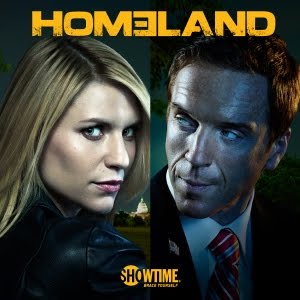
As I watched the season finale of the Showtime Homeland series, I couldn’t help wonder what like-minded souls thought of Sgt. Brody’s clever rationalization for his inability to detonate the bomb which would have killed the VP [and the show’s future]. Brody’s initial plea to live, spoken to a fellow traitior, is based on an idea to “influence policy,” which the Islamofascist Abu Nazir repackages as, “why kill a man when you can kill an idea.”

Which begs the question, what policy or ideas would Islamofascists be interested in killing or promoting? I can think of a couple of obvious ones:

  • Diminish the concept of American exceptionalism – Charles Murray article and on Youtube with Dennis Prager
  • Minimize the role of Muslims and Islam in actual terrorist activities – see here and here

Similarities between Sgt Nicholas Brody and the most Islamic Christian you’ll ever meet:

  • Neither can pray publicly
  • Adored by those who don’t know them – Dinesh D’Souza’s efforts aside
  • Must eschew more radical tactics advocated by their mentors
  • Disciplined to not reveal real thoughts or emotions
  • Hounded by unstable woman

Homeland series links:

Posted in Entertainment | Tagged , , | Leave a comment

The Butterfly Effect and C.S. Lewis

On September 19th, 1931, after an intense conversation with J.R.R. Tolkien, C.S. Lewis became a Christian. I humbly suggest that the Butterfly effect from that stage of his conversion — an earlier stage included a necessary pit-stop at Theism for the former atheist — may be the most consequential wing flap by a layperson in all of Christendom.

For me, Lewis the revelation – in reading Lewis, there are actual moments where I literally pause to appreciate the wave of grace lapping up from the pages – has turned into Lewis the daily inspiration. Largely due to Lewis, I now view what I previously considered seemingly inconsequential daily decisions as either moving me towards or away from God, period. We wish that it were otherwise, that there were ponderous and weighty gray areas. I now see those gray areas largely as effective lies courtesy of The Enemy, to coin a phrase.

Taking a que from Albert Brooks, ‘Defending Your Life,’ I picture Lewis’ ‘trial’ as having ended up as a unabashed celebration of faith as a seemingly endless stream of people recall the book, passage, verse, sentence or radio broadcast which most helped strengthen their faith. In my case, the cumulative effect of Mere Christianity and The Screwtape Letters.

Can you imagine what it felt like to be in Lewis’ shoes at that trial? St Catherine of Siena likely knew what Lewis would experience when she wrote, “All the way to heaven is heaven, for He [Jesus] said, ‘I am the Way.'”

Posted in Catholic Faith & Inspiration | Tagged , , , , , | Leave a comment

Who defends food rationing?

There is a delicious article in the Foreign Policy magazine by Michael Moynihan which highlights the lengths to which people will go to assuage their ideological positions.

So who defends food rationing? Travel guidebooks who are trying to find an ideologically sympathetic explanation for the failure of leftist and/or anti-American regimes to provide basic needs to their people – an excerpt:

… Cubans don’t just walk; they glide, sauntering rhythmically through the timeworn streets like dancers shaking their asses to the syncopated beat of the rumba. Maybe the secret is in the food rationing.

The article highlights the two top-selling travel guidebooks — named Lonely Planet and Rough Guides — who engage in this type of propaganda. But we know its not limited to them, I found an example of a similar technique back in a 2010 New York Times article.  By the way, how most governments handle “timeworn streets” is to repair them.

Western societies have come to view the use of burqas as symbolizing women’s lack of freedom in Muslim societies.  Not to the Lonely Planet and Rough Guides – another excerpt:

The burqa can be seen as a tool to increase mobility and security, a nuance often missed in the outside world’s image of the garment. Assuming that a burqa-clad woman is not empowered and in need of liberation is a naïve construct.

Moynihan on the formula used by the Lonely Planet and Rough Guides guidebooks:

… a pro forma acknowledgment of a lack of democracy and freedom followed by exercises in moral equivalence … contorted attempts to contextualize authoritarianism and scorching attacks on the U.S. foreign policy that precipitated these defensive and desperate actions. … economic backwardness viewed as cultural authenticity, not to mention an admirable rejection of globalization and American hegemony. The hotel recommendations might be useful, but the guidebooks are clotted with historical revisionism, factual errors, and a toxic combination of Orientalism and pathological self-loathing.

The Moynihan article is copied in full at end of post.

Continue reading

Posted in Current Affairs & History | Tagged , | Leave a comment