Heat fan request to Fox Sports

Dear Fox Sports:

While scanning portions of all games involving my beloved Miami Heat on various fast forward speeds using Comcast’s DVR system, your graphics box–which displays the score on the lower right-hand side–is partially obscured by the DVR’s ‘current place within the recorded program’s entire length’ status bar. As such, this makes the ability to tell when the Heat is making a comeback immeasurably more difficult. Difficult, … not impossible.

A seasoned NBA fan is aided by disproportionate foul shooting opportunities, the body language of non-contumelious players and of course, your periodic tight shots of the losing coach’s angst over his inability to change the narrative of the game [given the crappy players, spoiled attitudes and non-enforceable curfews on team visits to Miami which he has to work with]. But still, why risk it? One of you, Comcast or Fox Sports, needs to budge [literally] and I’m hoping you can be the bigger of the media entities on this issue.

Tragedy–the deletion of a scan-worthy game broadcast–was narrowly averted last night when I detected excessive Dwayne Wade foul shooting opportunities–otherwise known as the Dallas Mavericks twitch. As such, I was able to return to a normal play speed in time to revel in the Heat’s comeback. The win, Wade’s return to form, Beasley’s obvious talent, Chalmer’s defensive skills were all on display last night, but they weren’t the real story for dedicated NBA fans, thanks to your excellent camera work.

With 0.3 seconds left Chris Quinn was fouled by Jarvis Hayes. Quinn made both of the seemingly inconsequential free throws of the already decided contest, two of his six made free throws in the game’s final minute. What’s that you say, you watched the game and didn’t notice?

Here’s what they missed that Fox Sports captured for all eternity:

As Quinn walked to the free throw line, Hayes whispered something to Quinn as he pretended to look away and they both smiled. Big deal? Hey, it was rarer than a triple-double in the NBA, a classy move by a player, Jarvis Hayes, done without fanfare. The bonding of two 3rd year role players from different backgrounds, united by their struggles to stick in the NBA. They have a heck of a lot more in common with each other than they do with Wade or Vince Carter.

By Hayes fouling, he gave Quinn the opportunity to pad his stats and soak in one of his best moments as a professional. This on a night where Coach Spoelstra had called Quinn’s number in diagramming a play in which the Heat’s victory depended on the ability to make free throws. Look for Quinn to pay it forward to another role player later in the year. There is a fraternity and code among role players which operates under the surface of all the attention given to the stars. Cross-racial bonding, professional courtesy and manners on display in a feel good story, all in the last 0.3 seconds.

Posted in Entertainment, Random Observations | Tagged , , , | Leave a comment

Joe Calzaghe

Miami Herald boxing article by Santos Perez on Joe Calzaghe.

—————————————————————————————
Calzaghe takes out another legend

Posted on Mon, Nov. 10, 2008

BY SANTOS A. PEREZ

For one brief early moment, fight fans were given a glimpse of Roy Jones Jr. in his heyday.

A lightning-quick glancing blow dropped Joe Calzaghe to the canvas, reminiscent of a period when Jones ruled the sport and earned the distinction of boxing’s best pound-for-pound fighter.

However, Jones’ productive first-round moment turned out to be fleeting.

Calzaghe shook off the knockdown, turned on the punch volume common of his unbeaten career and scored a lopsided unanimous decision over Jones late Saturday at Madison Square Garden in New York.

The victory further cements Calzaghe’s status as one of the best fighters of this era, while putting the Pensacola native closer to retirement.

”My power is in my recovery,” Calzaghe said. “Anyone can fall on the floor. How you recover is what matters.

“I’ve been knocked down before and when I get knocked down, I come back stronger.”

After winning his first 44 bouts in Europe, the Welsh native now has two noteworthy victories in the United States. Earlier this year, Calzaghe scored a split decision over Bernard Hopkins in Las Vegas.

”This year I beat two legends in Hopkins and Jones, and I came to the United States to do it,” Calzaghe said.

Jones took a beating against Calzaghe. Jones, who turns 40 in two months, could not avoid Calzaghe’s multiple combinations throughout the fight.

”I knew I could fight fast with him,” Calzaghe said. “I’m just overwhelmed. I’m so happy.

“It’s an honor to fight Roy Jones. The guy is a wicked fighter.”

In the early rounds, Calzaghe was effective at pinning Jones (52-5) to the ropes and scoring with combinations to the body and the head.

Calzaghe landed a left to the head, which opened a cut on Jones’ left eyelid in the seventh round. The cut worsened into the late rounds, further slowing Jones’ attempt at a comeback.

Ringside physicians allowed Jones to continue fighting until the final bell, but the verdict was a foregone conclusion — Calzaghe won on all three judges’ scorecards 118-109.

”The guy was the better fighter tonight,” Jones said. “I got out of my game plan.”

Calzaghe was so confident with his performance he repeatedly taunted Jones, dropping his guard and wiggling his hips.

”I felt really relaxed with my hands at my side,” Calzaghe said. “That’s just my style, and I felt in the rhythm.”

Before the fight, Calzaghe talked about retiring with a victory but would not confirm it after the bout. Jones said he would talk with his representatives and family before deciding if he will continue fighting or retire after a 19-year professional career.

LOCAL CORNER

Miami promoter Henry Rivalta concludes a busy first year of cards with his eighth show November 19 at the Mahi Temple Shrine Auditorium in Miami.

The announced 11-bout show will be headlined by Hollywood resident Ed Paredes. Paredes, who won a regional welterweight title with a second-round knockout in Rivalta’s previous show September 27, will face Harrison Cuello in a scheduled eight-round bout.

For information, call 305-220-1470.
—————————————————————————————

Posted in Sports | Tagged , | Leave a comment

Poor Aren’t Poor Because Rich Are Rich

Economist Robert Samuelson at his best. He addresses the question of income inequality in his column. An excerpt:

Judged only by economic inequality, the financial crisis is a godsend. It will probably narrow the gap though still vast between the rich and everybody else. But what good will that do? Economic inequality also declined in the Great Depression. The country wasn’t better off. 

By and large, the poor aren’t poor because the rich are rich. They’re usually poor for their own reasons: family breakdown, low skills, destructive personal habits and plain bad luck.

The presumption implicit in the criticism of growing economic inequality is that society’s income is a given and, if the rich have less, others will have more. Up to a point, that’s true. The government already redistributes much income, often for the good.

During the boom years, companies might have been less lavish with top executives and slightly more generous to other workers or shareholders. Some new fortunes stem from self-dealing and financial razzle-dazzle, not the creation of real economic value. It’s just desserts that some of this wealth has evaporated.

But the redistributionist argument is at best a half-truth. The larger truth is that much of the income of the rich and well-to-do comes from what they do. If they stop doing it, then the income and wealth vanish. No one gets it. It can’t be redistributed because it doesn’t exist. Everyone’s poorer.

I think those last few sentences would surprise most voters. It’s not a surprise to those who want to redistribute wealth. To them, potentially having additional monies to redistribute is worth the gamble of damaging economic growth with higher tax rates. Poor economic growth is hard to ascribe to any one member of Congress, as such, the political costs are too dispersed to have an impact on your average demagogue.

In fairness, if you’re a liberal democrat, not voting for higher tax rates may constitute an act of super-human discipline. It’s like asking Shawn Kemp to remain celibate AFTER his vasectomy. [Speaking of stamping out pandering, I almost explained the Kemp joke–the fight continues, the dream shall never die!]

Also in the column, Samuelson notes how McCain’s attacks on greed ‘buttressed the moral case for redistribution.’ I agree, McCain spoke as though he had personally detected an uptick in one of the seven deadly sins. Keeping the Jeopardy category of ‘seven’ alive, that was kind of Dopey of him.

Poor voters, the guy who was supposed to give the other side of the income inequality argument ending up sucker-punching his client. Perhaps we should have seen it coming though. Since McCain was limited by his acceptance of public financing, in effect we got the candidate version of a public defender.

All articles referenced are copied in full at end of post.

——————————————————–
Poor Aren’t Poor Because Rich Are Rich
November 04, 2008

By Robert Samuelson

For years, we’ve debated rising economic inequality. On one side, liberals denounce it as unjust. Redistribute wealth to the poor and middle class, they say. On the other, conservatives minimize its importance. What matters most is overall economic growth, they retort.

Well, the conjunction of the presidential campaign and the financial crisis is giving the debate a curious twist. Liberals have triumphed politically; soaking the rich has become more acceptable. But conservatives may have won the intellectual argument; making the rich poorer doesn’t make everyone else richer.

If Barack Obama and John McCain agreed on anything, it was this: Greed is bad. They competed in denunciations of reckless investment bankers and avaricious CEOs.

Obama proposed raising taxes on higher incomes (couples above $250,000); though McCain didn’t, he suggested that much recent wealth accumulation was ill-gotten. Unintentionally, perhaps, he buttressed the moral case for more redistribution. Let’s tap the gold mine of the rich.

Unfortunately, the mine has less gold. All the financial turmoil has left the wealthy, however defined, much less wealthy. Stock ownership is highly concentrated. In 2001, the richest 1% owned 34% of stocks and mutual funds, estimates economist Edward N. Wolff of New York University. Let’s see. Since the market’s high in October 2007, stocks are down (through Oct. 31) 38%, or $7.5 trillion, reports Wilshire Associates.

That will mean lower capital gains taxes, because capital gains profits on the sale of stocks and other assets will plunge. In recent years, capital gains taxes have been running at $100 billion or more. That amount could drop sharply, even if the top rate on capital gains were raised from 15% to its pre-2003 level 20%.

Thousands of well-paid investment bankers, traders, portfolio managers and security analysts are losing their jobs. Though Wall Street bonuses will continue, their total is likely to decrease. Gains in executive compensation may be similarly squeezed. Profits are down; the political climate is hostile.

In 2005, the richest 1% of Americans had 18% of total income and paid 28% of all federal taxes, says the Congressional Budget Office. Their income won’t grow much. Even if higher tax rates increase government revenues, the effect will be less than before.

Judged only by economic inequality, the financial crisis is a godsend. It will probably narrow the gap though still vast between the rich and everybody else. But what good will that do? Economic inequality also declined in the Great Depression. The country wasn’t better off.

By and large, the poor aren’t poor because the rich are rich. They’re usually poor for their own reasons: family breakdown, low skills, destructive personal habits and plain bad luck.

The presumption implicit in the criticism of growing economic inequality is that society’s income is a given and, if the rich have less, others will have more. Up to a point, that’s true. The government already redistributes much income, often for the good.

During the boom years, companies might have been less lavish with top executives and slightly more generous to other workers or shareholders. Some new fortunes stem from self-dealing and financial razzle-dazzle, not the creation of real economic value. It’s just desserts that some of this wealth has evaporated.

But the redistributionist argument is at best a half-truth. The larger truth is that much of the income of the rich and well-to-do comes from what they do. If they stop doing it, then the income and wealth vanish. No one gets it. It can’t be redistributed because it doesn’t exist. Everyone’s poorer.

This isn’t just theory. Last week, Gov. David Paterson of New York pleaded with Congress to provide emergency aid to states. Heavily dependent on Wall Street for taxes, he testified, New York faces a $12.5 billion budget deficit next year and expects joblessness to rise by 160,000.

Wall Street bonuses will drop by 43% and cap gains income by 35%, he estimated. People in New York would be better off if the securities industry were still booming, even if there were more economic inequality.

Americans legitimately resent Wall Street types who profited from dubious investment strategies that aggravated today’s crisis. And government properly redistributes income to reduce hardship and poverty.

But that’s different from attempting to deduce and engineer some optimal distribution of income. Government can’t do that and shouldn’t try.

Scapegoating and punishing all of the rich won’t do us any good if the resulting taxes dull investment and risk-taking, discouraging economic growth that benefits everyone.
Page Printed from: http://www.realclearmarkets.com/articles/2008/11/poor_arent_poor_because_rich_a.html at November 09, 2008 – 10:59:52 PM CST
————————————————-

Posted in Business & Economics | Tagged | Leave a comment

Haiti: Beyond Cruel

On Friday a school collapsed while in session. The killed and injured children were in the hundreds. When you consider all their problems, what is happening in Haiti seems beyond cruel.

But not beyond our ability to help. Catholic Relief Services is one way and donations made there can be targeted to help Haiti specifically. All Haitians, in addition to our many Catholic brothers and sisters there, warrant our prayers and financial help.

All articles referenced are copied in full at end of post.

——————————————————–
Little miracles: Kids rescued from ruins

Posted on Sun, Nov. 09, 2008

BY JACQUELINE CHARLES
With blood dripping from his tiny forehead, 2-year-old Jerry Corilan screamed and wiggled his feet as a rescue worker whisked him from the rubble of the crumbled school building to a nearby triage center.

Jerry calmed down only after he realized he was in his grandmother’s arms. She, like scores of others, kept vigil throughout the night as United Nations and Haitian rescue workers sifted through crushed concrete with their bare hands, searching for survivors.

Carelle Romulus said Jerry was the last of her four grandchildren to be rescued from College La Promesse Evangelique in this Port-au-Prince suburb.

”I am grateful to God, he saved all four of them, even though some are injured,” she said.

Jerry was pulled from the crumbled building about 1 p.m. Saturday, more than 24 hours after the third floor caved in, killing at least 84 people and injuring more than 150.

It was unclear how many students were inside. Some estimates have put the number at 700, causing officials to fear that the toll could increase further.

Jerry was one of at least two students to be rescued Saturday. At 2 a.m., an 8-year-old girl was freed, officials said.

Also Saturday, U.S. search-and-rescue experts took the lead in the delicate task of removing massive pieces of concrete from the school.

Firefighters from Fairfax County (Va.) Fire and Rescue Department’s urban search and rescue joined local emergency workers and others from Martinique just as Jerry was rescued.

Fortin Augustin, the preacher who owns and built the school,was arrested late Saturday and charged with involuntary manslaughter. He was held at a police station in Port-au-Prince, said police spokesman Garry Desrosier. The poorly constructed building was bordered by two ravines, which hampered rescue efforts. The absence of a building plan also posed challenges for those trying to figure out just where classrooms or beams may have been located within the mazelike stairwells.

RESCUE, FRUSTRATION

All made it difficult for rescuers to pinpoint precisely where a faint moaning — heard Saturday afternoon — was coming from when they called out, “Is there anyone here?”

While Jerry’s rescue did bring some good news, the day was marked with frustration, endless waiting and calls by some government officials for more oversight of Haiti’s schools, both private and public.

”There is no concrete on that building, just water and rocks,” said Steven Benoit, a member of Haiti’s lower house of parliament while visiting the scene. “There are building codes, but the people are not respecting them.”

Benoit said the country’s education minister, Joel Desrosiers Jean-Pierre, was expected to appear before parliament on Wednesday to answer questions about how the tragedy happened. Jean-Pierre, who only recently became education minister, said a government commission was in the works and would include educators and elected officials who will be looking at the issue of where children are attending schools.

But the focus for now, he said, ”is on saving lives.” The effort included not just Haitians, but emergency workers from several United Nations countries involved in the Stabilization Mission here, as well as Martinique and the U.S. Southern Command.

Throughout the day, Haitian volunteers formed a human chain to move water and juice into the Red Cross triage as others toted plywood and other rescue equipment down the steep hill. As they worked, thousands of onlookers surveyed the scene from a dusty street leading into the shantytown and from nearby hills.

Fairfax firefighters used metal cables to secure and shore up the building as concerns grew that what was left of the third floor with its cathedral columns could fall onto workers. They used fiber-optic scopes as well as dogs to search for survivors. The Martinique brigade also had two dogs, including a pit bill.

Below, Haitian volunteers, wearing only latex gloves, dug through fallen debris.

”Every time I find one, I have to thank God,” Michaèle Gedeon, president of the Haitian Red Cross, said as one of volunteers ran past carrying Jerry amid applause.

”The biggest difficulty is the state of the building. It’s a building that presents a lot of problems because of the way it is constructed. . . . Every time they get ready to intervene, there is a problem,” said Minister of Youth and Sport Evans Lescouflair, designated by Haitian President René Préval to coordinate the operation.

Lescouflair said authorities still cannot confirm how many children and teachers may have been inside when the building crumbled.

There was a party at the school on Friday, and in addition to students there were vendors as well as a DJ who was reportedly trapped with two students. The estimated number of students has ranged from 300 to 700.

INVESTIGATION

Minister for Public Safety Eucher-Luc Joseph said the building had been poorly constructed and was structurally flawed.

He later blamed the tragedy on “the way we are living in this country.”

Préval, who visited the site twice Saturday, told The Miami Herald that emergency workers discovered ”a class with 21 students and their teacher inside.” The students were in their final year of high school.

The mayor of Petionville has told local Haitian radio that during her previous term as mayor she had stopped construction on the school, but it resumed sometime between 2004 and 2006 when an interim government was put in place.

Préval said tragedies such as this speak to the need for political stability.

”Every time there is instability a bidonville [shantytown] gets constructed. When there is no political stability, politicians come and they don’t have the force to make laws,” he told The Miami Herald shortly after visiting the site. “

People profit through poor construction, he said.

”A government has to have the courage to take decisions that are difficult,” he said. “The laws are there but people don’t respect them.”

Miami Herald staff writer Kathleen McGrory contributed to this report.
————————————————-

Posted in Current Affairs & History | Tagged , | Leave a comment

Impressive First Day?

President-elect Obama had a revealing first day in public:

  • Named a decidedly non-post-partisan Chief of Staff, Rahm Emanuel, who like Obama, is a product of Chicago politics. Because after all, nothing says ‘a different kind of politics’ than Chicago.
  • Reversed his own transition website’s position on required National Service hours, when the plan was highlighted by Greg Mankiw’s blog. Proof once again, the Obama administration is all about change.
  • Fox News was the only major network not to participate at his 1st news conference. If evil Karl Rove were still around, that might have been referred to as payback.
  • Poked fun [and later apologized] at recently hospitalized 87 year-old Nancy Reagan.
Posted in Current Affairs & History | Tagged | Leave a comment

Freedom House

There is an organization out there that actually measures how free different countries are. Freedom House has been doing this work since 1972 and are strongly endorsed by the WSJ Editorial page, my personal measure of acceptability. This year, in an unusual twist, they took a special look at freedoms in the US.

The Economist magazine reviewed that work, an excerpt:

The judicious tone of “How Free?” will undoubtedly disappoint leftists. Freedom House bends over backwards to give the authorities the benefit of the doubt. Other countries have recalibrated the balance between freedom and security in the face of terrorists who want to inflict mass casualties on civilians. America’s recent sins, however, are minor compared with those of its past. Newspapers have published highly sensitive information without reprisals. Congress and the courts have repeatedly stepped in to restore a more desirable constitutional balance.But the verdict on the Bush years is nevertheless sharp. “How Free?” not only details and condemns the administration’s familiar sins, from Guantánamo to extraordinary rendition to warrantless wiretapping. It reminds readers of its aversion to open government. The number of documents classified as secret has jumped from 8.7m in 2001 to 14.2m in 2005—a 60% increase over three years. Decade-old information has been reclassified. Researchers report that it is much more difficult and time-consuming to obtain information under the Freedom of Information Act.

All articles referenced are copied in full at end of post.

——————————————————–
Land of the free?

May 8th 2008
From The Economist print edition
Liberty in America is not quite as revered as its leaders pretend

NO OTHER country puts as much emphasis on “freedom” as the United States. Patrick Henry demanded “liberty or death”. The national anthem calls America “the land of the free”. Great reformers from Abraham Lincoln to Martin Luther King have urged America to live up to its ideal of “freedom”. When a group of French Americanophiles wanted to flatter the United States, they sent the Statue of Liberty.

And no other country boasts as much about its mission to give freedom to the rest of the world. Woodrow Wilson thought that he had a God-given duty to bring liberty to mankind. George Bush regards his foreign policy as a crusade for freedom—“the right and hope of all humanity”.

But how good is America at living up to its own ideals? A new study by Freedom House tries to answer this question. The fact that Freedom House has devoted so much attention to the United States is significant in its own right. Founded in 1941 by a group of Americans who were worried about the advance of fascism, Freedom House is now the world’s leading watchdog of liberty. The fact that “Today’s American: How Free?” is such a thorough piece of work makes it doubly significant.

The judicious tone of “How Free?” will undoubtedly disappoint leftists. Freedom House bends over backwards to give the authorities the benefit of the doubt. Other countries have recalibrated the balance between freedom and security in the face of terrorists who want to inflict mass casualties on civilians. America’s recent sins, however, are minor compared with those of its past. Newspapers have published highly sensitive information without reprisals. Congress and the courts have repeatedly stepped in to restore a more desirable constitutional balance.

But the verdict on the Bush years is nevertheless sharp. “How Free?” not only details and condemns the administration’s familiar sins, from Guantánamo to extraordinary rendition to warrantless wiretapping. It reminds readers of its aversion to open government. The number of documents classified as secret has jumped from 8.7m in 2001 to 14.2m in 2005—a 60% increase over three years. Decade-old information has been reclassified. Researchers report that it is much more difficult and time-consuming to obtain information under the Freedom of Information Act.

Government whistleblowers have repeatedly been punished or fired—even when they have been trying to expose threats to national security that their bosses preferred to overlook. Richard Levernier had his security clearance revoked for revealing that some of the country’s nuclear facilities were not properly secured. Border security agents have been punished for pointing out that the border is inadequately monitored, and airport baggage-handlers and security people for pointing to weaknesses in the security system. The Office of Special Counsel, which was established to enforce laws designed to protect the rights of such people, is widely regarded as “inept and even hostile to whistleblowers”.

“How Free?” also has some hard things to say about America’s criminal-justice system. The incarceration rate exploded from 1.39 per 1,000 in 1980 to 7.5 in 2006, driven, among other things, by the war on drugs. America now has one of the highest rates of imprisonment in the world: 5.6m Americans, or one in every 37 adults, has spent time behind bars. Even though prison-building is one of the country’s great growth industries, overcrowding is endemic, with federal prisons operating at 131% of capacity. America is also one of the few countries to ban felons and, in some states, ex-felons from voting. At any one time 4m Americans—one in every 50 adults—is disenfranchised because of past criminal convictions. This includes 1.4m blacks, or 14% of the black male population.

Freedom House’s strictures are, if anything, too soft. America insists on criminalising victimless crimes such as prostitution. Last week Deborah Jeane Palfrey, the so-called DC Madam, committed suicide; the government had thrown the book at her, including racketeering and mail fraud, because it really wished to penalise the arranging of assignations between consenting adults. In her suicide note to her mother she wrote that she could not “live the next six-to-eight years behind bars for what you and I have both come to regard as this ‘modern-day lynching’.”
The wrong lemonade

The American legal system also seems to have lost any sense of proportion. Christopher Ratte, a professor of archaeology, recently tried to buy his seven-year-old son a bottle of lemonade at a baseball game. He was handed a bottle of Mike’s Hard Lemonade, an alcoholic drink, by mistake. Officials noticed the boy sipping the drink and immediately whisked him off to hospital. He was fine. But the family was condemned to legal hell: the police at first put the seven-year-old into a foster home and a judge ruled that he could go home only if his father moved out. It took several days of legal wrangling to reunite the family.

“How Free?” repeatedly argues, even as it dredges through the most depressing material, that the American system has proved admirably self-correcting. The response of civil-liberties advocates has been swift and dogged. The Supreme Court has forced the administration to extend the Geneva conventions to inmates in Guantánamo and other military prisons. Congress has reined in warrantless wiretapping. The press has repeatedly published leaked material.

This is perhaps a little optimistic—the courts have been slow and Congress half-hearted. But nevertheless the self-correction is now entering a higher gear. All the current presidential candidates, Democratic and Republican alike, have condemned torture and rendition and declared their desire to close Guantánamo. Freedom House’s new publication will be an important contribution to this process of self-correction.
————————————————-

Posted in Business & Economics | Tagged , | Leave a comment

Do free markets corrode moral character?

My biggest concern about the fallout from the financial crisis–which lead to the Federal Rescue Plan–is whether the response to that will lead to over-regulation, i.e. trending towards the Rorschach-word of the day, socialism.

The use of the ‘s’ word is a political loser for us conservatives. Over-regulation can occur and do great damage before socialism ever formally arrives. Which raises the practical question anyone who throws around the ‘s word’ should feel obligated to answer; What constitutes formally arriving at a socialist society? Socialism is the ultimate failed policy prescription, but why warn and take a political stake in something whose arrival we would have a hard time defining?

Conservatism is the politics of reality. Here are some realities; our economy has had a moderately increasing level of governmental involvement since the 1960’s, but less than Europe during the same period. The US economy has also consistently and significantly outperformed the European economy during that time. People who think those two facts are unrelated, will push for additional regulation and subsidies; The golden goose will be just fine school of thought. They should be made to answer why similar prescriptions have failed so spectacularly in other countries, especially Europe, whose socio-economic conditions are most similar to the US.

The John Templeton Foundation has asked a wide cross-section of people a question which addresses these type issues; Does the free market corrode moral character? A great read.

One of my favorite blogs, Becker-Posner, chimed in. I provide a sample of their responses:

Becker – Many critics judge the performance of free markets relative to alternatives the way a judge might make her decision about the winner of a beauty contest between two contestants. She chose the second contestant after seeing the warts on the first one. Prominent and not so prominent businessmen in market economies have been involved in various scandals where they have provided misleading information, lie, sell shoddy and dangerous products, and the like. When such scandals arise, there is a clamor for greater regulation in the sectors where the scandals occurred, and sometimes even for government takeovers of these enterprises. This presumes that regulators and government officials act with sufficient knowledge about the industries involved, and with great wisdom and morality. Unfortunately, often that is not the case.Posner – History teaches that a commercial society is bound to be more prosperous and peaceful than an honor-based traditional society. The commercial culture creates incentives and constraints that, provided that economic activity is effectively regulated, (an important qualification) maximizes the values that are important to most people. This doesn’t mean that people in a commercial society are “better” than people in other types of society. The human race is genetically uniform, and our “moral” genes are not much different from the corresponding genes in chimpanzees. The success of commercial societies just illustrates that different institutional structures produce different human behavior.

Goosebumps right? Pass the popcorn.

All articles referenced are copied in full at end of post.

——————————————————–
Ideology Has Consequences

Bush rejects the politics of prudence.

Jeffrey Hart

Many Republicans must feel like that legendary man at the bar on the Titanic. Watching the iceberg slide by outside a porthole, he remarked, “I asked for ice. But this is too much.” Republicans voted for a Republican and got George W. Bush, but his Republican Party is unrecognizable as the party we have known.

Recall the Eisenhower Republican Party. Eisenhower, a thoroughgoing realist, was one of the most successful presidents of the 20th century. So was the prudential Reagan, wary of using military force. Nixon would have been a good secretary of state, but emotionally wounded and suspicious, he was not suited to the presidency. Yet he, too, with Henry Kissinger, was a realist. George W. Bush represents a huge swing away from such traditional conservative Republicanism.

But the conservative movement in America has followed him, evacuating prudence and realism for ideology and folly. Left behind has been the experienced realism of James Burnham. Also vacated, the Burkean realism of Willmoore Kendall, who aspired, as he told Leo Strauss, to be the “American Burke.” That Burkeanism entailed a sense of the complexity of society and the resistance of cultures to change. Gone, too, has been the individualism of Frank Meyer and the commonsense Western libertarianism of Barry Goldwater.

The post-2000 conservative movement has abandoned all that to back Bush and has followed him over the cliff into our calamity in Iraq. On top of all that, the Bush presidency has been fueled by the moral authoritarianism of the current third evangelical awakening.

Yes, aware Republicans are like that man on the Titanic who asked for ice, and this iceberg is too much.

The problem is that Bush campaigned in 2000 as a “compassionate conservative.” Today, the media calls him a conservative, yet there is nothing at all conservative about his policies, whether foreign or domestic. William F. Buckley once said that conservatism is the “politics of reality.” But Bush has not pursued reality-based policies. Will we have to find another word? It certainly looks that way.

Buckley has said that Bush has been “engulfed” by Iraq and that if he had been a European prime minister he would have resigned by now. Other commentators known as conservatives have agreed: Andrew Sullivan, George Will, Francis Fukuyama. It is worth considering a statement by Richard Cheney:

Once you get to Baghdad, it’s not clear what you do with it. It’s not clear what kind of government you put in place of the one that’s currently there now. Is it going to be a Shia regime, a Sunni regime, a Kurdish regime? Or one that tilts toward the Baathists, or one that tilts toward Islamic fundamentalists? How much credibility is that going to have if it’s set up by the American military there? How long does the United States military have to stay there to protect the people that sign on for that government, and what happens once we leave?

Smart man, that Cheney. The only problem is that he said that back in 1991 during the first Gulf War when he was secretary of defense in the administration of George H.W. Bush. At that time, Brent Scowcroft was national security adviser and James Baker was secretary of state. Recently, Scowcroft has said that though he has been friends with Cheney for more than 30 years, he no longer really knows him. What has happened to Cheney is anybody’s guess.

It can’t be 9/11. We know from many sources that Bush had decided to invade Iraq long before 9/11. In The Right Man, David Frum recounts being interviewed for a position by Michael Gerson, head Bush speechwriter and also policy adviser, not long after Bush became president. Gerson told Frum that Bush would topple Saddam. At that time nothing was being said about weapons of mass destruction.

National Review editor Rich Lowry sheds some light on the president’s motivation for invading Iraq in a column titled “The Revenge of Orthodoxy.” Following historian Walter Russell Mead, he notices that we are in the “Third Awakening” of Protestant evangelicalism and that the Bush presidency should be stamped “Brought to you by orthodox Christian believers.” He makes clear the implications of this for American foreign policy:

The reinvigorated Wilsonian foreign policy championed by Bush—and motivated less by Woodrow Wilson’s secular values (international law, etc.) and more by religious beliefs (the God-given rights of all people)—is a reflection of Bush’s Christian base.

Lowry, following Mead, is surely correct here. But just what is conservative about it? Historically, American evangelicalism has veered wildly from the crusading lyrics of Julia Ward Howe’s “Battle Hymn of the Republic” to the pacifism of William Jennings Bryan.

And has anyone ever claimed that Wilsonianism is conservative? To give Woodrow a bit of a break, his “Wilsonianism” was much more temperate than is sometimes thought: “It will now be our fortunate duty,” he said, “to assist by example, by sober, friendly counsel, and by material aid in the establishment of democracy through out the world.” That statement by Wilson reflects the original meaning of the torch the Statue of Liberty holds aloft: the United States is a beacon of liberty. Emma Lazarus’s famous lines about welcoming immigrants amounted to a misinterpretation. True enough, Lloyd George, when he returned to England from Versailles, remarked that he had not done badly considering that he had been sitting between Napoleon (Clemenceau) and Jesus Christ (Wilson). But just what did Wilson mean by “the world” when he spoke of “establishing democracy”? I hazard the thought that he focused on the West and was not thinking of Borneo or the Congo, nor, surely, of launching invasions and occupations of Mesopotamia. With Bush in mind, Woodrow’s “Wilsonianism,” though naïve and though certainly not conservative, can be declared Not Guilty.

To define what “conservative” in fact means, the place to turn is Edmund Burke, the founder of modern political philosophy, the first political thinker to base his thought on empirical fact and on history. Both Hobbes and Locke were empiricists, but in their political thought they reasoned from assumptions they posited about human nature.

Hobbes took a relatively dark view of human nature, seeing human life in a mythical pre-social state of nature as “solitary, nasty, brutish and short.” Such creatures needed firm control. Locke, in contrast, was more optimistic, seeing man in a state of nature as governed by reason and thus requiring a much less intrusive government. The empiricism reflected by Locke, however, represented a new way of seeing the world and made political philosophy, beginning with Burke, possible. The opening pages of Locke’s Essay on Human Understanding (1690) possess the promise of a new and innocent dawn as Locke brushes aside much of Western philosophy, judging metaphysics to be a distraction from his focus on the facts of this world, with a view to improving it. As a result, we have the facticity reflected in the birth of the novel (Defoe), history (Gibbon, Hume), biography (Boswell), and Burke. In Robinson Crusoe (1719) we have the thrill of Locke’s empiricism as it appears in the prose of our first novel, that is, in the first distinctively modern form of literature:

The sixth day of our being at sea we came into Yarmouth Roads; the wind having been contrary, and the Weather calm, we had made but little Way since the Storm. Here we were obliged to come to an Anchor, and here we lay, the Wind continuing contrary—viz. at South-west—for seven or eight Days, during which time a great many Ships from Newcastle came into the same Roads, as the common Harbour where the ships might wait for a wind from the river.

Never before in literature had man been placed so thoroughly in a physical (empirical) environment. Never before had biography come to us with the detail Boswell uses in his Life of Samuel Johnson.

Burke does not begin with hypothetical “states of nature” but with the facts of history and human behavior. His great breakthrough into new territory—he wrote that he had been “alarmed into reflection” by the completely unique events in France—came in his Reflections on the Revolution in France (1790). To see his thought develop here in an exploratory way, then see him make further discoveries a year later, is to experience enormous intellectual excitement.

Once, while I was a graduate student at Columbia, I took a seminar in important thinkers with Jacques Barzun and Lionel Trilling. Barzun, in particular, liked to start by identifying the core of a great thinker’s thought. When it came to Burke’s Reflections on the Revolution, I offered: “Burke knows that if you tried to tie your shoes in the morning by means of reason you would never get out of the house.” That is, you tie your shoes by habit. Barzun nodded approval but gave this a social dimension, saying, “Burke wanted his morning newspaper delivered on time.” That is, the writing, manufacture, and delivery of that newspaper require a great many actions that are accomplished by habit. Social institutions are the habits of society.

What Burke faced in the radical philosophes across the Channel was something new: an actual society in France being attacked by abstract “rights of man.” To this he opposed the historic liberties of England. He saw the abstraction-based attack on an actual society as something new in history—and inherently dangerous. Part of the excitement of the Reflections consists in Burke confronting this novelty, searching for a vocabulary to describe it: “abstract theory,” “metaphysical dogma.” Burke was seeking terms to describe a belief system impervious to fact or experience, and he brought to bear a permanently valid analysis of human behavior and the role of social institutions. Burke’s “abstract theory” and “metaphysical dogma” we would call ideology.

Burke’s thought, however, did not conclude with the Reflections. And it is exciting to watch him responding to events as they unfold. By 1791, in his “Thoughts on French Affairs,” he recognized that the social forces converging against the absolute monarchy had made revolution inevitable. Saying that the French Revolution had occupied him for two years, he now recognized that:

If a great change is to be made in human affairs, the minds of men will be fitted to it; the general opinions and feelings will draw that way. Every fear, every hope will forward it; and they, who persist in opposing this mighty current in human affairs, will appear rather to resist the decrees of Providence itself, than the mere designs of men. They will not be resolute and firm, but perverse and obstinate.

Burke there moved from social structure in the Reflections to social process. In his great essay “The Function of Criticism at the Present Time” (1865) Matthew Arnold rightly described this as one of the great moments in modern thought.

In the free nations of the world at the present time, we have experienced changes that can be called revolutions, certainly the biomedical, also the women’s revolution, which has been one of the most far reaching in its implications. Not until 1912 was women’s suffrage on the agenda of a major American political party, Theodore Roosevelt’s Progressive (“Bull Moose”) Party. And women’s suffrage implied women’s equality. The sources of women’s demand for equality surely went back before 1912. The result today can be seen in almost any college or university graduate school, indeed in the armed forces. I know the subject is fraught with emotion and contention, but I consider analytically that the demand for the availability of abortion is a derivative of women’s equality: that is, equality requires that women be able to shape their lives as freely as men do. Many will find that analytical conclusion disagreeable. No doubt Burke hated to see that the French Revolution had been inevitable. Yet he knew that those who “persist in opposing [the implications of] this mighty current in human affairs … will not be resolute and firm but perverse and obstinate.”

While it is not incorrect to call Burke a conservative, it is also correct to call him an analytical realist. And I suggest that they may be the same thing. Indeed there is a sense in which any successful government must be based upon such analytical realism. Today, many historians judge that Franklin Roosevelt and Dwight Eisenhower were among the best presidents in the 20th century and rank them among the best in American history. I think Ronald Reagan will join them. All were realistic in handling the challenges they faced.

Bush has offered two justifications for his invasion of Iraq. First, that Saddam had weapons of mass destruction. None were discovered, and Bush’s claims, upon examination, have been found suspect. He has also projected a democratic Iraq, some of his statements being so disconnected from actuality as to qualify as pure ideology.

For example, at the American Enterprise Institute on Feb. 26, 2003, Bush put forth the following theory of human behavior:

Human cultures can be vastly different. Yet the human heart desires the same good things, everywhere on earth. In our desire to be safe from brutal and bullying oppression, human beings are the same. For these fundamental reasons, freedom and democracy will always and everywhere have greater appeal than the slogans of hatred and the tactics of terror.

Yes, human beings do dislike “brutal and bullying oppression,” but everything else there is false. The people going to work at the World Trade Center on 9/11 did not want the same things as Mohammed Atta. Historically, holiness, power, glory, conquest, and empire have had greater appeal than freedom and democracy. But Bush’s belief in the convergence and even identity of goals apparently is unshakable.

Speaking in Whitehall later in 2003, Bush was at it again, claiming, “The establishment of a free Iraq in the heart of the Middle East will be a watershed event in the global expansion of democracy … as the alternative to instability and hatred and terror.” Sure, “global expansion of democracy.” Andrew Bacevich of Boston University, a strategic thinker, wrote of Bush’s

fusion of breathtaking utopianism with barely disguised machtpolitik. It reads as if it were the product not of sober, ostensibly conservative Republicans but of an unlikely collaboration of Woodrow Wilson and the elder Field Marshal von Moltke.

On April 24, Bush repeated his fantastic theory in a speech in Irvine, California:

I based a lot of my foreign policy decisions on some things I think are true. One, I believe that there’s an Almighty, and secondly, I believe one of the great gifts of the Almighty is the desire in everybody’s soul, regardless of what you look like or where you live, to be free. I believe liberty is universal. I believe people want to be free. And I know that democracies do not war with each other. And I know that the best way to defeat the enemy, the best way to defeat their ability to exploit hopelessness and despair is to give people a chance to live in a free society.

Well, it is certainly taking a long time for what the Almighty wants to make its appearance in the actual world. Most of the world today is far from democratic. Over the long span of human history, democracy is almost invisible. In the real world, many people want a society in which the rules laid down in the Koran govern all activities and take absolute precedence over liberty. In Iraq, the radical cleric Moqtada al-Sadr has no interest in freedom, and al-Sadr is the power behind the present Prime Minister Maliki. What planet is Bush living on? He makes the “metaphysical dogma” of the radical philosophes seem sober by comparison.

Before long, students may be allowed to take entire history courses in the expanding library of books analyzing Bush’s Iraq calamity and other failures of his administration, which also derive from his tendency to privilege ideology over realism. Supply-side ideology led to large tax cuts and mountainous deficits. Privatization ideology led to an incomprehensible and unnecessarily expensive prescription-drug plan. No previous administration has produced such an outpouring.

Is Bush a conservative? Of course not. When all the evidence is in, I think historians will agree with Princeton’s Sean Wilentz, who wrote a carefully argued article judging Bush to have been the worst president in American history. The problem is that he is generally called a conservative, perhaps because he obviously is not a liberal. It may be that Bush, in the magnitude of his failure, defies conventional categories. But the word “conservative” deserves to be rescued. Against the misconception that Bush is a conservative, and appealing to Burke, all of our analytical energies must be brought to bear. I hope I have made a beginning here.
____________________________________________

Jeffrey Hart is a senior editor of National Review and author, most recently, of The Making of the American Conservative Mind.

———————————————————–
Administration speeding up on economic problems

By MARTIN CRUTSINGER
The Associated Press
Thursday, November 6, 2008; 7:48 AM

WASHINGTON — At a time when most administrations are slowing down, the Bush White House appears to be speeding up _ at least when it comes to getting the $700 billion financial rescue program up and running.

Treasury Secretary Henry Paulson, President Bush’s point man on the gigantic program, is pushing his staff to do everything possible to show markets that the government is getting the money out the door to bolster the financial system and get banks to resume more normal lending.

On Wednesday, one day after Sen. Barack Obama won the presidency, the Treasury Department detailed how it planned to borrow a record $550 billion before the end of this year to back the bailout. Treasury said it would sell $55 billion in bonds next week, including a reintroduction of the three-year note _ all part of a massive borrowing effort required because of the cost of the bailout and a budget deficit that some believe could hit nearly $1 trillion next year.

The government’s surging financing needs are a stark reminder of the challenges awaiting Obama even as the current administration moves to implement its rescue program and the Fed fine-tunes its approach to the crisis.

The financial turmoil flared anew Wednesday with the Dow Jones industrial average plunging 486.01 points, or more than 5 percent, as investors absorbed more bad economic news with a report on the manufacturing sector showing that the segment of the economy where most Americans work had dipped into recession territory in October.

The selling carried over to Asia, where Japan’s Nikkei stock average retreated 5.7 percent and Hong Kong’s Hang Seng Index lost 6.7 percent in early trading Thursday.

Investors were braced for more bad news Thursday with the number of newly laid-off workers filing claims for unemployment benefits expected to remain around 480,000, a level that usually signals a recession.

Economists expect a separate report will show productivity slowed to a weak 0.8 percent rate of gain in the third quarter, far below the 2.8 percent increase in the second quarter. And they were looking for the slowdown in productivity to be accompanied by a rise in labor pressures with unit labor costs climbing at a rate of 2.8 percent, compared with the 0.5 percent rate of decline turned in during the second quarter.

And those reports were coming one day before the government was scheduled to report on unemployment for October, a report expected to show that the jobless rate shot up to 6.3 percent last month as businesses cut 200,000 workers from their payrolls, the 10th straight month of joblessness since January.

The government said last week that the overall economy, as measured by the gross domestic product, fell at an annual rate of 0.3 percent in the July-September quarter, reflecting the biggest drop in consumer spending in 28 years. Analysts are forecasting that GDP will fall by an even larger amount of around 2 percent in the current quarter. That would meet the classic definition of a recession of two consecutive quarters of declining GDP.

Mark Zandi, chief economist at Moody’s Economy.com, said he thinks GDP will keep shrinking through the first half of next year, pushing the unemployment rate up to 8 percent before a solid rebound can begin.

Zandi expects this downturn to produce the most severe unemployment since the 1981-82 recession, when the jobless rate jumped to 10.8 percent, the highest since the 1930s.

“I think we are through the worst of the financial panic, but I expect the recession will last through next summer,” Zandi said.

While major bond trading firms are projecting that the government will need to borrow a record $1.4 trillion during the current budget year, which began Oct. 1, Zandi expects the borrowing costs to be closer to $2 trillion.

He noted the size of the rescue program that needs to be financed and the likelihood that Obama and a Congress with larger Democratic majorities will pass a second economic stimulus program of between $150 billion and $300 billion.

On Wednesday, the Federal Reserve said it will slightly boost the interest rates it pays banks on their required reserves and the excess reserves they choose to deposit with the Fed. The rescue bill authorized the central bank to start paying interest rates to commercial banks on the reserves. Policymakers hope the move will further bolster the banks’ reserves.

In other developments, Treasury also gave Congress its first report on the operation of the bailout fund, detailing the $125 billion the government spent last week to buy stakes in nine of the country’s biggest banks. The bailout legislation requires Treasury to issue reports each time its spending passes a $50 billion marker.

Paulson has pledged to work with Obama to ensure a smooth transition. He has already set up desks and phone lines at the department where Obama’s incoming Treasury team can work between now and the inauguration on Jan. 20.

In light of the crisis, Obama is expected to quickly name members of his economic team. Former Treasury Secretary Lawrence Summers, who served in the Clinton administration, and Timothy Geithner, president of the New York Federal Reserve Bank, are among the names being mentioned for Treasury secretary.

___

AP Business Writers Marcy Gordon and Ellen Simon contributed to this report.

————————————————-

Posted in Business & Economics | Tagged , , | Leave a comment

My blog penance in Liberty City on Election Day

If done right, the Christian life is meant to be humbling. It calls for constant self-examination. I figured Election day was a perfect day to reexamine my views, specifically about our new president, which I find much to be concerned about.

In terms of humility, being an opinionated conservative political junkie and blogger during a presidential campaign is kind of like being 100 pounds overweight and trying to run a marathon, you’re just asking for trouble. So while I know I could intellectually defend everything I’ve written here, there was one nagging thought. Can you tell I’m a Christian by what you read here? I don’t mean every post [and I’ve had a lot of fun with my attempts at very politically incorrect satire], but the overall tone. Did I give the benefit of the doubt, show humility etc. The answer was no.

I had an idea on how to address that, meet with Obama supporters. I really don’t interact with any in my normal routine. While I don’t like their candidate, I can be happy for a regular person who is getting to see their guy win. I can relate to how I felt in 1980 when Reagan was elected. Since I was determined not to have a lousy election day, I set aside some time yesterday afternoon and drove around Liberty City voting precincts. Getting voters to chat was not easy. A white guy with a clipboard was a definite turnoff I learned. But when no voters where available, I did get to speak with a number of volunteers from the area. My initial question to all who would listen was; What’s the one concrete thing you’d like to see from an Obama presidency? This is who I saw and what I heard.

2350 NW 54 ST: Precinct 262 – PEPPER TOWERS:

A rocky start. I walk up to van full [8] of young people loaded with Obama materials outside of what looked like a condo. College volunteers I assume. I try to start a conversation with one guy and realized that he had an accent and that they all looked Swedish. Under the slim possibility that I may have stumbled upon some bizarre kidnapping, I persist in getting them to talk. ‘Sven’ responds that all questions should be directed to the campaign office. What?! Now I really start giving them a hard time and they panic and drive off. What?! I’ve never felt so Republican. Those were the last people I intimidated all day.

This precinct was right on a major street in Liberty City and cars were happily honking all the time when they saw the Obama signs.

  • Betsy D – Economy was her main issue. Hoping that something could be done to help people in danger of losing their homes.
  • Annonymous Guy–would not give his first name, he didn’t mind that I didn’t support Obama, but could not trust someone who was for McCain–He did not think color had anything to do with his support of Obama. He hoped that Obama would make things better for all people. ‘We need change,’ he repeated wearily.
  • Robert – ‘Time for a change.’ Was not bothered by Obama’s lack of experience, since look where 8 years of Bush’s experience got us.

2991 NW 62 ST: Precinct 259 – DAYSPRING BAPT CHURCH – no pictures to be had here:

  • Arlene L. – Health insurance was her main issue, but mainly just wanted a change.
  • Kay – attorney poll watcher – Wanted an end to the hatefulness, felt that nothing gets accomplished in that type of environment.

757 NW 66 ST: Precinct 507 – THENA CROWDER ELEMENTARY – Hard to overstate how open and friendly the Haitian-born couple were:

  • Dan [Firefighter monitoring for safety] Allowed me get a list of nearby precincts, which was a great help. One of many volunteers throughout the precincts which make everything go smoothly.
  • Mirlande – ‘Who am I for?,’ she asked repeating my question. ‘I am for me.’ If Obama is elected, she felt ‘America’s image would change overnight.’ She regretted that ‘all the focus on Obama being black, always discounts the fact that he’s half-white.’

  • Monaud – ‘Obama as president would reflect the melting pot which is America.’ When I asked him what things he regretted about the campaign he indicated that he disliked when Obama made McCain sound like he wanted to stay in Iraq for 100 years, when that clearly is not what he meant. On the other hand, he disliked the way Obama was accused of being a Muslim, ‘what’s so bad about that, ‘ he asked. Monaud himself is a Seventh-day Adventist. With respect to the chances of Obama being a radical, he doubted that someone that radical could have risen so far on the national scene.

514 NW 77 ST: Precinct 501 – LITTLE RIVER ELEM SCHOOL – Really nice day out, by the way. I had to remind myself that I had ‘a job to do,’ when we started talking about Miami high school kids who have made it in sports, the Colzie’s, the Edwards’, Udonis Haslem etc:

  • Bruce – ‘Whoever is president, they got a problem.’ He was hoping for a change, but just glad the race was over. He enjoys the TV program, ‘The View,’ and feels that it illustrates how we have to get along with all kinds of people. He was a Northwestern [high school] guy and when he found out I was from Miami High, that made a big difference. We spoke for about 30 minutes. Bruce raised 3 kids who have moved elsewhere. Told me not to worry about not seeing my kids as they get older, ‘they never really leave, even when they leave!’

5821 NW 7 AVE: Precinct 521 – EDISON TOWERS – The 2 ladies I met here run a property management company which operates the Towers. Very impressive people. When I first told them I had already voted, they said too bad, we could have gotten you to vote for Obama. The Towers were full of very happy people as loud music played in the late afternoon:

  • Heidi – Health insurance was her big issue. Thought it was a shame that some people actually get medicine from Canada. I challenged her on that and believe that was aware of actual cases of that occurring. While she opposed abortions, she questioned whether the Bush administration did all it could to reduce abortions since they reduced funding for a lot of the ‘at-risk’ programs which are designed to prevent teen pregnancies. Regarding the whole socialist attacks, she asked, aren’t we taught by the bible, ‘for whom much is given, much is expected.’

  • Carol – Was hoping that her taxes would be reduced in an Obama administration. Again, regarding the criticisms about spreading the wealth, she recalled the bible story about the man who was told to sell all he had to be like Christ. Regarding welfare, she asked how that differed from the Earned Income Tax credit started by Reagan [I didn’t have an answer]. Indicated that she was tithing and although it hurts at times, ‘what I give away always comes back to me.’ Felt that, ‘trickle down just doesn’t work.’ She personally opposes abortion [and gay marriage] but wonders why that should dictate her vote when Republicans have been ineffective in preventing abortions. ‘Every year there are more abortions, I am going to vote based on other issues.’ She was worried about the turnout, especially with young people, who she felt mostly registered because they were tied to giveaways.

5946 NW 12 AVE: Precinct 511 – JORDAN GROVE BAPT CHURCH – Met 3 folks not from the area [two from San Francisco], but classic campaign volunteers. People who care enough to go into the heart of Liberty City to encourage others to vote:

  • Maya – ‘A change is needed in the culture. Give different kinds of people a chance.’ Obama’s well run campaign seems like a good omen for how he would handle his executive duties. One regret is that he backed out of the public financing.
  • Carolyn – ‘It will be nice to be able to listen to an intelligent and articulate president who can present the US in such a positive light.’
  • Doug – ‘Glad to see the Karl Rove era of divisiveness defeated.’ Also glad that the positive campaign prevailed over the campaign which attacked. Feels Obama has a chance to unite the country.

6304 NW 14 AVE: Precinct 508 – LIBERTY SQUARE COMM CENTER – Again a festive atmosphere and one very aggressive campaign official who really needed to know who I was:

  • Arthur – Worked in the construction areas and was very concerned about the economy. Wondered what jobs would be available if they keep going overseas. ‘Our problems did not happen overnight and they won’t be resolved overnight.’

I expected to find a lot of people very happy about an African-American being elected. No one talked that way, despite my egging them on in that area. I suspect those feelings are there, but they rather not go there with a stranger with a clipboard. I learned that real people worry deeply about issues which are sometimes easy to dismiss as just ‘talking points’ by someone like me. This was a great experience.

Posted in 2TG Favorites, Catholic Faith & Inspiration, Current Affairs & History | Tagged , | 1 Comment

What Can Get My Mind Off This Election?

The sports writing of Bill Simmons can do it. Sentences like those copied below give me, what I happily acknowledge to be, an inordinate amount of pleasure, even when they do not conjure up images of Christina Hendricks.

If the 2008-09 NBA season were a TV character, it would definitely be Joan Holloway from “Mad Men.” You know her as the saucy, bosomy redhead who can’t even be called “curvy” because that would be like calling Amy Winehouse “troubled” or Isiah Thomas “embattled.” It’s too big of an understatement. See, Joan Holloway is built like an “S.” Top-heavy and bottom-heavy at the same time.

Joan’s figure became obsolete for Hollywood characters in the age of healthy eating, chain-smoking, overexercising, plastic surgery and a few nefarious weight-watching tricks I’m not allowed to mention. In 1962, you could take Joan on a date to a diner, and she would order a patty melt, onion rings and a vanilla malt and finish off everything with a smile on her face. In 2008, if you took her to that same diner, she would order a Diet Coke and a garden salad with the dressing on the side, leave three times to smoke Marlboro Lights, stare at your onion rings for 20 minutes before eating two of them, disappear into the bathroom for another 20 minutes, then ask you to pay the check because she couldn’t be late for her Pilates appointment. Also, there’s a decent chance one of her ribs would break when she put on her seat belt on the way home.

As if that weren’t enough, Simmons then goes make the following points:

  • Mike D’Antoni blew it by not waiting for the lottery results
  • Compares the Mavs and Suns to Vincent Chase after “Medellin” bombed [FYI – check out my Lloyd spotting]
  • Isiah Thomas was the worst front office person in the history of the NBA
  • Why Gilbert Arenas is the new Chris Webb
  • Why Wally Szczerbiak is the new Theo Ratliff
  • His note to Sixers fans: ‘you’re building around the 2002 Clippers!’
  • Sleeper team: ‘the goofy team Pat Riley slapped together’

Articles referenced is copied in full at end of post.

——————————————————–
The NBA finally has its curves back by Bill Simmons
Updated: October 29, 9:05 AM ET

If the 2008-09 NBA season were a TV character, it would definitely be Joan Holloway from “Mad Men.” You know her as the saucy, bosomy redhead who can’t even be called “curvy” because that would be like calling Amy Winehouse “troubled” or Isiah Thomas “embattled.” It’s too big of an understatement. See, Joan Holloway is built like an “S.” Top-heavy and bottom-heavy at the same time.

Joan’s figure became obsolete for Hollywood characters in the age of healthy eating, chain-smoking, overexercising, plastic surgery and a few nefarious weight-watching tricks I’m not allowed to mention. In 1962, you could take Joan on a date to a diner, and she would order a patty melt, onion rings and a vanilla malt and finish off everything with a smile on her face. In 2008, if you took her to that same diner, she would order a Diet Coke and a garden salad with the dressing on the side, leave three times to smoke Marlboro Lights, stare at your onion rings for 20 minutes before eating two of them, disappear into the bathroom for another 20 minutes, then ask you to pay the check because she couldn’t be late for her Pilates appointment. Also, there’s a decent chance one of her ribs would break when she put on her seat belt on the way home.

Call me crazy, but I liked the old days a little more. I have a friend who went to the 2008 Emmys and reported that the actress who plays Joan (Christina Hendricks) nearly caused a riot every time she walked across the room, left her seat for a bathroom trip or whatever. People were gaping at her the same way everyone would stare at a UFO if it just randomly landed on the stage. What’s wrong with curves? What’s wrong with a few female celebs defying the unwritten rule that it’s much more appealing to men if they whittle themselves down to an unnatural weight like they’re training to fight Brian Chute? Nothing against Courteney Cox, but I walked by her in Hollywood last year, and she was built like a manhole cover. It was genuinely depressing. I miss “Dancing in the Dark” Courteney Cox. You could have ordered her a milkshake or a Guinness without worrying about having it thrown back in your face. And while we’re here, if I ever see Lindsay Lohan in person, I just might sob Nancy Kerrigan-style and start screaming, “Why????? Why???????”

Back to the NBA: This league used to have curves. Parity might work for the NFL, but for the NBA’s purposes, we’re always better off as fans when there are nine or 10 teams that fall somewhere among “wildly entertaining,” “very good” and “potentially excellent.” Because of overexpansion, overpaid/overhyped stars, untimely injuries and a genuine talent swoon, the league lost its way competitively from 1994 through 2007. The comeback season in 2007-08 happened for four specific reasons: the decade-long influx of foreign players; an established rookie salary scale that prevented talented youngsters from pulling a Kenny Anderson on us; a boom of gifted young players in the 20-to-25 age range; and a generation of well-known stars in the 30-to-37 age range who can now remain effective because of medical and training advances. The comeback season was pushed over the top by three have-nots (Memphis, Seattle and Minnesota) strengthening two haves (Boston and the L.A. Lakers).

Now we’re headed for a 2008-09 season with eight contenders firmly entrenched in the “very good/potentially excellent” range (Boston, Detroit, Cleveland, Houston, L.A., San Antonio, New Orleans, Utah), four wannabes itching to join them (Orlando, Philly, Phoenix, Dallas) and three teams that have a chance to be “entertaining/intriguing” (Portland, Toronto, Miami). Why is this happening? Because we also have a swollen number of doormats in the “fairly incompetent/unabashedly rebuilding/shamefully young/worse-than-you-think” range (by my count, a whopping 10 teams). It’s like anything else — the rich can’t get richer unless the poor get poorer, right? Why do you think the league was in such good shape from 1984 through 1993?

After 15 grueling years, we’re back to having some curves again. Maybe this isn’t a good thing if you root for Memphis, New Jersey, Sacramento, Minnesota, Golden State, Charlotte, Milwaukee or the City That Shall Not Be Named, but everywhere else? It’s a good thing. The truth is, I don’t know who will win the NBA title this season. Any of eight teams could take it. But I know it will be fun to find out.

If you missed my fantasy preview from Friday (which includes a host of thoughts about specific players), click here. Without further ado, here are 20 predictions for the 2008-09 NBA season:

1. At least 23,370 times this season, Mike D’Antoni will mentally kick himself for not waiting two more weeks to see what happened with the 2008 lottery.

We know the Knicks offered to overpay him to fail with the wrong roster for his style, bottom out, then pin their 2010 hopes on LeBron and the long-standing rumor that Nike will immediately give Bron a $50 million bonus as soon as he joins a New York or Los Angeles team. We also know Chicago failed to pursue D’Antoni with the same passion (and dollars), but the Bulls had a better roster for his style, a slew of young athletes born to play the up-and-down game. Whatever. He grabbed the money. A scant 10 days later, Chicago lucked into the No. 1 pick and Derrick Rose, one of the five point guards on the planet born specifically to play for D’Antoni. Which means Mike D. gets to spend the foreseeable future being tortured by subpar points, yelling at Zach Randolph and watching Eddy Curry waddle up and down while the guy who could have turned him into basketball’s Bill Walsh lights it up for Chicago. But seriously, I hope the extra $6 million was worth it.

(Important note: If the Knicks land Ricky Rubio two years from now, the previous paragraph becomes moot and the Bill Walsh/Mike D. scenario immediately goes back into play. Hey, did the fact that I nearly set up a Google alert for Rubio last week make me a fan or a stalker? Since I held off, I say I’m still a fan. Although that might change when I move to whichever city drafts him. OK, I’m a semi-stalker.)

2. The window will officially close on Dallas and Phoenix as title contenders.

Remember how excited we were when the NBA briefly shed the “No Balls Association” tag this past February and Dallas (Jason Kidd) and Phoenix (Shaq) swung for the fences? Well, it didn’t work — the Kidd gamble was doomed from the start, and the Shaq gamble was nullified when Phoenix suffered a colossal Stomach Punch loss in Game 1 of the Spurs series (and by the way, the Suns choked that game away, so I’m not absolving them). If this were “Entourage,” the ’09 Mavs and Suns would be a reeling Vincent Chase right after “Medellin” bombed, only they don’t have a superagent like Ari to save them. Stick a fork in them. And yes, I picked that analogy only because it combined Marc Stein’s favorite show with his two favorite NBA teams.

(The good news: We haven’t lost either team from the “wannabe contender” group just yet, and they still have a chance to win 45-50 games. Also, we get another elite year of Steve Nash and Dirk Nowitzki; a potential career year from Amare Stoudemire; 15-20 box scores from opposing point guards against Jason Kidd that will resemble some of Oscar Robertson’s best work; a full season of Josh Howard jokes; two Suns with WNBA hairdos; tons of bitterness from the Phoenix fan base toward Robert Sarver, not just for blowing their 2004-2008 window by being cheap but also for indefensibly selling the Rudy Fernandez pick in 2007; and Shaq officially shifting into Kareem-in-1989/Ewing-in-2000 full-scale calcification mode.)

3. You will be treated to a bunch of “Could this be the end of the line?” stories about the struggling Spurs in November and December.

And they will struggle for two reasons: Manu Ginobili’s still-healing ankle combined with a supporting cast that became perplexingly mediocre overnight. Matt Bonner. Ime Udoka. Jacque Vaughn. Fabby Oberto. An equally washed-up trio of Bruce Bowen, Mike Finley and Kurt Thomas. If they don’t get anything from rookie George Hill (whom everyone seems to like), they might have the worst 3-through-12 guys in the league until Manu comes back. The last time the Spurs stumbled with their supporting cast — during the 2001-02 season, the bridge between the David Robinson/Tim Duncan era and the Duncan/Manu/Tony Parker era — a 25-year-old Duncan carried them to 58 wins with his greatest statistical season (25.5 points, 12.7 rebounds, 3.7 assists and 2.5 blocks per game, and 51 percent shooting from the field) before the Lakers trounced them in the Western semis. At 32, with 979 games on his NBA odometer, that 2001-02 season isn’t happening again.

So where does that leave us? With the following sequence of headlines:

November: Spurs Struggle to Disappointing Start
November: Stern Demands Popovich Shave Creepy Beard
December: Manu Returns, Spurs Continue to Struggle
January: Did Holt’s Penny-Pinching Kill Duncan Dynasty?
February: Quietly, the Spurs are Rounding Into Shape
March: Look Out, Here Come the Spurs!
April: Isiah Accused of Attacking Caddy with 9-Iron

(Whoops, I got my future headlines screwed up; that was from the “Where Isiah’s Life Could Be Headed Next” section that I ended up leaving out of this column. Does anyone else find it a little unsettling that Isiah lives in a lily-white suburb, plays golf every day and seems profoundly unhappy that he’s not a major player in the sports world anymore?)

4. Gilbert Arenas will become the new C-Webb.

Not in a basketball sense, but in a “My God, why did we commit such a staggering amount of money to a guy who clearly has knee issues and might have already peaked as a player when nobody else could have come within $30 million of our offer?” sense. The Chris Webber contract murdered the Kings; Gilbert’s contract could murder the Wizards. And by the way, C-Webb was better than Gilbert — a healthy, happy C-Webb made you a title contender, whereas a healthy, happy Gilbert makes you a 5-seed in Round 1 at best. Big difference.

(When I asked for a one-sentence defense of Gilbert’s $113 million contract from my buddy House, a lifelong D.C. fan, here’s what he sent back: “I would prefer not to, as I think it is a franchise-crippler and thus indefensible.” Well said. When do you think sports franchises will break out of the “We need him to put butts in seats!” mindset and realize winners are the only things that put butts in seats? 2015? 2020? 2030? Hey, that reminds me …)

5. The 2009 Blazers will become the single most popular team in the history of the Internet.

How interesting are Greg Oden and the Blazers? Bill has them near the top of his can’t-miss games to see.

These guys bring everything to the Internet bandwagon table: youth; likeability; a real excess of talent; foreign stars; a rabid fan base; an expiring contract for Trade Machine purposes (Raef LaFrentz, everybody!); rookie of the year dark horse and potential NBA heartthrob Rudy Fernandez (a cross between Paul Westphal and Antonio Banderas); a superb group of beat writers; multiple players who translate well to YouTube clips; a shrewdly run front office that spends its riches correctly (unlike everyone else); the whole “Will a Western rival pick up Darius Miles for 10 games just to screw their 2009 cap space?” subplot; a top three (Greg Oden, Brandon Roy, LaMarcus Aldridge) that ranks off the charts on the Good Guy Scale and might have broken the record for a professional sports team; the smart decision to split the 10-man rotation into two units and keep it that way (love it); the increasing probability of a Roy-Fernandez-Travis Outlaw-Aldridge-Oden crunch-time lineup (really love it); the ongoing “Will Oden ever be the guy we thought he would be?” and “Isn’t it a bad sign that a 20-year-old franchise center looks and runs like he’s 37?” debates; even the whole Duke/Rocky, “When Apollo died, a part of me died, too, but now you’re the one” dynamic with the disenfranchised Sonics fans who might jump to their side.

There’s just a lot going on with the 2008-09 Blazers. They were made for blogs and message boards and YouTube and losers like me who watch the NBA every night and everything else. Call ’em the Portland Internets. And by the way, when I made my wish list for “Teams I Absolutely Have to See” for my Clippers games this year, the list shook out like this: Celtics, Lakers, Blazers, Cavs, Hornets, Heat, Suns, Knicks, Pistons, Rockets, Durant’s Future Former Team. Believe me, I can enjoy just about any NBA game in good seats. But those are the 11 teams I have to see in person at least once … and Portland ranked third on the list. What a turnaround. Let’s hope this paragraph isn’t the moment when it peaks.

6. “Wally Szczerbiak’s Expiring Contract” will become America’s favorite new phrase.

Move over Theo Ratliff, there’s a new sheriff in town! Expect Wally’s contract to be thrown into more than 15 million fake trade scenarios over the next four months, and with reason: The Cavs are desperate. The LeBron Clock is ticking. I threw out the Michael Redd/Dan Gadzuric for Wally/Sasha Pavlovic possibility in Friday’s column. How big of a gamble will Cleveland take? Would the Cavs roll the dice with Vince Carter or Andrei Kirilenko? Would they be desperate enough to trade Wally’s contract and Eric Snow’s expiring deal to Denver for the unseemly Allen Iverson/Kenyon Martin contracts and save Denver from Luxury Tax Hell? I just know that Wally is about to become the mint to the ESPN Trade Checker’s mojito. We should even give him his own link: “Make your own Wally Szczerbiak trade!!!!!”

(My prediction if the Redd trade doesn’t happen: Wally, $3 million and a future No. 1 to Utah for Kirilenko, a move that clears enough cap space for Utah to pay Carlos Boozer and Paul Millsap next summer and, more importantly, gives the Jazz an unparalleled Clean-cut White Guy Trifecta of Matt Harpring, Kyle Korver and Wally. Can’t you see those guys riding a ski lift together or crashing a raging Sundance party? I’m excited already.)

7. You will regret thinking Philly is a sleeper contender in the East.

In a league in which you’re only as good as your best three guys, the 76ers are paying a second banana (Elton Brand) and a third banana (Andre Iguodala) first banana money, and they’re paying a role player (Sam Dalembert) third banana money. In a league in which you need a proven crunch-time guy to battle the other proven crunch-time guys in the last three minutes of close games, they don’t have a proven crunch-time guy. (And don’t tell me it’s Brand. I watched him for four years on the Clippers; he’s not that type of player.) Fundamentally, this can’t work for anything beyond 45-47 wins and maybe a second-round appearance … and that’s before you factor in the skewed level of expectations already in place, or the fact that, again, they just spent $83 million to reunite the best two guys on a 27-win Clippers team from 2003. I just don’t see it.

Note to Sixers fans: Hope you enjoy building around the 2002 Clippers!

You want a sleeper contender in the East? Check out the goofy team Pat Riley slapped together in Miami. Could a healthy Dwyane Wade win 40 games by himself? Hell, yeah! He’s Dwyane Wade! Then you have Michael Beasley (a guaranteed 18 and 8), Shawn Marion (either what he gives them or what they get when they deal him), Udonis Haslem (a playoff-proven banger) … and what if they get something from Shaun Livingston? What if Mario Chalmers turns out to be as cool/collected as he was at Kansas? What if new coach Erik Spoelstra turns out to be the Jon Gruden-like savant everyone keeps predicting? What if they land a key buyout guy like Boston did with P.J. Brown in February? I’d rather bet on a healthy Wade than the heart of the ’03 Clippers joining forces with Iguodala and Dalembert. But that’s just me.

(Random Miami note: I watched Game 3 of the 2006 Finals on NBA TV earlier this month. It featured at least eight incomprehensibly bad calls or no-calls and should always be mentioned on the short list of NBA playoff games with the fishiest officiating. I look at the Tim Donaghy Saga as a good thing now; there’s just no way anything like Game 3 of the 2006 Finals will ever happen again. You will never see three referees collectively decide either consciously or subconsciously, “We’re giving every borderline call to Team X and that’s that.” Anyway, I blocked this out of my mind, but seriously, how bad was Miami’s “every fan wears white” gimmick for those games? They looked like they should have been rooting for Zac Efron’s team in “High School Musical 3.” What an appalling Finals in every respect. Maybe the league’s worst moment since the Kermit Washington punch. And yet I digress.)

8. The words “struggling economy” and “2008-09 NBA season” will cross paths more than once.

You probably thought it was weird when Denver inexplicably extended Nene’s deal for $60 million, then was forced to dump leader Marcus Camby on the Clippers two years later for luxury tax reasons even though Camby is a much better player. That was the NBA equivalent of having your house repossessed because you spent too much money on a yacht. Well, just wait — things are about to get super-duper, “Turtle dating Meadow Soprano in real life”-level weird. We’re about to hear the word “sunk cost” over and over again.

What is a sunk cost? In financial terms, it’s a lost cause — you’re paying for something that has lost its value to you. Let’s say I spent $200 on one of those beautiful, 6-foot-high, glass-blown water bongs and named it Barack Obonga. And let’s say I smoked a little too much of the special hydro weed they give to cancer patients, decided someone was watching me through my front window, ran outside in my underwear with a baseball bat, and eventually spent the next two hours sitting in a tree waiting for the imaginary guy to come back before my neighbors called the police. And let’s say the whole experience made me say, “You know what? I need to quit smoking pot, it’s making me a little crazy.” Maybe I’d try to sell the bong on Craigslist to no avail, and none of my friends would take it because there’s nothing grosser than owning someone else’s bong. At that specific point, Barack Obonga would become a sunk cost; that money is out the window. It’s gone. I need to accept this fact and move on.

The NBA landscape is littered with sunk costs every season, but teams rarely do anything about them for three reasons: stubbornness, a fear of admitting failure and a fear of having the sunk cost haunt them on another team. Look at the Pacers right now. Jamaal Tinsley is a sunk cost. They can’t trade him without taking back someone else’s problems. They can’t play him because their fans have turned on him. So what do you do? Admit that he’s a sunk cost, buy out 85 percent of his remaining $21 million and allow him to sign somewhere else. Before the current economic swoon, teams may have decided, “Screw that, I’m not doing that just to save a couple million” or “Let’s keep him and his expiring contract will be worth something down the road.” Not anymore, not with walk-up ticket sales expected to drop severely. So not only will you see the usual group of expiring vets jettisoned to save a few bucks in February (Antoine Walker, Malik Rose, Stephon Marbury, etc.), but for the first time, we might also see veterans cut loose with two or three years left on their contracts: Tinsley, Bobby Simmons, Greg Buckner, Kenny Thomas, Dan Gadzuric, Brian Scalabrine, Brian Cardinal, Speedy Claxton, maybe even overpaid guys with whopper contracts like Kenyon Martin. If you’re running the Nuggets, would you offer K-Mart $35 million spread over three years to buy out the remaining $45 million of his contract, considering you’d potentially save $20 million total with the luxury tax? And if you’re K-Mart, couldn’t you make that money back on another team?

What does this mean for the 2009 playoff picture? For all we know, one of those sunk costs might end up swinging the race. I can only guarantee that it won’t be Scalabrine.

9. You will regret all the time you spent hearing and reading about the Jermaine O’Neal/T.J. Ford deal.

Here’s my take: Ford can’t stay on the floor (sorry, this has been painfully established over the past few years), and if O’Neal somehow returns to 20-10 form, it would be the first time that a big man rejuvenated his career in his 30s without the excuse, “He’s not doing cocaine anymore” (which happened a few times in the ’70s and ’80s). Power forwards and centers are like porn stars and singers: When they lose it, they lose it. That’s it. End of story. We have six decades of evidence to back this up. So the Raptors aren’t just gambling on O’Neal’s returning to All-Star form, they’re gambling on an improbable turn of events that has no precedent in the 62-year history of the NBA. Tom Chambers, Antoine Walker, Artis Gilmore, Ben Wallace, Mutombo, Ewing, Hakeem, Shaq, Moses, Larry Johnson, Derrick Coleman, Ralph Sampson, George McGinnis, Spencer Haywood, Jerry Lucas, Nate Thurmond … seriously, find me a former All-Star big guy whose statistics dropped as dramatically as O’Neal’s did from 2005 (24-10) to 2008 (13-7) and then rallied back the other way. You will come up empty.

10. You will regret not fully appreciating Cleveland for swiping Mo Williams from Milwaukee.

Now here’s a trade that didn’t get enough attention: Cleveland’s swipe of Mo Williams from Milwaukee. Only 25 years old and blessed with grapefruit-sized melons, Mo might be a shoot-first point guard, but shoot-first point guards thrive on teams with a creator in place … and the Cavs have LeBron. Perfect! According to 82games.com, Williams finished second in the league by making 51 percent of his 2-point jump shots. Throw in his 39 percent clip on 3s and that’s a trade that makes sense to me. LeBron creates open jump shots for teammates. Mo Williams makes open jump shots at an alarmingly good rate. Sometimes it’s that easy.

11. With Isiah finally gone from the Knicks, Charlotte will assume the mantle as the most frustrated franchise in the NBA.

Let’s go through the Frustrated Franchise Checklist …

$72 million for Emeka Okafor? When does college basketball start?

Overmatched owner who’s in over his head? (CHECK)

Overmatched GM who gets routinely mocked by his peers? (CHECK)

Lack of a franchise player or any potential star? (CHECK)

Either a terrible coach or a veteran coach with a ballyhooed history of quitting on teams going nowhere? (CHECK)

Disturbed fan base that’s already written off the brain trust as a bunch of clowns and wouldn’t mind if the team just moved somewhere else? (CHECK)

Series of poor decisions that left the team crippled for the foreseeable future? (Let’s see … Adam Morrison over Brandon Roy, $27 million for Matt Carroll, $72 million for Emeka Okafor, $25 million per year for Gerald Wallace and Jason Richardson, trading for Nazr Mohammed’s onerous contract, D.J. Augustin over Brook Lopez/Jerryd Bayless … CHECK!)

It’s a mess. Everything peaked when Charlotte passed on Lopez, a ghastly move that became five times worse when the Bobcats went 0-8 in the preseason partly because they only had one NBA-ready power forward (Sean May) who showed up so out of shape that Larry Brown announced publicly (I’m paraphrasing), “We have to slow things down and change the way I wanted to play because our only power forward can’t run for more than three minutes without potentially puking all over the place.”

Now here’s the weird part: There’s a famous story about last year’s draft that Charlotte called Lopez and told him that they were taking him, then Brown talked them out of it at the last second because he wanted a point guard … leading to an incredible moment when Lopez’s jaw dropped in shock on live TV as he heard the words “D.J. Augustin.” I heard this story in various forms all summer, then Yahoo’s Adrian Wojnarowski wrote about it last week as if it were true. So screw it, maybe it’s true. I would believe anything with the 2009 Charlotte Bobcats.

(Random awful summer decision that didn’t get nearly enough play: The Kings’ committing $60 million over the next five years to Beno Udrih and Francisco Garcia. Didn’t Luke Walton’s horrific contract teach everyone not to overpay mediocre players? Did Geoff Petrie really think he would be standing on the championship podium some day telling Stu Scott, “I knew we were headed for a title the day I decided to pay Udrih, Garcia and Mikki Moore three times what they were worth”? On the bright side, you can now gamble on any NBA game at the Palms that doesn’t involve the Kings! Woo-hoo! If only their sportsbook wasn’t the size of a closet.)

12. The Celtics will put the word “defending” back into “defending champs.”

The last NBA champ that defended its crown with vigor was the ’97 Bulls. They loved being “The Champs.” They loved shutting up crowds on the road, fending off young upstarts and sending messages to potential contenders. On a nightly basis, Jordan (and most of the time, Pippen) simply wouldn’t allow the Bulls to let up competitively, even carrying the slack for everyone else on the nights when nobody showed up. Beyond that, it meant something to that particular team, night in and night out, to show up as “The Champs” with a big bull’s-eye on their backs and spend the next 150 minutes laying the smack down and proving why that bull’s-eye was there.

For a variety of reasons, we just finished a 12-year stretch of defending champs that weren’t wired that way. Either they were saving their legs for the playoffs (the ’04 and ’08 Spurs); they were overly arrogant and/or battling the usual array of demons that come after winning the title (the Kobe-Shaq teams, the ’05 Pistons); or they were battling injuries/age/complacency (the ’99 Bulls, ’01 Spurs and ’07 Heat). Only the ’98 Bulls and ’06 Spurs defended their title by winning 60-plus games and a No. 1 seed, but neither carried themselves with that definitive “Throw everything you have at us, we’re ready!” swagger. (Important note: The ’01 Lakers found that swagger in the playoffs and unleashed holy hell for two straight months. But since it didn’t happen for nine months, they can’t qualify.) I believe this Celtics team is wired like that ’97 Bulls team. They won’t have the ego/money/stats problems that develop sometimes after a championship. They won’t mail in the regular season because Garnett and Pierce are too freaking competitive on a day-to-day basis to let it happen. They also developed two positive wrinkles: Pierce’s “I’m an elite player, dammit!” challenge to himself, and Rajon Rondo’s quest to make the All-Star team.

And then there’s this: No team since Magic’s last two Lakers teams has enjoyed a title more than last year’s Celtics. They celebrated for six solid weeks. They celebrated in Boston. They celebrated in L.A. They celebrated in Vegas. They celebrated in Malibu. You could say that the veteran stars appreciated the significance because they could put it in the proper perspective, that the team was unnaturally close, that righting the league’s most famous franchise pushed everything over the top. Whatever the case, these guys LOVE being the champs. They want to repeat for all the right reasons, and as a fan of the team, I’m looking forward to this season specifically for those 10-11 road games against good teams when they show up with their chest puffed out and their imaginary championship belts tossed over their shoulders. I don’t think the Celtics will win a second straight title, but they will kill themselves trying. And that’s really all you can ask for.

13. James Posey will end up being the Hidden Swing Guy this season.

Why the Celtics won’t repeat: James Posey signed with the Hornets.

Here’s why I don’t think the Celtics can repeat: They made a decision not to match Posey’s offer from New Orleans (four years, $24 million) because it would have messed up their salary structure down the road. (Remember, they’re set up nicely for the next four years with Ray Allen expiring in 2010, Pierce in 2011 and Garnett in 2012, giving them a ton of cap flexibility even when factoring in Rajon Rondo’s inevitable $60 million extension.) Really, they sacrificed a terrific chance at repeating to avoid messing with 2011 and 2012, hoping that Posey could be replaced with Tony Allen, Billy Walker and whomever else. I’m fine with that decision. I don’t think it will work, but it was a logical move in my opinion.

Important note: My dad hated the move. Hated it. We argued about it for at least 10 hours this summer. “The whole point is to win a title,” Dad kept saying. “I don’t care about 2012. I might not be around in 2012! I care about 2009. We would have repeated with Posey. Instead, I have to watch Tony Allen for two more years? Put this in your column: We should have re-signed James Posey. Huge mistake. These guys won a title and decided they were geniuses — it’s just like what happened with the Red Sox.”

Ouch. I agree with Dad on one thing: The Celts probably would have repeated with Posey. And he can’t be replaced; it would belittle what he did last season. You can’t replace his clutch 3s, his ability to stretch the floor, his unselfishness, his defense, his leadership/spirit, his man-hugs and his knack for coming through in big games. (Don’t forget, in their two biggest road playoff wins, Game 6 at Detroit and Game 4 at Los Angeles, Posey was prominently involved.) And now that he’s gone, they can’t play a small-ball lineup of Rondo, Allen, Pierce, Posey and Garnett anymore. Damn it all. His departure hurts Boston for the same reason it helps the Hornets, who desperately needed a swingman who could do Posey things (and allow them to go small from time to time). I don’t want to talk about this anymore.

14. The “Which NBA star will pull a reverse David Beckham and flee for Europe?” question will gain steam throughout the season.

It really comes down to two guys: Shaq and Kobe. Shaq makes more sense since he fits the Beckham mold (big name, past his prime, could make more money there than here, might extend his career three more years against crummy Euro centers), but you can’t count out Kobe, who spent much of his childhood in Italy and might embrace the chance to become a megastar overseas. One of the many fascinating subplots from the Olympics was Kobe’s insane popularity in China; he will never be that beloved in the States because he has been too polarizing a figure over the past eight years. So let’s say the Lakers win the title this year. If you’re Kobe, and you have nothing left to prove, and your NBA odometer is running close to 1,100 games … why not make a Pele-like jump overseas for twice as much money and 10 times the attention and become a global superduperstar?

(Even better, what if they BOTH jumped? What if the Shaq-Kobe rivalry continued for another four years on foreign soil? I support any scenario that leads to Shaq potentially learning how to sing “tell me how my butt tastes” in Italian and Greek.)

15. You will enjoy having the Lopez twins in your life.

And you thought the Van Gundy brothers provided good comedy.

They’re like the Hanson brothers with jump hooks. I could totally see them opening one of their suitcases and having 20 little race cars fall out. That reminds me, here are some other things you will enjoy about the 2009 season …

A. The Raptor Truthers slowly turning on Jermaine O’Neal. I can’t wait for this. I would set Jan. 19 as the over/under and take the under.

B. Lamar Odom being a good soldier and coming off the bench for about six weeks, then going into Full Sulk Mode because he’s in a contract year. Lakers fans, you better hope he doesn’t run into Manny Ramirez and Scott Boras at an L.A. party this winter.

C. Did you know that Atlanta’s bench this year consists of Ronald Murray, Zaza Pachulia, Mo Evans, Solomon Jones and Acie Law? Really? That’s your bench? The Hawks should just have Feces Night and have their cheerleaders shoot dog doo out of T-shirt cannons at their fans. What a disgrace.

D. Scott Skiles coaching Charlie Villanueva. Either Skiles will light a fire under Charlie and turn him into a quality player, or they will fight to the death. It’s one or the other.

E. Marc Stein slowly backing off a summer spent pimping the Sixers, then eventually pretending the whole thing never happened.

F. Chad Ford watching a Nets-Grizzlies game this winter, seeing Yi Jianlian and Darko Milicic awkwardly bouncing off one another like bumper cars in an amusement park for a few minutes, then sadly making himself a pina colada in a giant half-coconut.

G. Speaking of ESPN, did I mention that we decided to form a pregame show team of Stu Scott, Avery Johnson and Bill Walton? Have we ever seen anything in television history that remotely approaches those three voices? Why couldn’t they get Cartman from “South Park” to be the fourth guy? Hell, why couldn’t they have brought in me? It’s the ESPN Pregame Show, sponsored by Tylenol!

H. Vegas sweating out the 10-to-1 odds for Jose Calderon to win the assist title. What were they thinking? Way too high! Put $1,000 on Chris Paul (6 to 5 odds) and $200 on Calderon and you’re guaranteed to win $1,000 this year.

I. My brewing feud with Jazz fans. Because I keep dismissing the Chris Paul-Deron Williams “rivalry” and wrote last week that Paul was the Pearl Jam to Williams’ Stone Temple Pilots, that earned me a steady stream of hate mail from Utah and an extended rip in something called the Deseret News. Look, people of Utah — you ruined the 2002 Olympics because nobody could buy a stiff drink or a beer that had a real level of alcohol, and I think “Last Call” was 8:30 at night. As my friend Jacoby jokes, “Each brewery around the world has to brew and bottle special low-alcohol beer solely because Utah hates fun.” It’s true. The only reason we still put up with you is the skiing. I’d keep it down.

J. The ongoing “I still can’t believe I talked myself into a head coaching job” look on Vinny Del Negro’s face. Vinny, we can’t believe it either.

K. The U.S Airways terminal in Phoenix on the Thursday before and the Monday after the 2009 All-Star Game. Because the airline industry has positioned it so that you really can’t get to Phoenix without using U.S. Airways, it’s going to be a murderers’ row of autograph seekers, card collectors, groupies, bimbettes, strippers, media members, B-list celebrities and, yes, basketball players. I say we just equip the place with cameras and run a 24-hour feed on ESPN 360. Let’s go over to Baggage Claim A, where Audrina Patridge is hitting on Dwight Howard.

L. The Gay-Mayo Era in Memphis. One of my favorite eras of all time. I don’t even care how it ends.

M. Eric Gordon’s beautiful, moonball, knee-weakening, once-in-a-generation jump shot. It’s just perfect. I love it. I love everything about it. Every time he shoots it, the Clippers crowd goes quiet for a split-second like one of the cheerleaders just pulled up her shirt. Even the spin is gorgeous. I can’t say enough about it. I am in love with Eric Gordon’s jump shot. I want to marry it. I want to have kids with it. I will go to at least one practice or shootaround this year just to see him hoist 200 of them. And by the way, the kid is going to be great — he’s bigger than I thought, and when he drives to the lane, defenders just bounce off him. He will end up being the third-best guy in that draft. Unless, of course — and I’m contractually obligated to mention this since it’s the most jinxed franchise in sports and we’re only two years removed from Shaun Livingston’s knee flying off his body and landing in the eighth row — something horrible happens to him. Please, Lord, no. Just give us a decade of Gordon jump shots. I don’t ask for much.

16. You will see three teams win 60-plus games this year.

Boston, New Orleans and Los Angeles. The Lakers will finish with the best record because they’re built for an 82-game season — they go 11-deep and two-deep at every position, they can throw every type of look at you (big, small, medium, whatever) and they won’t let down competitively night to night because of Kobe. They also upgraded at two spots from the team that nearly won last year: Ronnie Turiaf to Andrew Bynum (“upgrade” isn’t a strong enough word there), and Slightly Tentative Jordan Farmar to Shockingly Better Jordan Farmar (he has looked fantastic). The 2008-09 Lakers are loaded. On paper. And that’s the key. Because the playoffs come down to four things: Chemistry, defense, toughness and crunch-time scoring. The Lakers failed in all four categories in last year’s Finals and that’s why they lost. Will they be able to get stops next spring? Will they get pushed around again like they did in June? Will they quit when the going gets tough like they did in Game 6 of the Finals? Again, they look fantastic on paper … but I don’t see it translating into a title. Too many variables.

17. You will remember the 2008-09 season for an imaginary torch.

We have seen the best of the generation that replaced Bird and Magic (and eventually, the Jordan-Barkley-Hakeem-Isiah group) in the mid-’90s: Shaq, Kidd, Iverson, Hill, T-Mac, Penny, Payton, C-Webb, Vince, Nash and Jermaine O’Neal, with only Garnett, Duncan, Pierce, Nowitzki and Kobe remaining franchise guys … and all five of those guys have peaked as players. But another group is itching to take the reins: LeBron, Wade, Carmelo, Paul, Amare, Howard, Deron Williams, maybe even Brandon Roy and Chris Bosh, with Kevin Durant, Derrick Rose and (hopefully) Greg Oden lurking in the wings. And that shift will be personified by my last three predictions for the season …

18. We will have a full-fledged Dwyane Wade return to prominence.

As in, “It’s OK to schedule me for 13 nationally televised games and take me in the top-five of your fantasy draft again, and by the way, you don’t want any part of me in a playoff series.” Remember, he’s the only guy from the previous paragraph with “Finals MVP” on his résumé.

19. We will see LeBron’s first MVP season.

Remember, the Cavs came within a couple of plays of toppling the Celtics last spring. They were damned close … and that was without Daniel Gibson. Assuming they jump a level with Gibson, Williams and Whoever They Get For Wally, and assuming LeBron submits a career year (something like a 31-9-8), and assuming the media gets behind him (and not Chris Paul), LeBron will take the trophy home. He’s due.

20. We will see LeBron win the Finals MVP as well.

My pick: Cleveland over New Orleans in the 2009 Finals. You will remember it as the first LeBron/CP3 Finals some day, a seminal moment in the league’s history, the season when a new generation of stars symbolically moved the previous regime out of the way. The NBA … where rejuvenation happens.

Bill Simmons is a columnist for Page 2 and ESPN The Magazine. For every Simmons column, as well as podcasts, videos, favorite links and more, check out the revamped Sports Guy’s World.
————————————————-

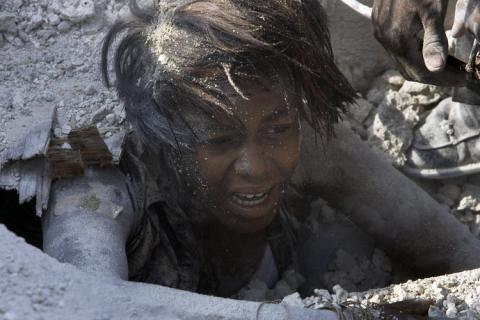
Posted in Sports | Tagged , , , , | Leave a comment

The Obama Bargain Revisited

Back in March, a WSJ article [based on a book] by Shelby Steele analyzed Barack Obama in a unique way. One particular sentence from the article captured something odd about the Obama, “bargainers [like Obama] are always laboring to stay invisible.”

For me, Steele highlighted an oddity about Obama as a candidate. The man would be favored to win any election this year, as long as he can obscure his most personal thoughts, hence the secrecy about college, Rev Wright, Ayers etc. Here’s the quote in context, the entire article is copied at end of post:

And yet, in the end, Barack Obama’s candidacy is not qualitatively different from Al Sharpton’s or Jesse Jackson’s. Like these more irascible of his forbearers, Mr. Obama’s run at the presidency is based more on the manipulation of white guilt than on substance. Messrs. Sharpton and Jackson were “challengers,” not bargainers. They intimidated whites and demanded, in the name of historical justice, that they be brought forward. Mr. Obama flatters whites, grants them racial innocence, and hopes to ascend on the back of their gratitude. Two sides of the same coin.

But bargainers have an Achilles heel. They succeed as conduits of white innocence only as long as they are largely invisible as complex human beings. They hope to become icons that can be identified with rather than seen, and their individual complexity gets in the way of this. So bargainers are always laboring to stay invisible. (We don’t know the real politics or convictions of Tiger Woods or Michael Jordan or Oprah Winfrey, bargainers all.) Mr. Obama has said of himself, “I serve as a blank screen on which people of vastly different political stripes project their own views . . .” And so, human visibility is Mr. Obama’s Achilles heel. If we see the real man, his contradictions and bents of character, he will be ruined as an icon, as a “blank screen.”

An example of a ‘blank screen’ is yesterday’s headline, Obama Says He Is Against Same-Sex Marriage But Also Against Ending Its Practice In CA.

All articles referenced are copied in full at end of post.

———————————————
The Obama Bargain

By SHELBY STEELE
March 18, 2008; Page A23

Geraldine Ferraro may have had sinister motives when she said that Barack Obama would not be “in his position” as a frontrunner but for his race. Possibly she was acting as Hillary Clinton’s surrogate. Or maybe she was simply befuddled by this new reality — in which blackness could constitute a political advantage.

But whatever her motives, she was right: “If Obama was a white man, he would not be in this position.” Barack Obama is, of course, a very talented politician with a first-rate political organization at his back. But it does not detract from his merit to say that his race is also a large part of his prominence. And it is undeniable that something extremely powerful in the body politic, a force quite apart from the man himself, has pulled Obama forward. This force is about race and nothing else.

The novelty of Barack Obama is more his cross-racial appeal than his talent. Jesse Jackson displayed considerable political talent in his presidential runs back in the 1980s. But there was a distinct limit to his white support. Mr. Obama’s broad appeal to whites makes him the first plausible black presidential candidate in American history. And it was Mr. Obama’s genius to understand this. Though he likes to claim that his race was a liability to be overcome, he also surely knew that his race could give him just the edge he needed — an edge that would never be available to a white, not even a white woman.

How to turn one’s blackness to advantage?

The answer is that one “bargains.” Bargaining is a mask that blacks can wear in the American mainstream, one that enables them to put whites at their ease. This mask diffuses the anxiety that goes along with being white in a multiracial society. Bargainers make the subliminal promise to whites not to shame them with America’s history of racism, on the condition that they will not hold the bargainer’s race against him. And whites love this bargain — and feel affection for the bargainer — because it gives them racial innocence in a society where whites live under constant threat of being stigmatized as racist. So the bargainer presents himself as an opportunity for whites to experience racial innocence.

This is how Mr. Obama has turned his blackness into his great political advantage, and also into a kind of personal charisma. Bargainers are conduits of white innocence, and they are as popular as the need for white innocence is strong. Mr. Obama’s extraordinary dash to the forefront of American politics is less a measure of the man than of the hunger in white America for racial innocence.

His actual policy positions are little more than Democratic Party boilerplate and hardly a tick different from Hillary’s positions. He espouses no galvanizing political idea. He is unable to say what he means by “change” or “hope” or “the future.” And he has failed to say how he would actually be a “unifier.” By the evidence of his slight political record (130 “present” votes in the Illinois state legislature, little achievement in the U.S. Senate) Barack Obama stacks up as something of a mediocrity. None of this matters much.

Race helps Mr. Obama in another way — it lifts his political campaign to the level of allegory, making it the stuff of a far higher drama than budget deficits and education reform. His dark skin, with its powerful evocations of America’s tortured racial past, frames the political contest as a morality play. Will his victory mean America’s redemption from its racist past? Will his defeat show an America morally unevolved? Is his campaign a story of black overcoming, an echo of the civil rights movement? Or is it a passing-of-the-torch story, of one generation displacing another?

Because he is black, there is a sense that profound questions stand to be resolved in the unfolding of his political destiny. And, as the Clintons have discovered, it is hard in the real world to run against a candidate of destiny. For many Americans — black and white — Barack Obama is simply too good (and too rare) an opportunity to pass up. For whites, here is the opportunity to document their deliverance from the shames of their forbearers. And for blacks, here is the chance to document the end of inferiority. So the Clintons have found themselves running more against America’s very highest possibilities than against a man. And the press, normally happy to dispel every political pretension, has all but quivered before Mr. Obama. They, too, have feared being on the wrong side of destiny.

And yet, in the end, Barack Obama’s candidacy is not qualitatively different from Al Sharpton’s or Jesse Jackson’s. Like these more irascible of his forbearers, Mr. Obama’s run at the presidency is based more on the manipulation of white guilt than on substance. Messrs. Sharpton and Jackson were “challengers,” not bargainers. They intimidated whites and demanded, in the name of historical justice, that they be brought forward. Mr. Obama flatters whites, grants them racial innocence, and hopes to ascend on the back of their gratitude. Two sides of the same coin.

But bargainers have an Achilles heel. They succeed as conduits of white innocence only as long as they are largely invisible as complex human beings. They hope to become icons that can be identified with rather than seen, and their individual complexity gets in the way of this. So bargainers are always laboring to stay invisible. (We don’t know the real politics or convictions of Tiger Woods or Michael Jordan or Oprah Winfrey, bargainers all.) Mr. Obama has said of himself, “I serve as a blank screen on which people of vastly different political stripes project their own views . . .” And so, human visibility is Mr. Obama’s Achilles heel. If we see the real man, his contradictions and bents of character, he will be ruined as an icon, as a “blank screen.”

Thus, nothing could be more dangerous to Mr. Obama’s political aspirations than the revelation that he, the son of a white woman, sat Sunday after Sunday — for 20 years — in an Afrocentric, black nationalist church in which his own mother, not to mention other whites, could never feel comfortable. His pastor, Rev. Jeremiah Wright, is a challenger who goes far past Al Sharpton and Jesse Jackson in his anti-American outrage (“God damn America”).

How does one “transcend” race in this church? The fact is that Barack Obama has fellow-traveled with a hate-filled, anti-American black nationalism all his adult life, failing to stand and challenge an ideology that would have no place for his own mother. And what portent of presidential judgment is it to have exposed his two daughters for their entire lives to what is, at the very least, a subtext of anti-white vitriol?

What could he have been thinking? Of course he wasn’t thinking. He was driven by insecurity, by a need to “be black” despite his biracial background. And so fellow-traveling with a little race hatred seemed a small price to pay for a more secure racial identity. And anyway, wasn’t this hatred more rhetorical than real?

But now the floodlight of a presidential campaign has trained on this usually hidden corner of contemporary black life: a mindless indulgence in a rhetorical anti-Americanism as a way of bonding and of asserting one’s blackness. Yet Jeremiah Wright, splashed across America’s television screens, has shown us that there is no real difference between rhetorical hatred and real hatred.

No matter his ultimate political fate, there is already enough pathos in Barack Obama to make him a cautionary tale. His public persona thrives on a manipulation of whites (bargaining), and his private sense of racial identity demands both self-betrayal and duplicity. His is the story of a man who flew so high, yet neglected to become himself.

Mr. Steele, a research fellow at Stanford University’s Hoover Institution and the author of “A Bound Man: Why We Are Excited About Obama and Why He Can’t Win” (Free Press, 2007).
———————————————

Posted in Current Affairs & History | Tagged | Leave a comment