Die iPhone Scum — Palm Pre is Here!

Order is finally about to be restored throughout the galaxies. Palm is on the verge of returning to its rightful place of dominance in the PDA [Palm Dumps on Apple] world.

Palm Pre’scharacteristics:

  • Much smaller than the iPhone, but the screen seems big enough
  • It runs Linux. SQLlite is the built-in database
  • The animations and interface are gorgeous
  • It has the coolest menu bar I’ve ever seen
  • Integration with Facebook and Gmail looks top notch
  • There will be an official app store, but you can still load other apps
  • It’s got multitouch

Articles referenced is copied in full at end of post.

—————————————————————————-
Seven features that make the Palm Pre better than the iPhone

Posted by Joel Johnson, January 8, 2009 5:52 PM

There was a glow on the face of every Palm employee we saw today, and deservedly so: the new Palm Pre is a hail mary product. It’s probably going to save the company.

And it is, in many ways, better than the iPhone.

Brownlee and I got a little guided tour of a Pre by a beaming executive this evening. (We filmed it; Xeni, Derek, and Wes from the Boing Boing video team are working on it as I write.) But I’m so excited about the product that I wanted to share my enthusiasm before I forgot all the details about why I am so into it in the first place.

• It feels small and pleasant in the hand. Much smaller than the iPhone, but inexplicably the screen seems big enough. Part of that is the lovely interface that Palm has created that echos a little bit of the old Palm OS in font choice and such, but feels wholly new.

It’s a little bit longer than a Treo when the keyboard is extended, but the curving bit makes it seem a nice size.

• It runs Linux. SQLlite is the built-in database. Developers will have to use “web technologies” to make most of the apps, but it sounds like there may still be ways to use closer-to-the-metal languages.

• The animations and interface are gorgeous. They are in many ways busier than the iPhone’s animations, and clearly largely cribbed from the bouncy, lively way the iPhone OS moves around, but they look really nice when switching from app to app.

• It has the coolest menu bar I’ve ever seen. The touchpad actually extends about half an inch below the screen, and to bring up the ever-present menu bar, you push up from below to smoosh it onto the screen, where it rests under your thumb like a Gummi worm. It looks really great and really useful. It is the first clear “impress your friends” feature.

• Integration with Facebook and Gmail looks top notch. Here’s the part that got me: if you choose to, you can make your contacts list pull live from Facebook, including their selected profile picture, which means every time your friends call you their image will be their latest Facebook profile picture. Not a huge deal, of course, but a wonderful touch.

• There will be an official app store, but you can still load other apps. Probably. Palm isn’t quite sure how syncing with a PC will work, but it sounds like you’ll be able to load apps from a variety of sources as well as buying them over-the-air from the Palm application store.

• It’s got multitouch, Apple patents be damned. We asked if they were afraid of Apple’s claimed protectionist patents for multitouch. They would only respond with a confident smile.

What a pleasing thing it is to see a company that had been all but counted out of the smartphone game come storming back into what I suspect will be the lead.

Update: Oh, one more thing: It has system-wide cut-and-paste.
———————————————————————

Posted in Science & Technology | Tagged , , | Leave a comment

Abortion Opposition, Solely on Theology?

Does the pro-life position rest exclusively on private (and thus inherently undebatable) religious intuitions?

Catholic writer, George Weigel, whose works includes a biography of John Paul II, makes the case in a Newsweek column back in August 2008, that the abortion issue does not rely solely on theological considerations. His main points and the non-theological field they are based upon are excerpted below:

  • Science – Human development begins at fertilization when a male gamete or sperm (spermatozoon) unites with a female gamete or oocyte (ovum) to produce a single cell—a zygote. This highly specialized, totipotent cell marked the beginning of each of us as a unique individual.
  • Philosophy – Nothing human was ever anything other than human, and that nothing not human will ever become human.
  • Political – Innocent life is inviolable and the equal protection of the laws must extend to everyone, regardless of condition.

FYI, Richard Doerflinger, featured in the article, had a son killed in Iraq in 2004.

See the complete column below.
——————————————————-
The Democrats and the Abortion Wars

Are Obama and Pelosi dodging the life-and-death question?
George Weigel
Newsweek Web Exclusive
Updated: 8:38 PM ET Aug 25, 2008

A few years ago, Richard Doerflinger, a pro-life Roman Catholic intellectual with decades of experience in the trenches of America’s culture wars, was invited to debate the moral and legal status of the human embryo before a large class of Harvard undergraduates. During the course of the discussion, Doerflinger’s Harvard faculty interlocutor drew a timeline of human biological development on the blackboard: conception, implantation, brain waves, viability, birth and so forth. His challenge to Doerflinger was to defend, in a nonarbitrary way and without reference to religious principles, the notion that society should recognize moral value and legal rights at any particular point along that line. If here, why here? If there, why there?

After the class, as the conversation continued with a few students and the professor, Doerflinger took a piece of chalk and extended the timeline to the end of the blackboard, where he wrote “Tenure.” The students laughed, and got the message. The only point along that continuum that wouldn’t be arbitrary was the starting point—conception.

Perhaps Doerflinger should send his extended timeline to the Democratic National Convention in Denver.

Throughout this lengthy campaign, the Democratic Party has worked hard to present itself as the party of intellect, competence and moral seriousness. Yet it’s off to a very rocky start in addressing the substance of the abortion issue—which remains, 35 years after Roe v. Wade, one of the most volatile in our public life. Talk this week by Democratic leaders about lowering the incidence of abortion in America will rightly be welcomed by pro-life Democrats, including the large number of pro-life African-American Democrats. But the recent public record has to make committed pro-lifers of both parties wonder just how serious the Democratic leadership is about engaging the abortion debate.

At the Aug. 16 “Civil Forum on the Presidency” at Saddleback Church in Lake Forest, Calif., Sen. Barack Obama was asked by pastor Rick Warren, “At what point does a baby get human rights, in your view?” Obama quickly changed the subject to when life begins, and then demurred: “… whether you are looking at it from a theological perspective or a scientific perspective, answering that question with specificity … is above my pay grade.” Why, though? An embryology text widely used in American medical schools, “The Developing Human,” is not so reticent about the science involved: “Human development begins at fertilization when a male gamete or sperm (spermatazoon) unites with a female gamete or oocyte (ovum) to produce a single cell—a zygote. This highly specialized, totipotent cell marked the beginning of each of us as a unique individual.” That is the science. It’s quite specific, and understanding the science here is surely not above the “pay grade” of a president who will be making public-policy decisions based on that science.

As for theology, there are, obviously, theological disagreements on the moral question of abortion. But while a president is not a theological referee, a president ought to have some grasp of the basic philosophical issues that have been vigorously debated in the abortion wars over the past several decades; these, after all, are the issues that should inform public policy. For decades now, pro-life advocates have been arguing, on the basis of reason informed by science, that nothing human was ever anything other than human, and that nothing not human will ever become human. These are things we can know prior to our theological convictions (or lack thereof). Does Senator Obama disagree with these claims?

There are also serious questions of political theory and governance at stake in the abortion wars. Pro-lifers have long argued that allowing the government to declare an entire class of human creatures—the unborn—outside the protection of the law is a danger for everyone (wherever they may be located on the Doerflinger timeline). Does Senator Obama agree that the abortion debate involves that first principle of justice which teaches that innocent life is inviolable and that the equal protection of the laws must extend to everyone, regardless of condition? Justice Byron White—President John F. Kennedy’s sole appointment to the Supreme Court—described Roe v. Wade as an exercise in “raw judicial power.” Does Senator Obama agree with Justice White that the Supreme Court overreached its authority in Roe v. Wade?

At Saddleback, Senator Obama expressed his “respect” for the views of consistent pro-lifers because their conviction that “life begins at conception … is a core issue of faith” for those voters. This, however, is another dodge. Yes, for some pro-lifers, obedience to religious authority is the source of their conviction. Yet to suggest, as Obama did, that the pro-life position rests on private (and thus inherently undebatable) religious intuitions is to have missed virtually the entirety of the substantive pro-life argument since 1973. Pro-lifers of both parties—some of them agnostic and atheists—have made genuinely public arguments, based on scientific knowledge, reason and democratic political theory. Judging from the evidence to date, the Democratic candidate for president has yet to engage those arguments seriously.

Then there are the multiple confusions of House Speaker Nancy Pelosi. In her “Meet the Press” appearance Aug. 24, Pelosi was asked by Tom Brokaw whether she agreed with Senator Obama’s statements on abortion at Saddleback. Pelosi, declaring herself an “ardent, practicing Catholic,” told Brokaw that “this is an issue that I have studied for a long time”—and then got herself into a deep muddle, in which she seemed to confuse St. Augustine with St. Thomas Aquinas (neither of whom, in any case, knew anything about modern embryology); misrepresented the settled (and scientifically informed) judgment of the Catholic Church on when life begins by declaring it an open question, and concluded by suggesting that none of this really makes a difference, because what the scientists, theologians, and philosophers say “… shouldn’t have an impact on a the woman’s right to choose.” The Speaker then misrepresented the legal impact of Roe v. Wade, arguing that the Supreme Court hadn’t created a right to “abortion on demand”—which will come as news to those on both sides of the ongoing debates over partial-birth abortion and other late-term abortion procedures, parental- and spousal-notifications laws and regulatory oversight of abortion clinics.

Democrats who had hoped to persuade a good number of evangelicals and Catholics to return to their traditional 20th-century political home in November 2008 cannot be very encouraged by such intellectual disarray on the part of their party’s senior federal official. For more than three decades, the abortion license created by the high court in Roe v. Wade has been an important factor in determining American voting behavior—in more than a few instances, the decisive factor. Yet, judging by her performance on “Meet The Press” (which seemed to surprise the usually unflappable Tom Brokaw), the Democratic Speaker of the House of Representatives is as ill-informed on the scientific and legal facts involved in the abortion debate as she is of the teaching of the Catholic Church. Speaker Pelosi is, like most “ardent, practicing” Catholics, a great admirer of the late Pope John Paul II. Was John Paul wrong, one wants to ask Speaker Pelosi, when he wrote in the 1995 encyclical Evangelium Vitae [The Gospel of Life] that “abortion … always constitutes a grave moral disorder, since it is the deliberate killing of an innocent human being”? Was he wrong when he further stated that this moral truth could be known by reason, and was thus a matter of grave concern to public policy?

However far they may be below the pay grade of a pope, pro-life advocates deserve the respect of having their arguments taken seriously. Given the opportunity to do just that at Saddleback, Barack Obama opted for rhetorical finesse over substantive engagement; that choice may have done fatal damage to his capacity to peel evangelical and Catholic swing voters away from the now-tattered Republican coalition. Given a nationally televised opportunity to repair some of that damage, Nancy Pelosi, seemingly bereft of coherent ideas, could only fall back on the mantra of “choice.” Appeals to Joe Biden’s being a Catholic kid from hardscrabble Scranton, Pa., will not likely persuade many committed pro-life voters that the water is once again safe in the Democratic Party; Biden’s NARAL ratings may not be as glowing as Obama’s, but no serious pro-lifer thinks of the senator from Delaware as a pro-life legislator.

The talking points developed for Democratic leaders appearing on the pre-convention talk shows stressed the economy, housing, jobs, and other “middle-class” issues. This suggests that Democratic strategists are discounting the life issues as major factors in 2008. Those strategists have been surprised before; they may be surprised again. In any case, the country deserves something more serious than what it has been given by the Democratic leadership on what has been, and remains, one of the defining issues of our time.

URL: http://www.newsweek.com/id/155564

Tagged , , | Leave a comment

Who’s fooled by $19.99 instead of $20?

Answer: Apparently we are. An excerpt from the article in Scientific American:

There were three scenarios involving different retail prices: one group of buyers was given a price of $5,000, another was given a price of $4,988, and the third was told $5,012. When all the buyers were asked to estimate the wholesale price, those with the $5,000 price tag in their head guessed much lower than those contemplating the more precise retail prices. That is, they moved farther away from the mental anchor. What is more, those who started with the round number as their mental anchor were much more likely to guess a wholesale price that was also in round numbers. The scientists ran this experiment again and again with different scenarios and always got the same result.

Posted in Random Observations | Leave a comment

A Great Day to Citizen Watch and Listen

I took some surefire ideological neutralizing medication yesterday for lunch. I first tried the drug treatment back in November, with great effects. It involves meeting people–regular people, not the type of people who inhabit cable political shows which even mild-mannered accountants would gladly consider exposing to deadly viruses. No, the type of people that actually have jobs, bosses, payrolls to meet and memories of segregated buses with white lines running down the center.


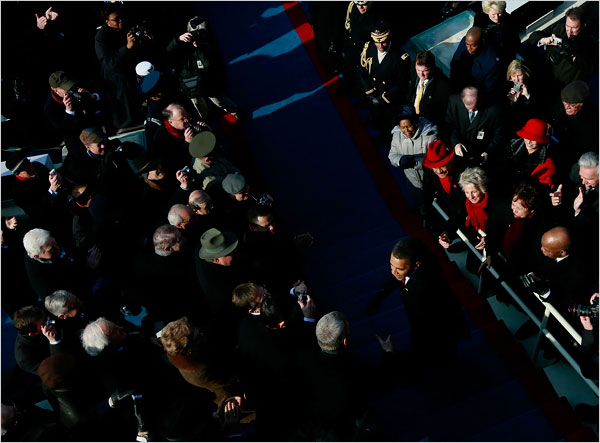
So I trekked downtown to the Arsht Center yesterday at lunch to watch the inauguration with 4,500 of my fellow citizens. I did so with my cousin / photographer, Rolando Gonzalez. Part of the festive atmosphere was attributable to a number of school children who had been bused in. I wonder how they’ll remember the day. Safe to say the event probably did not register as much yesterday, as it will when they look back and recount that they were there.

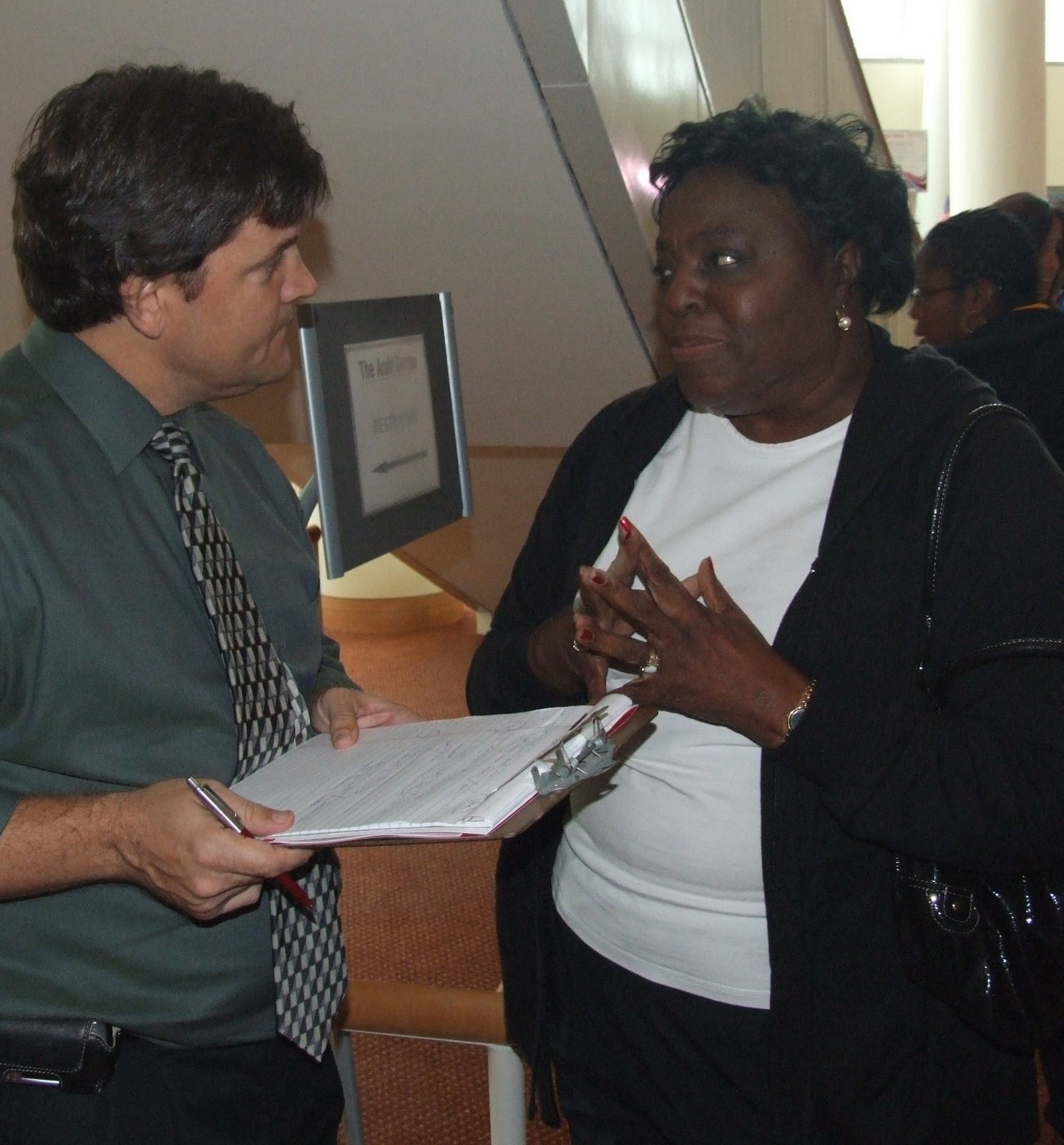
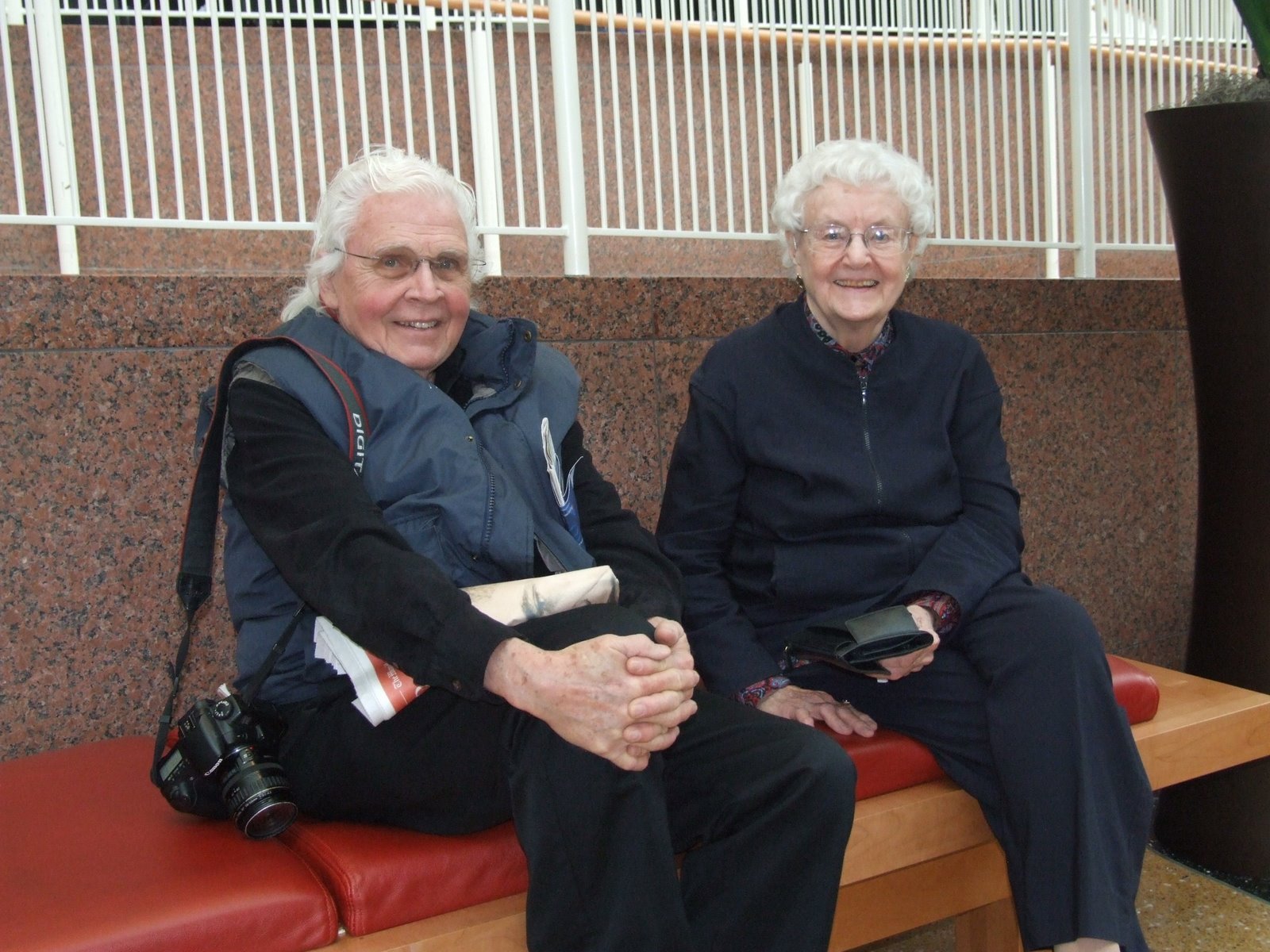
After Obama’s speech, clipboard safely in hand, we stopped people as they were leaving and asked what their impressions were. It was a privilege to interact with people who, for the most part, had just watched their dreams being realized. I kinda wish someone had a camera and blog back in 1981…. Here is who we met:

Kervin Clenance

“I am for the type of things he stands for; decency and competency. He’s not about black and white or race issues. I think the people see that in him and that’s why he has their confidence at the outset.”

Betty Hicks

“It was magnificant! I truly hope the good feeling we are experiencing in our country lasts.”

Marion Wallace

“I’m just overwhelmed. I am initially from Columbus GA

and have seen a lot in our country. It’s a pleasure to see people coming together as one.”

Mark Cevilla

“I’m so impressed. I did not expect to see this in my lifetime. The surprising part is all the young people who he has attracted to politics instead of MTV. How can you not be inspired?”

[I had one of those moments when you realize how little you know. I noted to Mark that I did not vote for Obama, he replied, “neither did I.” Boom, as Ari Gold would say–JC]

Ruth Solivay

“Wonderful! I loved the history of it all. It says so much about our country.”

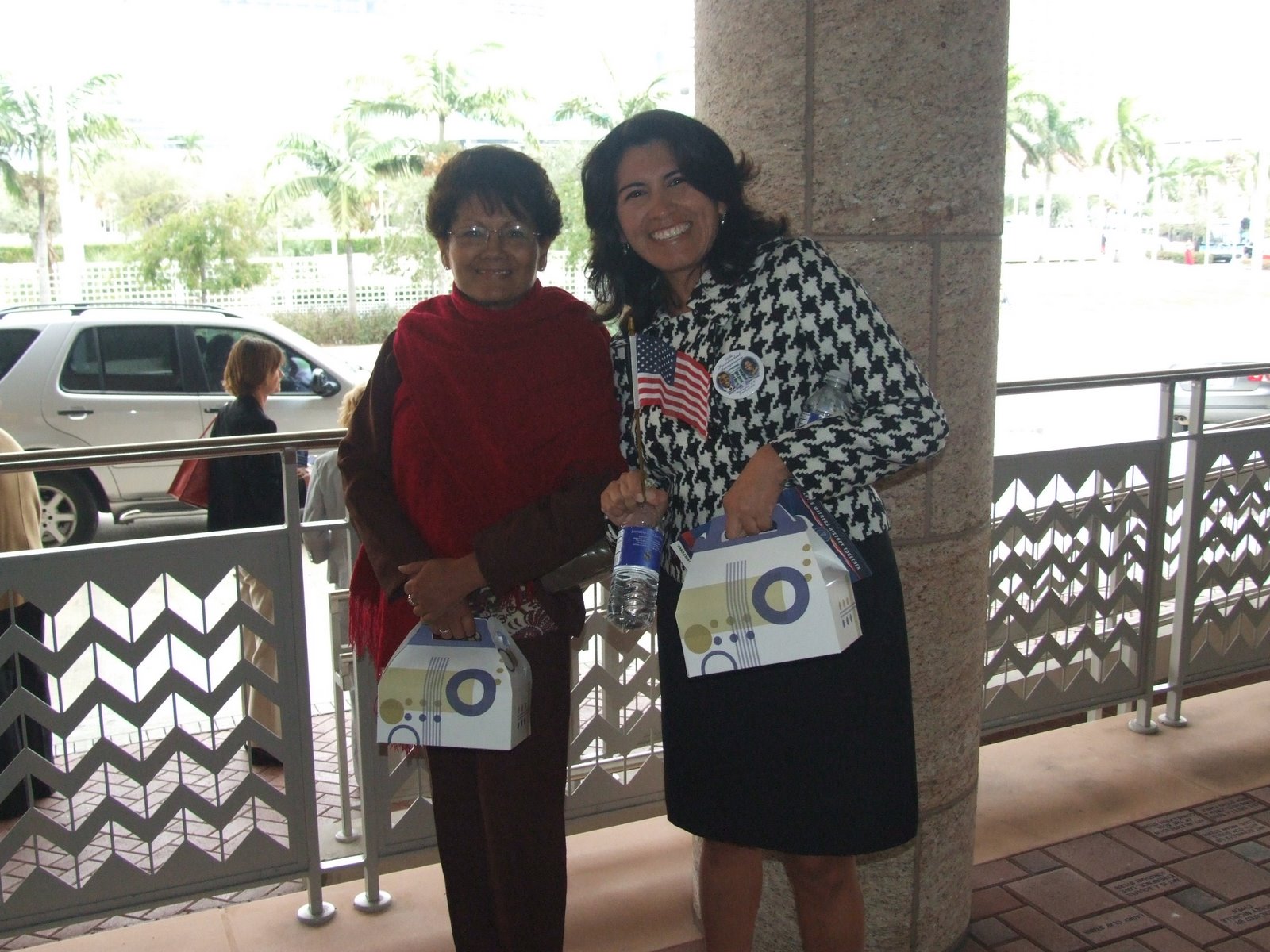
Milagros and Marisa Huerta

“As a minority myself, from Peru, it is very special to watch what has happened. Dreams can come true, that’s why this is America. It was a great idea to allow people to gather here and share in the excitement.”

Donna Shelley

“This is wonderful. I’ve waited a long time to see the type of solidarity we’re seeing in this country today. I think there is healing taking place.”

Maddie Canty

“Fantastic! I have seen history. I’ve lived long enough to see some remnants of segregation–a white line running down the middle of public buses–so I never thought this day would happen.”

Lois Wright

“I’m just so happy today. While I would have loved to have been there in DC, being here was the the 2nd best thing. I love the Arsht Center as well. I’m also glad they brought all these kids to see it. It’s important.”

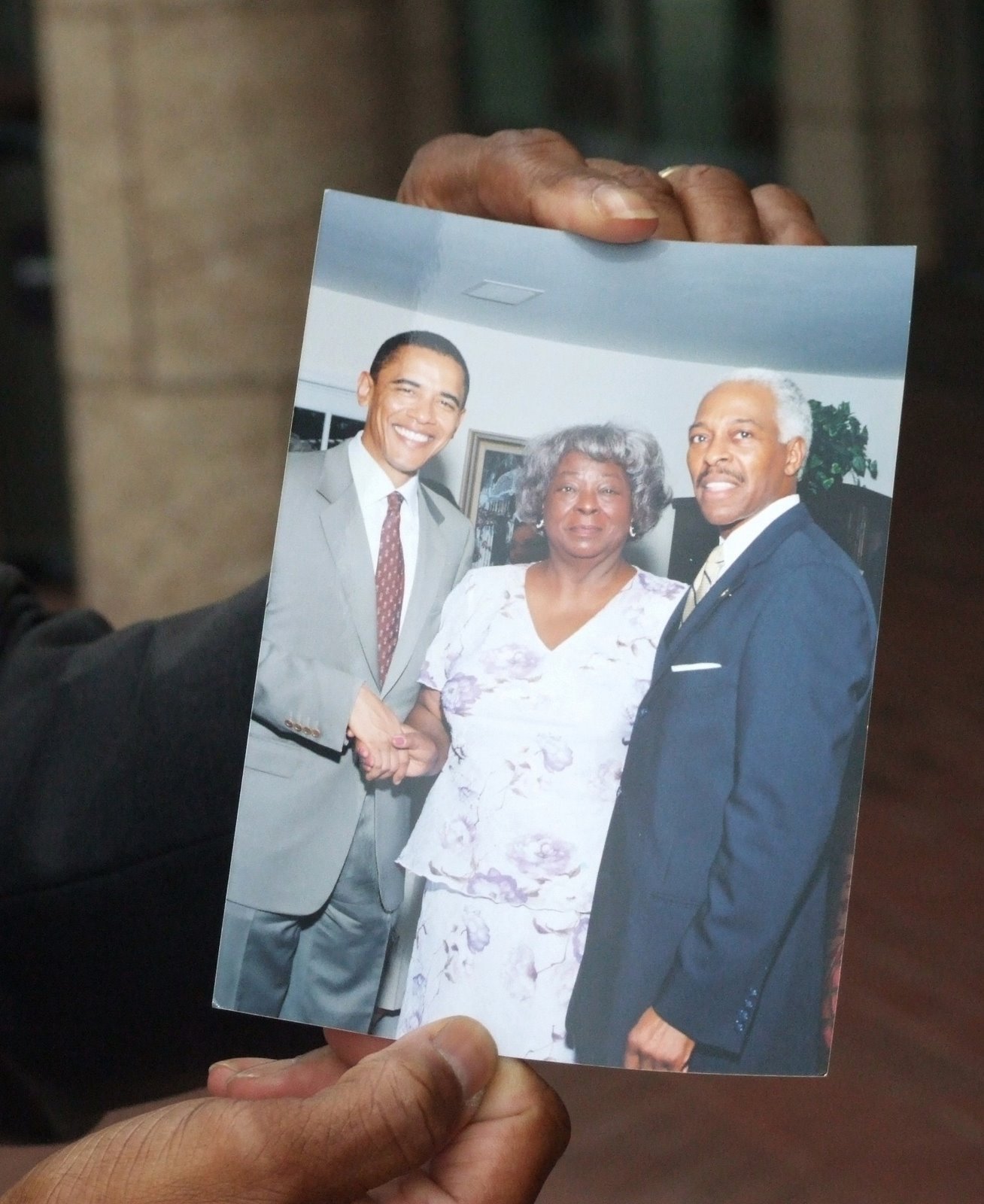
Robert Beatty

“I think this will go down as one of the greatest days ever. The world looks different today than it did yesterday and I believe it feels differently about itself as well. Ours is a country with every race and one people, we can say that with more confidence today than ever.”

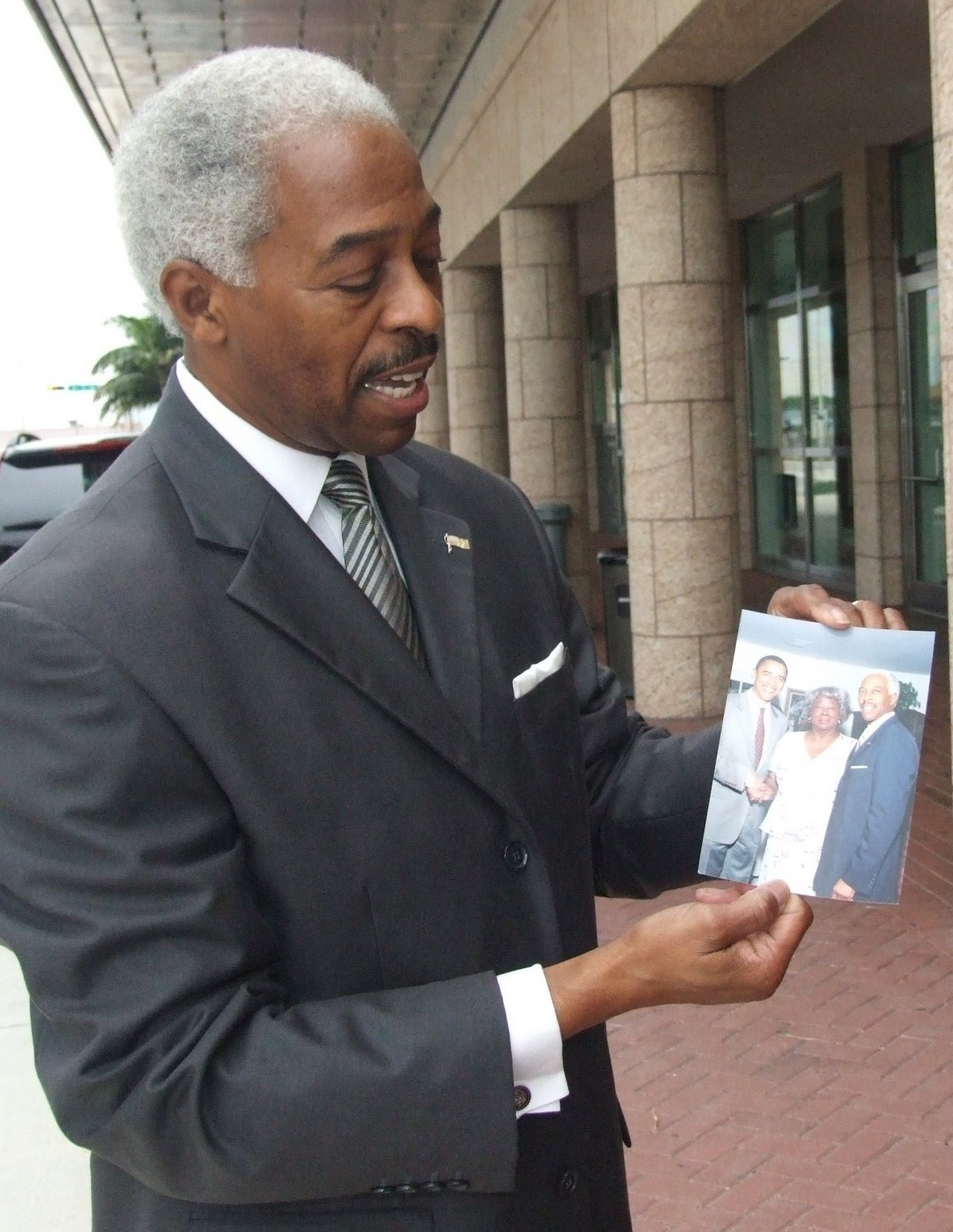
[Robert held up a picture taken with his Mom and Obama, back in 2005. Mrs. Beatty is now deceased, may she rest in peace–JC].

Posted in 2TG Favorites | Tagged | Leave a comment

For those about to govern, we salute you

With a tip of a non-Che beret to AC/DC, my sentiments towards the Obama Administration here at the inception is the following;

For those about to govern [imperito],
we salute you [te salutant]

I pray for Obama’s success. Because if he fails, we fail. And if we fail, Islamofascists may be doing the saluting and they aren’t down with AC/DC. Their salute is more in tune with the Maximus Meridius crowd, morituri te salutant.

One thing I thought was unusual about the inaugural address. It was the part when Obama promised to end government programs that don’t work. I involuntarily guffawed when I heard it. Later I wondered, in such a short and important speech, why risk using what can be described as insincere boilerplate. The ultimate compliment I have for the new Obama team, is that I think they are too sharp to drop a line like that without being ready to back it up.

Thank you for reading this blog post.  You have committed the political equivalent of watching a junkie shoot up in an empty warehouse.

Posted in Current Affairs & History | Tagged , , | Leave a comment

Today’s Historic Event — Wichi

A welcome, but unpaid, friend of the blogger, but not necessarily the blog, Wichi, gives us his take on Obama’s inauguration:

I am always moved by this day. To see the greatest, most powerful Nation on Earth performing a smooth, peaceful transition of power, with political rivals on the same stage, together, for the public to see, is amazing. Especially as a person born in a foreign land who is here precisely because my country of birth does not allow for free voting, peaceful transition and respect of law. I will never, ever cease to view inauguration day as anything less than special. I am proudest of being an American on this day.

Pastor Rick Warren’s invocation speech was remarkable. He spoke with passion, mercy, and humility. His sincere wishes for the Obama family was powerful. If you have the chance, please check out the 5 minute video by clicking here. He closed with the Lord’s prayer. Wow.

President Obama’s speech was equally powerful. He spoke clearly about our problems and confidently about our ability, as Americans, to face and defeat those challenges. I thought he too was humble, sincere, confident, and eager to work together as a nation going forward. He even quoted St. Paul’s passage about the need to set childish things aside (from 1 Corinthians 13:11).

We should all pray today for the President Bush and his family and thank him for his service.

We should also all pray today for President Obama and his administration, that they lead us with honor, grace and humility.

Luis N. Perez

See the entire 1 Corinthians Chapter [13] reading and the transcript of Rick Warren’s Inaugural invocation at the end of post by clicking on Read more!

———————————————————————————–
1 Corinthians Chapter 13

1 – If I speak in human and angelic tongues but do not have love, I am a resounding gong or a clashing cymbal.

2 – And if I have the gift of prophecy and comprehend all mysteries and all knowledge; if I have all faith so as to move mountains but do not have love, I am nothing.

3 – If I give away everything I own, and if I hand my body over so that I may boast but do not have love, I gain nothing.

4 – Love is patient, love is kind. It is not jealous, (love) is not pompous, it is not inflated,

5 – it is not rude, it does not seek its own interests, it is not quick-tempered, it does not brood over injury,

6 – it does not rejoice over wrongdoing but rejoices with the truth.

7 – It bears all things, believes all things, hopes all things, endures all things.

8 – Love never fails. If there are prophecies, they will be brought to nothing; if tongues, they will cease; if knowledge, it will be brought to nothing.

9 – For we know partially and we prophesy partially,

10 – but when the perfect comes, the partial will pass away.

11 – When I was a child, I used to talk as a child, think as a child, reason as a child; when I became a man, I put aside childish things.

12 – At present we see indistinctly, as in a mirror, but then face to face. At present I know partially; then I shall know fully, as I am fully known.

13 – So faith, hope, love remain, these three; but the greatest of these is love.
———————————————————————————-
Transcript of Rick Warren’s Inaugural Invocation

January 20, 2009

Almighty God, Our Father, everything we see and everything we can’t see exists because of You alone. It all comes from You, it all belongs to You, it all exists for Your glory. History is your story. The Scripture tells us, ‘Hear, oh Israel, the Lord is our God, the Lord is one’ and You are the compassionate and merciful one and You are loving to everyone You have made.

Now today we rejoice not only in America’s peaceful transfer of power for the 43rd time, we celebrate a hinge-point of history with the inauguration of our first African American president of the united states. We are so grateful to live in this land, a land of unequaled possibility, where a a son of an African Immigrant can rise to the highest level of our leadership. And we know today that Dr. King and a great cloud of witnesses are shouting in heaven.

Give to our new president, Barack Obama, the wisdom to lead us with humility, the courage to lead us with integrity, the compassion to lead us with generosity. Bless and protect him, his family, Vice President Biden, the Cabinet and every one of our freely elected leaders.

Help us, oh God, to remember that we are Americans. United not by race or religion or by blood, but to our commitment to freedom and justice for all. When we focus on ourselves, when we fight each other, when we forget you, forgive us.

When we presume that our greatness and our prosperity is ours alone, forgive us. When we fail to treat our fellow human beings and all the earth with the respect that they deserve, forgive us. And as we face these difficult days ahead, may we have a new birth of clarity in our aims, responsibility in our actions, humility in our approaches and civility in our attitudes—even when we differ.

Help us to share, to serve and to seek the common good of all. May all people of good will today join together to work for a more just, a more healthy and a more prosperous nation and a peaceful planet. And may we never forget that one day, all nations, all people will stand accountable before You. We now commit our new president and his wife Michelle and his daughters, Malia and Sasha, into your loving care.

I humbly ask this in the name of the one who changed my life—Yeshua, Esa, Jesus, Jesus—who taught us to pray:

Our father, who art in heaven, hallowed be Thy name. Thy kingdom come, Thy will be done, on earth as it is in heaven. Give us this day our daily bread, and forgive us our trespasses, as we forgive those who trespass against us. And lead us not into temptation but deliver us from evil, for thine is the kingdom and the power and the glory forever. Amen.

http://www.lifesitenews.com/ldn/2009/jan/09012003.html
—————————————————————————–

Posted in Current Affairs & History | Tagged , | Leave a comment

President Obama’s Inaugural Address

My favorite parts of Obama’s Inaugural Address:

In reaffirming the greatness of our nation, we understand that greatness is never a given. It must be earned. Our journey has never been one of short-cuts or settling for less. It has not been the path for the faint-hearted – for those who prefer leisure over work, or seek only the pleasures of riches and fame. Rather, it has been the risk-takers, the doers, the makers of things – some celebrated but more often men and women obscure in their labor, who have carried us up the long, rugged path towards prosperity and freedom.

For us, they packed up their few worldly possessions and traveled across oceans in search of a new life.

For us, they toiled in sweatshops and settled the West; endured the lash of the whip and plowed the hard earth.

For us, they fought and died, in places like Concord and Gettysburg; Normandy and Khe Sahn.

Time and again these men and women struggled and sacrificed and worked till their hands were raw so that we might live a better life. They saw America as bigger than the sum of our individual ambitions; greater than all the differences of birth or wealth or faction.

This is the journey we continue today. We remain the most prosperous, powerful nation on Earth. Our workers are no less productive than when this crisis began. Our minds are no less inventive, our goods and services no less needed than they were last week or last month or last year. Our capacity remains undiminished. But our time of standing pat, of protecting narrow interests and putting off unpleasant decisions – that time has surely passed. Starting today, we must pick ourselves up, dust ourselves off, and begin again the work of remaking America.


Nor is the question before us whether the market is a force for good or ill. Its power to generate wealth and expand freedom is unmatched, but this crisis has reminded us that without a watchful eye, the market can spin out of control – and that a nation cannot prosper long when it favors only the prosperous. The success of our economy has always depended not just on the size of our Gross Domestic Product, but on the reach of our prosperity; on our ability to extend opportunity to every willing heart – not out of charity, but because it is the surest route to our common good.


We are the keepers of this legacy. Guided by these principles once more, we can meet those new threats that demand even greater effort – even greater cooperation and understanding between nations. We will begin to responsibly leave Iraq to its people, and forge a hard-earned peace in Afghanistan. With old friends and former foes, we will work tirelessly to lessen the nuclear threat, and roll back the specter of a warming planet. We will not apologize for our way of life, nor will we waver in its defense, and for those who seek to advance their aims by inducing terror and slaughtering innocents, we say to you now that our spirit is stronger and cannot be broken; you cannot outlast us, and we will defeat you.

Inaugural Address is copied in full at end of post. Click on Read more!

—————————————————————————-
Barack Obama Inaugural Address

January 20, 2009

My fellow citizens:

I stand here today humbled by the task before us, grateful for the trust you have bestowed, mindful of the sacrifices borne by our ancestors. I thank President Bush for his service to our nation, as well as the generosity and cooperation he has shown throughout this transition.

Forty-four Americans have now taken the presidential oath. The words have been spoken during rising tides of prosperity and the still waters of peace. Yet, every so often the oath is taken amidst gathering clouds and raging storms. At these moments, America has carried on not simply because of the skill or vision of those in high office, but because We the People have remained faithful to the ideals of our forbearers, and true to our founding documents.

So it has been. So it must be with this generation of Americans.

That we are in the midst of crisis is now well understood. Our nation is at war, against a far-reaching network of violence and hatred. Our economy is badly weakened, a consequence of greed and irresponsibility on the part of some, but also our collective failure to make hard choices and prepare the nation for a new age. Homes have been lost; jobs shed; businesses shuttered. Our health care is too costly; our schools fail too many; and each day brings further evidence that the ways we use energy strengthen our adversaries and threaten our planet.

These are the indicators of crisis, subject to data and statistics. Less measurable but no less profound is a sapping of confidence across our land – a nagging fear that America’s decline is inevitable, and that the next generation must lower its sights.

Today I say to you that the challenges we face are real. They are serious and they are many. They will not be met easily or in a short span of time. But know this, America – they will be met.

On this day, we gather because we have chosen hope over fear, unity of purpose over conflict and discord.

On this day, we come to proclaim an end to the petty grievances and false promises, the recriminations and worn out dogmas, that for far too long have strangled our politics.

We remain a young nation, but in the words of Scripture, the time has come to set aside childish things. The time has come to reaffirm our enduring spirit; to choose our better history; to carry forward that precious gift, that noble idea, passed on from generation to generation: the God-given promise that all are equal, all are free, and all deserve a chance to pursue their full measure of happiness.

In reaffirming the greatness of our nation, we understand that greatness is never a given. It must be earned. Our journey has never been one of short-cuts or settling for less. It has not been the path for the faint-hearted – for those who prefer leisure over work, or seek only the pleasures of riches and fame. Rather, it has been the risk-takers, the doers, the makers of things – some celebrated but more often men and women obscure in their labor, who have carried us up the long, rugged path towards prosperity and freedom.

For us, they packed up their few worldly possessions and traveled across oceans in search of a new life.

For us, they toiled in sweatshops and settled the West; endured the lash of the whip and plowed the hard earth.

For us, they fought and died, in places like Concord and Gettysburg; Normandy and Khe Sahn.

Time and again these men and women struggled and sacrificed and worked till their hands were raw so that we might live a better life. They saw America as bigger than the sum of our individual ambitions; greater than all the differences of birth or wealth or faction.

This is the journey we continue today. We remain the most prosperous, powerful nation on Earth. Our workers are no less productive than when this crisis began. Our minds are no less inventive, our goods and services no less needed than they were last week or last month or last year. Our capacity remains undiminished. But our time of standing pat, of protecting narrow interests and putting off unpleasant decisions – that time has surely passed. Starting today, we must pick ourselves up, dust ourselves off, and begin again the work of remaking America.

For everywhere we look, there is work to be done. The state of the economy calls for action, bold and swift, and we will act – not only to create new jobs, but to lay a new foundation for growth. We will build the roads and bridges, the electric grids and digital lines that feed our commerce and bind us together. We will restore science to its rightful place, and wield technology’s wonders to raise health care’s quality and lower its cost. We will harness the sun and the winds and the soil to fuel our cars and run our factories. And we will transform our schools and colleges and universities to meet the demands of a new age. All this we can do. And all this we will do.

Now, there are some who question the scale of our ambitions – who suggest that our system cannot tolerate too many big plans. Their memories are short. For they have forgotten what this country has already done; what free men and women can achieve when imagination is joined to common purpose, and necessity to courage.

What the cynics fail to understand is that the ground has shifted beneath them – that the stale political arguments that have consumed us for so long no longer apply. The question we ask today is not whether our government is too big or too small, but whether it works – whether it helps families find jobs at a decent wage, care they can afford, a retirement that is dignified. Where the answer is yes, we intend to move forward. Where the answer is no, programs will end. And those of us who manage the public’s dollars will be held to account – to spend wisely, reform bad habits, and do our business in the light of day – because only then can we restore the vital trust between a people and their government.

Nor is the question before us whether the market is a force for good or ill. Its power to generate wealth and expand freedom is unmatched, but this crisis has reminded us that without a watchful eye, the market can spin out of control – and that a nation cannot prosper long when it favors only the prosperous. The success of our economy has always depended not just on the size of our Gross Domestic Product, but on the reach of our prosperity; on our ability to extend opportunity to every willing heart – not out of charity, but because it is the surest route to our common good.

As for our common defense, we reject as false the choice between our safety and our ideals. Our Founding Fathers, faced with perils we can scarcely imagine, drafted a charter to assure the rule of law and the rights of man, a charter expanded by the blood of generations. Those ideals still light the world, and we will not give them up for expedience’s sake. And so to all other peoples and governments who are watching today, from the grandest capitals to the small village where my father was born: know that America is a friend of each nation and every man, woman, and child who seeks a future of peace and dignity, and that we are ready to lead once more.

Recall that earlier generations faced down fascism and communism not just with missiles and tanks, but with sturdy alliances and enduring convictions. They understood that our power alone cannot protect us, nor does it entitle us to do as we please. Instead, they knew that our power grows through its prudent use; our security emanates from the justness of our cause, the force of our example, the tempering qualities of humility and restraint.

We are the keepers of this legacy. Guided by these principles once more, we can meet those new threats that demand even greater effort – even greater cooperation and understanding between nations. We will begin to responsibly leave Iraq to its people, and forge a hard-earned peace in Afghanistan. With old friends and former foes, we will work tirelessly to lessen the nuclear threat, and roll back the specter of a warming planet. We will not apologize for our way of life, nor will we waver in its defense, and for those who seek to advance their aims by inducing terror and slaughtering innocents, we say to you now that our spirit is stronger and cannot be broken; you cannot outlast us, and we will defeat you.

For we know that our patchwork heritage is a strength, not a weakness. We are a nation of Christians and Muslims, Jews and Hindus – and non-believers. We are shaped by every language and culture, drawn from every end of this Earth; and because we have tasted the bitter swill of civil war and segregation, and emerged from that dark chapter stronger and more united, we cannot help but believe that the old hatreds shall someday pass; that the lines of tribe shall soon dissolve; that as the world grows smaller, our common humanity shall reveal itself; and that America must play its role in ushering in a new era of peace.

To the Muslim world, we seek a new way forward, based on mutual interest and mutual respect. To those leaders around the globe who seek to sow conflict, or blame their society’s ills on the West – know that your people will judge you on what you can build, not what you destroy. To those who cling to power through corruption and deceit and the silencing of dissent, know that you are on the wrong side of history; but that we will extend a hand if you are willing to unclench your fist.

To the people of poor nations, we pledge to work alongside you to make your farms flourish and let clean waters flow; to nourish starved bodies and feed hungry minds. And to those nations like ours that enjoy relative plenty, we say we can no longer afford indifference to suffering outside our borders; nor can we consume the world’s resources without regard to effect. For the world has changed, and we must change with it.

As we consider the road that unfolds before us, we remember with humble gratitude those brave Americans who, at this very hour, patrol far-off deserts and distant mountains. They have something to tell us today, just as the fallen heroes who lie in Arlington whisper through the ages. We honor them not only because they are guardians of our liberty, but because they embody the spirit of service; a willingness to find meaning in something greater than themselves. And yet, at this moment – a moment that will define a generation – it is precisely this spirit that must inhabit us all.

For as much as government can do and must do, it is ultimately the faith and determination of the American people upon which this nation relies. It is the kindness to take in a stranger when the levees break, the selflessness of workers who would rather cut their hours than see a friend lose their job which sees us through our darkest hours. It is the firefighter’s courage to storm a stairway filled with smoke, but also a parent’s willingness to nurture a child, that finally decides our fate.

Our challenges may be new. The instruments with which we meet them may be new. But those values upon which our success depends – hard work and honesty, courage and fair play, tolerance and curiosity, loyalty and patriotism – these things are old. These things are true. They have been the quiet force of progress throughout our history. What is demanded then is a return to these truths. What is required of us now is a new era of responsibility – a recognition, on the part of every American, that we have duties to ourselves, our nation, and the world, duties that we do not grudgingly accept but rather seize gladly, firm in the knowledge that there is nothing so satisfying to the spirit, so defining of our character, than giving our all to a difficult task.

This is the price and the promise of citizenship.

This is the source of our confidence – the knowledge that God calls on us to shape an uncertain destiny.

This is the meaning of our liberty and our creed – why men and women and children of every race and every faith can join in celebration across this magnificent mall, and why a man whose father less than sixty years ago might not have been served at a local restaurant can now stand before you to take a most sacred oath.

So let us mark this day with remembrance, of who we are and how far we have traveled. In the year of America’s birth, in the coldest of months, a small band of patriots huddled by dying campfires on the shores of an icy river. The capital was abandoned. The enemy was advancing. The snow was stained with blood. At a moment when the outcome of our revolution was most in doubt, the father of our nation ordered these words be read to the people:

“Let it be told to the future world…that in the depth of winter, when nothing but hope and virtue could survive…that the city and the country, alarmed at one common danger, came forth to meet [it].”

America. In the face of our common dangers, in this winter of our hardship, let us remember these timeless words. With hope and virtue, let us brave once more the icy currents, and endure what storms may come. Let it be said by our children’s children that when we were tested we refused to let this journey end, that we did not turn back nor did we falter; and with eyes fixed on the horizon and God’s grace upon us, we carried forth that great gift of freedom and delivered it safely to future generations.

Thank you.

God bless you. And God bless the United States of America.

Barack Obama is the President of the United States of America.
Page Printed from: http://www.realclearpolitics.com/articles/2009/01/obama_inaugural_address.html at January 20, 2009 – 01:06:07 PM PST
———————————————————————

Tagged | Leave a comment

Joseph Biden’s Nightmare Angle

VP Biden also promises to plug away on day 1

Posted in Random Observations | Leave a comment

History and the Responsibility of Faith

While it is frequently misused, the wealth of information and inspiration available on the web is amazing. For Catholics especially, sites like those maintained by EWTN have something for all levels of interest.

There was a powerful homily this past Sunday [Jan 18] by Fr. Anthony on EWTN. His homily draws a contrast between Martin Luther King day, Obama’s inauguration and the Pro-Life march in Washington which will follow. The homily is available in the EWTN Audio Library. The most powerful portion of the homily begins about halfway through the audio recording.

Tagged | Leave a comment

Samuelson [Wade] vs. Krugman [Kobe]

Robert Samuelson is a top economist who gets a wide audience, mostly due to his Newsweek column. I find him to be the most consistently politically-neutral economist around, think of him as the Dwyane Wade of economists; talented, hard-working and responsible. You get the sense that he goes wherever the data leads him. Here is an example of that fairness in his most recent column:

What suppressed inflation was the brutal 1981-82 recession undertaken by Federal Reserve Chairman Paul Volcker and supported by the newly elected Ronald Reagan. … Volcker and Reagan embarked on a deliberate effort to quell inflationary psychology; the question was whether the recession could be maintained long enough to do the job.

That may seem like an uncontroversial formulation, but to economist’s with a leftist agenda–which is most of them in academia–giving Reagan any credit is harder than getting a New York Yankees fan to show class.

Speaking of unlovable losers, that brings us to the New York Times Paul Krugman. Think of Krugman as the Kobe Bryant of economists; mad skills and does not play well with others, i.e. unreliable. He is so talented, that he will just make the data fit into his views. An example from his latest column:

Old-fashioned voodoo economics — the belief in tax-cut magic — has been banished from civilized discourse. The supply-side cult has shrunk to the point that it contains only cranks, charlatans, and Republicans.

But recent news reports suggest that many influential people, including Federal Reserve officials, bank regulators, and, possibly, members of the incoming Obama administration, have become devotees of a new kind of voodoo: the belief that by performing elaborate financial rituals we can keep dead banks walking.

Can you see Kobe quitting in the 2nd half of game 7 in the 2006 playoff series against Phoenix in that analysis? Krugman relies on a 1980’s code phrase, voodoo economics, to get his readers in the proper frame of mind–an attack. But who is he attacking you ask? “Many influential people, including Federal Reserve officials, bank regulators, and, possibly, members of the incoming Obama administration,” Paulie oh so gently explicates. Geez! That sound you just heard must have been his testicles falling off.

Later on he demonstrates that his fecklessness, like his former body parts, travels in pairs. He writes, “what I suspect is that policy makers — possibly without realizing it — are gearing up to attempt a bait-and-switch.” That additional sound you just heard were the aforementioned body parts being placed in a freezer ziplock bag.

Here’s my point. Please follow through. Either explain without an agenda or attack with one, both are fine. But don’t come in like a lion [voodoo economics] and go out like a Kobe [possibly, without realizing it]. People who mix metaphors aside, those people are the worst [man]!

Both columns referenced and Bill Simmons’ Kobe mail bag are copied in full at end of post – click on ‘Read More!

—————————————————————————-
The Great Foreboding
January 19, 2009

By Robert Samuelson

WASHINGTON — For Barack Obama, the Great Foreboding is both an enormous burden and a splendid opportunity. We are now suffering from more than depressed retail sales, stock prices and production. Americans have drifted, or been dragged, into a state of collective despair and bewilderment. They don’t know what lies ahead and wonder whether anyone does. Americans have lost their sense of mastery over the future, and if Obama can restore that, he will have gone a long way toward reviving the economy and ensuring a successful presidency.

It is not the present economy that most disturbs people. That’s bad, but not unprecedented. Despite recent increases, the unemployment rate of 7.2 percent in December remains below the average peak unemployment of 7.6 percent in the previous 10 post-World War II recessions. What unsettles and scares people is the vague notion that we’re headed into something new, menacing and enduring. Unemployment, predicted to reach 9 percent or more, will remain high. Expansion will resume grudgingly, if at all. Income gains will be slight or nonexistent.

Precisely this specter explains why the word “depression” is now so routinely deployed, even though we’re a long way from the bread lines of the 1930s. But the Great Depression also signifies a period when we lost control. For all the New Deal programs, the Depression lasted a decade and ended only with World War II. Even in 1940, unemployment averaged almost 15 percent. It’s the worry that government won’t triumph over today’s economy that justifies, for many people, the bleak analogies.

The pessimism stretches across class and political lines. A December survey by the Pew Research Center asked whether economic conditions would be worse in a year. Among those with incomes under $30,000, 51 percent thought so; for those with incomes exceeding $100,000, the response was almost identical, 53 percent. Another question was whether unemployment would rise in the next year; 57 percent of Democrats, 64 percent of independents and 66 percent of Republicans said yes.

This democratic (with a small “d”) despondency has many causes. As more Americans invested in stocks, more became exposed to the market’s wild psychological and financial swings. The plunge in home values has made many workers with secure jobs poorer. And, of course, layoffs themselves have become more democratic. Once, the young and blue-collar workers bore the brunt of firings. Now, managers, investment bankers, journalists, scientists — almost anyone — can be canned. Age confers little security. In December, almost a third of the jobless were 45 and over.

What offends middle-class Americans, most of us, is economic capriciousness. People crave order, predictability and security. They want to believe that personal virtues of studying, working hard and planning will be rewarded in the marketplace. Even in good times, these ambitions are often frustrated. But in today’s economy, the disconnect has widened. Setbacks and losses seem increasingly divorced from personal effort. Our whole values system seems besieged.

Since World War II, Americans have only once before experienced a similar economic trauma: the double-digit inflation of the 1970s (13 percent in 1979). Work and thrift were undermined, because inflation threatened the worth of wages, salaries and savings accounts. Then as now, people were terrified, because inflation seemed uncontrollable. Starting with Lyndon Johnson, four presidents had failed. No one knew how high it might go. Then as now, we seemed unable to chart our destiny.

What suppressed inflation was the brutal 1981-82 recession undertaken by Federal Reserve Chairman Paul Volcker and supported by the newly elected Ronald Reagan. Unemployment reached a peak of 10.8 percent, but gluts of jobless workers and idle factories broke the wage-price spiral and ushered in two decades of strong economic growth. Reagan won a landslide victory in 1984; his campaign featured a signature TV spot boasting that “It’s morning again in America.”

Up to a point, there are parallels for Obama. Today’s misery is a political opportunity. Reagan’s popularity soared on the belief that he had re-established economic order. The country had reasserted control of its future. These gains offset the recession’s severity and its hangover. In 1984, unemployment still averaged 7.5 percent.

If Obama can overcome the sense of helplessness, he will surely reap much political credit. There need not be a boom — the economy must achieve just enough sustained growth to convince most people that it’s manageable and that we have not descended into a new dark age.

Here, the parallels break down. Volcker and Reagan embarked on a deliberate effort to quell inflationary psychology; the question was whether the recession could be maintained long enough to do the job. Obama faces a global recession brought on by murky forces barely understood. The effort to counteract them and to prevent further economic damage is a grand and confused experiment. If it fails, Obama’s burden will be back-breaking.

Copyright 2009, Washington Post Writers Group
Page Printed from: http://www.realclearpolitics.com/articles/2009/01/the_great_foreboding.html at January 19, 2009 – 05:57:56 AM PST
——————————————————————————–
Wall Street Voodoo
January 19, 2009
Op-Ed Columnist

By PAUL KRUGMAN

Old-fashioned voodoo economics — the belief in tax-cut magic — has been banished from civilized discourse. The supply-side cult has shrunk to the point that it contains only cranks, charlatans, and Republicans.

But recent news reports suggest that many influential people, including Federal Reserve officials, bank regulators, and, possibly, members of the incoming Obama administration, have become devotees of a new kind of voodoo: the belief that by performing elaborate financial rituals we can keep dead banks walking.

To explain the issue, let me describe the position of a hypothetical bank that I’ll call Gothamgroup, or Gotham for short.

On paper, Gotham has $2 trillion in assets and $1.9 trillion in liabilities, so that it has a net worth of $100 billion. But a substantial fraction of its assets — say, $400 billion worth — are mortgage-backed securities and other toxic waste. If the bank tried to sell these assets, it would get no more than $200 billion.

So Gotham is a zombie bank: it’s still operating, but the reality is that it has already gone bust. Its stock isn’t totally worthless — it still has a market capitalization of $20 billion — but that value is entirely based on the hope that shareholders will be rescued by a government bailout.

Why would the government bail Gotham out? Because it plays a central role in the financial system. When Lehman was allowed to fail, financial markets froze, and for a few weeks the world economy teetered on the edge of collapse. Since we don’t want a repeat performance, Gotham has to be kept functioning. But how can that be done?

Well, the government could simply give Gotham a couple of hundred billion dollars, enough to make it solvent again. But this would, of course, be a huge gift to Gotham’s current shareholders — and it would also encourage excessive risk-taking in the future. Still, the possibility of such a gift is what’s now supporting Gotham’s stock price.

A better approach would be to do what the government did with zombie savings and loans at the end of the 1980s: it seized the defunct banks, cleaning out the shareholders. Then it transferred their bad assets to a special institution, the Resolution Trust Corporation; paid off enough of the banks’ debts to make them solvent; and sold the fixed-up banks to new owners.

The current buzz suggests, however, that policy makers aren’t willing to take either of these approaches. Instead, they’re reportedly gravitating toward a compromise approach: moving toxic waste from private banks’ balance sheets to a publicly owned “bad bank” or “aggregator bank” that would resemble the Resolution Trust Corporation, but without seizing the banks first.

Sheila Bair, the chairwoman of the Federal Deposit Insurance Corporation, recently tried to describe how this would work: “The aggregator bank would buy the assets at fair value.” But what does “fair value” mean?

In my example, Gothamgroup is insolvent because the alleged $400 billion of toxic waste on its books is actually worth only $200 billion. The only way a government purchase of that toxic waste can make Gotham solvent again is if the government pays much more than private buyers are willing to offer.

Now, maybe private buyers aren’t willing to pay what toxic waste is really worth: “We don’t have really any rational pricing right now for some of these asset categories,” Ms. Bair says. But should the government be in the business of declaring that it knows better than the market what assets are worth? And is it really likely that paying “fair value,” whatever that means, would be enough to make Gotham solvent again?

What I suspect is that policy makers — possibly without realizing it — are gearing up to attempt a bait-and-switch: a policy that looks like the cleanup of the savings and loans, but in practice amounts to making huge gifts to bank shareholders at taxpayer expense, disguised as “fair value” purchases of toxic assets.

Why go through these contortions? The answer seems to be that Washington remains deathly afraid of the N-word — nationalization. The truth is that Gothamgroup and its sister institutions are already wards of the state, utterly dependent on taxpayer support; but nobody wants to recognize that fact and implement the obvious solution: an explicit, though temporary, government takeover. Hence the popularity of the new voodoo, which claims, as I said, that elaborate financial rituals can reanimate dead banks.

Unfortunately, the price of this retreat into superstition may be high. I hope I’m wrong, but I suspect that taxpayers are about to get another raw deal — and that we’re about to get another financial rescue plan that fails to do the job.
—————————————————————————————
Kobe letters: Second thoughts on second half

Monday, May 8, 2006

Bill Simmons – ESPN.com

Editor’s Note: Here’s a selection of letters to Page 2’s Bill Simmons about Kobe Bryant’s performance in Game 7 of the first-round series loss to the Suns.

Looks like the voters got it right … at least the part about not giving the award to Kobe. There is no way that the league MVP would score just one point in the second half of a Game 7 in a playoff series. There’s just no way that would happen. I hope this puts to rest all the Kobe/Jordan comparisons that are still floating around out there. Kobe is not on his level. He never will be. Quite frankly, it’s not even close.
— Geoff, Agawam, Mass.

Kobe Bryant
It’s the third quarter — and Kobe’s not looking too good.

Game 7 of the Laker-Suns series was like in grade school when you challenge a big kid to race only after it starts he just jogs halfway and lets you win. You’re right, the MJ comparisons stop now.
— Rick M., New York

Let me first make you understand that I am a LIFELONG Lakers fan — I was born, I grew up, and now live less than one mile from the Fabulous Forum — and I have listened to the whole “Kobe has no supporting cast”/”Kobe is transforming”/”Kobe is becoming MJ” thing. And now I will remind you of the exact evidence as to why Kobe is not the next MJ. Is he more talented than MJ at his age? YES. Is he the next basketball savior? NO.

Because at the end of the day let’s remember: 1) The reason Kobe has no supporting cast is because he wanted it that way AND 2) Kobe only cares about Kobe, from the day he left Eddie Jones wide open for 3 in the corner while he took a 40-foot airball against Utah in his first playoff series (and eventually got him traded away too), to the time in Sacto when the “hacks” were saying he was taking too many shots (so he purposely didn’t shoot the whole game), to tonight when he decided that he would get ultimate revenge against Phil’s whole “team concept” and the “hacks” saying he shot too much in Game 6 by “just running the offense” in a deciding Game 7.

At the end of the day Kobe has never felt the “hunger” for basketball like MJ (or Magic or Bird) did, because through it all he was already coddled and never paid his dues. At the end of the day Kobe believes his own hype, and Kobe goes out of his way to TRY to show that basketball “needs” him more than he “needs” it — and it is that basic difference that will separate the two — because we are at 10 years and counting and he hasn’t changed yet.
— Dorian, Inglewood, Calif.

Did the other Laker starters play above themselves for four games or was Kobe gracious in sharing the ball, thus allowing the team to reap the rewards? I think it’s the former. I don’t want to play the role of “I-told-you-so” revisionist historian (but I will anyway), but when everyone was praising Kobe for sharing the ball, I was telling everyone that if the other Lakers had played like this all year long, he’d have given them they keys to the car long before now. It’s like when Robert Downey Jr. checks out of rehab and seems to have his act together, but you’re never quite sure if he’s really clean and you aren’t the least bit suprised when he relapses. It’s almost like we got a glimpse into an alternate universe where Kobe had decent teammates.

And I can’t wait to hear the criticisms about Kobe taking too few shots (presumably these people would prefer Kobe to score 40, so that the Lakers would only have lost by 20, paving the way for Kobe getting blamed for not getting everyone involved). And I really can’t wait for people to wisely begin observing that “at least Shaq is still playing” as if Chicago and Phoenix are anywhere remotely on the same level.
— DeAngelo L., Santa Monica, Calif.

An MVP does NOT throw in the towel during the second half of a Game 7. I don’t know if Kobe was trying to make some kind of statement or what, but that’s not what an MVP does. Period.
— Alex, Provo, Utah

After Kobe’s Game 7 performance, not only should MJ comparisons be forbidden, he should have to give up his self-proclaimed status as Black Mamba. Maybe he could call himself the Mottled Garter Snake or something like that. No way MJ disappears like that in a Game 7. Ever.
— Chuck J., Centreville, Va.

Someone please explain what happened to Kobe in the second half. I consider myself a Laker fan of the highest order. Diehard. I cheered like crazy for Magic Johnson, James Worthy, Shaq, Kobe, Fish, and even Cedric Ceballos and Chucky Atkins. I’ve been with them all the way. And yet I don’t get the second half. Defending Kobe’s integrity for the last 10 years suddenly feels futile and pointless.
— Gov D., Metro Manila, Philippines

Kobe would be great on “The Apprentice.” When it became clear that the Lakers had lost Game 7, Kobe went into his “boardroom defense” strategy. At the time, he was shooting over 50 percent and had 23 first-half points. Why should he bother to shoot in the second half? How could he be fired by passing the ball and getting his teammates involved? How easy it is to blame it on the Project Manager’s (Phil’s) game plan? Congrats on your boardroom victory, Kobe.
— Rick S., San Diego

So apparently Kobe was trying to get teammates into a rhythm during the second half. Funny, I must have missed his drives and dishes, and his post-ups that drew double-teams and created open shots. I did, however, see Kobe harmlessly swing the ball around the 3-point line quite a bit. Has any other “superstar” been so passive with the season on the line? You can debate whether Kobe should be MVP but there’s no debate whether he makes his teammates better. Either he doesn’t know how or Saturday he didn’t want to try. And if he didn’t want to try and he didn’t want to shoot, then he quit.
— Jonathan, Venice, Calif.

How much is Kobe trying to stick it to Phil Jackson and the media right now? Criticized for “shooting” too much in all of the Lakers’ losses, he’s willing to let the Lakers lose this series to prove a point that this is his team (and his success that got him to this point, not Phil’s great coaching). The Mamba is tricky like that — just when you think you have him figured out . . .
— Jonathan, Morgantown, W. Va.

Watching Kobe in the second half — wow. What blew me away was that, time after time, he would catch the ball, get doubled, give it up, and then DO NOTHING, literally just stand there. Your team is down 20-plus late in the third quarter in Game 7, no one on the floor except you should be allowed in the same ZIP code as a basketball player, and you’re not going to try to take over the game? You’re not going to start, I don’t know, making some cuts or something after you’re forced to give the ball up, in an attempt to get it back?

I doubt they would have won either way, but Kobe’s performance in the second half was absolutely baffling. Which is why I’m convinced he’s blown tens of millions on ice for his wife, is secretly in debt to the Stucci brothers, and was therefore forced to throw the game. It makes more sense than anything else I can come up with.

There’s some solace in this, however: I’d been forced to acknowledge Kobe’s brilliance recently, simply because I’d been watching him so much. This was an uncomfortable situation for me to be in, because a) I’m a Boston fan and b) Kobe’s a jerk. Now I have reason to dislike him again. So even though I was robbed of an entertaining Game 7, it wasn’t a total wash.
— Jesse S., Boston

No more MJ comparisons. It’s over. Three shots in the second half? He mailed it in with half a game to play! Kobe as MVP? What a joke [because] (a) MVP’s shouldn’t lose Game 7s; (b) if they’re going to, I want them to lose by shooting 45 shots, making 10, and breaking their face because they dove for too many loose balls. What a disgrace. I don’t even like basketball, and guys like Kobe are why. There’s too little heart in the NBA and way too much posturing.
— Mike, NYC

How about Kobe tanking the entire second half of Game 7? The great thing about egomaniacal prima donnas is that you can always count on them to showcase their true colors sooner or later with some grand spectacle of unprofessional petulance (see Carter, Vince). Snaps to Mamba on setting back the resuscitation of his image another 4-6 months. Oh and sweet mid-career number change. Awful.
— Matt, Washington, D.C.

How come no one is talking about Kobe completely stabbing his teammates in the back in the second half of Game 7? There’s a difference between (a) not taking 40 shots and (b) completely taking yourself out of the offense by standing at half court the entire half. Kobe was clearly trying to distance himself from the loss and let the blame fall squarely on his teammates. And then in the postgame interview Kobe made it sound like the Lakers never had chance — like they were the Generals and the Suns were the Globetrotters. Are you really telling me that Kobe would have sounded like that if Thomas’s 3 had been a half-inch off at the end of Game 6? The man is incapable of admitting that he got beat. It’s like when you’re playing against a cocky [player] in a pickup game, who realizes he’s going to lose, and stops trying at all just to let everyone know that they didn’t beat him when he was trying. That crap works at the Y, but it doesn’t work in Game 7 of an NBA series.
— Scott, Washington, D.C.

Michael Jordan
It didn’t end well in Washington, but a history of clutch performances earned Michael Jordan a victory lap or two.

Second half of Game 7 points out all that needs to be said about your MVP pick (not that Nash had a great game). But Kobe giving up after an amazing first half to keep them even in the picture was unbelievable. I never liked him, but I respected his talent, his skills, and his competitiveness — now I have no respect at all. He gave up, didn’t want to be blamed for the loss and, to top it off, pulled an Isiah and walked off the court without shaking hands. He is simply a classless individual who will never win another title. The media must now observe a permanent moratorium on all comparisons to MJ (which were insane from the beginning).
— Chris, Richmond, Va.

I’m sure you’re getting tons of these emails, but no matter what Kobe does the rest of his career, the Kobe/Jordan comparison is officially over. Jordan would NEVER let any of his teams lose by 30 in a Game 7. You could put Jordan with me and three other of my slow, overweight friends and we still wouldn’t lose by 30.
— Avi, Brooklyn, N.Y.

Maybe you should come up with a “Failed Vengeance Scale” to cover events such as Kobe seeming like he’d get revenge, then going splat. His teammates didn’t help, but do you really think Michael Jordan would have launched only three shots in the seconnd half?
— Fritz, New Orleans, La.

Kobe’s second-half performance in Game 7 against the Suns had to rank among the weirdest I’ve ever seen. Was the Phoenix defense that good? Doubtful. Was he mailing it in? Was he trying to prove a point (the weakness of his supporting cast, his importance to the team)? Zero field goals in the second half!? One measly technical free throw!? He didn’t attack the basket once! Yes, Phoenix had a 15-point lead at the half. Daunting? Yes. Insurmountable? No way. Simply inexplicable. No more MJ comparisons, please. No way MJ mails in a Game 7. EVER. And no more MVP whining, either. I have no desire to get acquainted with Kobe’s demons, but there’s something strange going on in there. I watched in disbelief (and with glee).
— Adam Caress, Manchester, Mass.

And don’t know what is more satisfying: Being a Suns fan and having to endure a week where every sportswriter in the country wrote about the impending Lakers/Clips duel . . . but then, hold on, wait . . . I got your Hallway Series right . . . HERE! Or watching Mamba flat-out quit during the second half in a Game 7 of a playoff series. (Do MVP’s actually do this?!) What a beautiful week!
— Nick, Chippewa Falls, Wis.

Watching Bryant quit in the second half of Game 7 was like watching as if Ray Lewis were to raise up his hands and say “[forget] it” in the middle of a wild-card game. MVPs do not put on their pouty face when things don’t go their way. It doesn’t work for me in real life and it most certainly doesn’t work in Game 7 of the playoffs. I can’t help but feel sorry for Lakers fans, something I never thought I would EVER say, given that I cheer for the Celtics. Kobe now ranks alongside Barry Bonds and Marcus Vick on the list of “Holy Crap I Can’t Believe He’s Actually Doing That” performances of this century.
— Brian H., Brighton, Mass.

Poor David Blaine. He spends a week in a water-filled bubble only to have Kobe come along and pull the greatest disappearing act of all time. What a shame.
— Neil L., Burns Lake, British Columbia
—————————————————————————-

Tagged , , , | Leave a comment