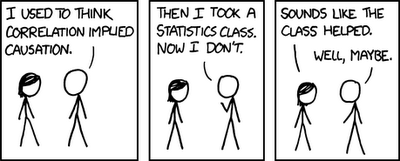
>Is the Center Breaking?

>Robert Samuelson is a syndicated economic columnist, whose work is featured in Newsweek. He is not a partisan–see a list of his recent columns here. There may be some wishful thinking on my part, but I believe that the center of American politics is starting to turn on Obama. Last week it was David Brooks, David Gergen and Christopher Buckley. Given Samuelson’s centrist reputation, what he says in his most recent column about Obama is all the more sobering. He writes:

To those who believe that Barack Obama is a different kind of politician — more honest, more courageous — please don’t examine his administration’s budget. If you do, you may sadly conclude that he resembles presidents stretching back to John Kennedy in one crucial respect. He won’t tax voters for all the government services they want. That’s the main reason we’ve run budget deficits in 43 of the past 48 years.

Obama is a great pretender. He repeatedly says he is doing things that he isn’t, trusting his powerful rhetoric to obscure the difference. He has made “responsibility” a personal theme; the budget’s cover line is “A New Era of Responsibility.” He says the budget begins “making the tough choices necessary to restore fiscal discipline.” It doesn’t.

Obama thinks he can ignore these blatant inconsistencies. Like many smart people, he believes he can talk his way around problems. Maybe. He’s helped by much of the media, which seem so enthralled with him that they don’t see glaring contradictions. During the campaign, Obama said he would change Washington’s petty partisanship; he also advocated a highly partisan agenda. Both claims could not be true. The media barely noticed; the same obliviousness persists. But Obama still runs a risk: that his overworked rhetoric loses its power and boomerangs on him.

Article referenced is copied in full at end of post.

—————————————————————————-
Obama’s Double Talk On the Budget

March 09, 2009 – By Robert Samuelson

To those who believe that Barack Obama is a different kind of politician — more honest, more courageous — please don’t examine his administration’s budget. If you do, you may sadly conclude that he resembles presidents stretching back to John Kennedy in one crucial respect. He won’t tax voters for all the government services they want. That’s the main reason we’ve run budget deficits in 43 of the past 48 years.

Obama is a great pretender. He repeatedly says he is doing things that he isn’t, trusting his powerful rhetoric to obscure the difference. He has made “responsibility” a personal theme; the budget’s cover line is “A New Era of Responsibility.” He says the budget begins “making the tough choices necessary to restore fiscal discipline.” It doesn’t.

With today’s depressed economy, big deficits are unavoidable for some years. But let’s assume that Obama wins reelection. By his last year, 2016, the economy presumably will have long recovered. What does his final budget look like? Well, it runs a $637 billion deficit, equal to 3.2 percent of the economy (gross domestic product), projects Obama’s Office of Management and Budget. That would match Ronald Reagan’s last deficit, 3.1 percent of GDP in 1988, so fiercely criticized by Democrats.

As a society, we should pay in taxes what it costs government to provide desired services. If benefits don’t seem equal to burdens, then the spending isn’t worth it. (Exceptions: deficits in wartime and economic slumps.)

If Obama were “responsible,” he would conduct a candid conversation about the role of government. Who deserves support and why? How big can government grow before higher taxes and deficits harm economic growth? Although Obama claims to be doing this, he hasn’t confronted entitlement psychology — the belief that government benefits once conferred should never be revoked.

Is it in the public interest for the well-off elderly (say, a couple with $125,000 of income) to be subsidized, through Social Security and Medicare, by poorer young and middle-aged workers? Are any farm subsidies justified when they aren’t essential for food production? We wouldn’t starve without them.

Given an aging America, government faces huge conflicts between spending on the elderly and spending on everything else. But even before most baby boomers retire (in 2016, only a quarter will have reached 65), Obama’s government would have grown. In 2016, federal spending is projected to be 22.4 percent of GDP, up from 21 percent in 2008; federal taxes, 19.2 percent of GDP, up from 17.7 percent.

It would also be “responsible” for Obama to acknowledge the big gamble in his budget. National security has long been government’s first job. In his budget, defense spending drops from 20 percent of the total in 2008 to 14 percent in 2016, the smallest share since the 1930s. The decline presumes a much safer world. If the world doesn’t cooperate, deficits will grow.

The gap between Obama rhetoric and Obama reality transcends the budget, as do the consequences. In 2009, the stock market has declined 23.68 percent (through March 6), says Wilshire Associates. The Wall Street Journal’s editorial page blames Obama’s policies for all of the fall. That’s unfair; the economy’s deterioration was a big cause. Still, Obama isn’t blameless.

Confidence (too little) and uncertainty (too much) define this crisis. Obama’s double talk reduces the first and raises the second. He says he’s focused on reviving the economy, but he’s also using the crisis to advance an ambitious long-term agenda. The two sometimes collide. The $787 billion “stimulus” is weaker than necessary, because almost $200 billion for extended projects (high-speed rail, computerized medical records) take effect after 2010. When Congress debates Obama’s sweeping health-care and energy proposals, industries, regions and governmental philosophies will clash. Will this improve confidence? Reduce uncertainty?

A prudent president would have made a “tough choice” — concentrated on the economy; deferred his more contentious agenda. Similarly, Obama claims to seek bipartisanship but, in reality, doesn’t. His bipartisanship consists of including a few Republicans in his Cabinet and inviting some Republican congressmen to the White House for the Super Bowl. It does not consist of fashioning proposals that would attract bipartisan support on their merits. Instead, he clings to dubious, partisan policies (mortgage cramdown, union card check) that arouse fierce opposition.

Obama thinks he can ignore these blatant inconsistencies. Like many smart people, he believes he can talk his way around problems. Maybe. He’s helped by much of the media, which seem so enthralled with him that they don’t see glaring contradictions. During the campaign, Obama said he would change Washington’s petty partisanship; he also advocated a highly partisan agenda. Both claims could not be true. The media barely noticed; the same obliviousness persists. But Obama still runs a risk: that his overworked rhetoric loses its power and boomerangs on him.
———————————————————————

Tagged , | Leave a comment

Sports Marketing and it’s PC Problem

There is a very interesting post over at the Biz of Baseball about how sports marketing expenditures from companies which received government bail-out money are coming under attack and how they are attempting, or not, to respond. To me something falls under the heading of PC [politically correct], if someone or something disagrees with an accusation made of them, but they capitulate to the accusations because they doubt their ability to make a more nuanced argument through the media din [i.e. headlines repeated ad nauseaum]. This from Toms’ article:

In the midst of this public and political turmoil, Nielsen Media Research has released some figures that show banking companies have decreased spending by 10 percent over the last year, but have increased the amount that they are spending on sports advertisement by 36 percent in 2008, showing that these businesses see sports as great return on investment.

According to Nielsen, “Banks spent $122 million – or 18.7% of all its TV ad dollars – on sports event programming in 2008. In 2007, the banking industry spent $90 million on sports broadcasts, or 12.5% of the industry’s total TV ad expenditures.”

That’s why Bank of America has a PC problem. They walked away from a sponsorship for the new Yankee Stadium, despite the fact that sports advertising is a considered a good buy in their industry.

As an aside, you can read the article by Pete Toms just as an example of why online articles are not a competitor, but a great compliment to, the regular media. Toms article gives the casual reader input on the issue from a variety of sources. But to those who are really interested and would have tried to read up further, absent his article, he just saved us [trust me on this], at least a couple of hours of research.

I became aware of the article through Shyster Ball, Craig Calcaterra’s blog, another good source of baseball related writing. I know the web can appear to be made up of angry people. But it can also be viewed as a community of bright people who learn about ‘stuff’ and are happy to share and encourage others to do the same. I met a few local bloggers recently at Tobacco Road. Perhaps I am guilty of too much much Hobbes in my cereal, but I’m always slightly amazed and appreciative of the random generosity I’ve encountered in the on-line community. Toms and Calcaterra are good examples of that.

Posted in Miami Marlins & MLB | Tagged , , , | 2 Comments

Geeky But Still Funny

Posted in Current Affairs & History | Tagged , | Leave a comment

Norman Braman: Profile in Slippage?

You might say that Norman Braman is a ‘Regalado-r‘ of his money, but only if you have the following in your background:

  • Rudimentary Spanish language skills.
  • Familiar with Miami and the new stadium politics.
  • Familiar with Bernard Madoff.
  • Have a deep and abiding love of bad humor.
  • Have no reasonable expectations of being hired by Mr Braman to sue anyone or anything involved in the stadium deal.
  • Have no reasonable expectations to inherent anything from Mr Braman. Because if that were a possibility, the distinction between Mr Madoff and Mr Braman’s stadium lawyers is lost upon you.

Ever had stuff you really should be doing, but another more pleasurable task drew you away, despite your best intentions. You’re reading my distraction. Don’t be too hard on yourself, after all you could be Norman Braman. His distraction, blocking a new baseball stadium in Little Havana, might have cost him the millions of dollars he eventually lost with Bernard Madoff. This of course assumes that even if he had tried to focus on his investment with Madoff, he would be sharp enough to have noticed the fraud which was so obvious to Harry Markopolos and Laura Goldman.

A few news items all came together in my head this week. Last night, I watched my DVR’d 60 Minutes broadcast, specifically the segment on the financial analyst [Markopolos] who had been warning the SEC about Madoff, but was ignored. Earlier in the week, I had seen a blog post in Freakonomics about another analyst, Laura Goldman, who also had determined that Madoff was a fraud. It took those two financial analysts, 5 and 45 minutes respectively, to realize that there was something amiss with Madoff’s claims. Finally, the week began with Tomas Regalado disclosing in a debate that seven different Norman Braman businesses had contributed to his mayoral campaign. Regalado, you will not be surprised to learn, is the anti-stadium candidate.

It’s a long way from Picasso, Jasper Johns and Andy Warhol to Tomas Regalado. So far in fact, that I can almost picture the following scene …

Braman sitting alone in his office as an aide walks in. ‘Sir, Mr Regalado keeps calling, I think you should take it.’ Braman looks exasperated, his arms flop on his chair-handles, palms up. ‘First of all, I can barely understand that man. Besides, he knows I’m maxed-out on contributions; what else does he want from me?’ Aide responds with a dead-on impersonation of Tony Montana, ‘a couple of tickets to the resurrection?’ Braman returns an unblinking unamused stare. The aide regrets the remark as soon as he says it–like the time he told his wife that seeing their newborn child was the first time he knew what real love was–spontaneity was always a bad idea around ‘Stormin Norman,’ that’s just the way he was. People with money get nicknames, the rest of us get deep-sixed when we are rude or obnoxious. ‘God, I just hope it’s not another cousin,’ Braman mumbles as he resigns himself to take the call.

‘Tomasitooo!!! How are ya …. yes, yes, we expect the trial to go smoothly … my people have a very good feeling about this … aw you’re too kind …. listen I always like to tell people, it’s not about me … aw you’re too kind … I know you do, I know you do … and it’s appreciated … hey, it’s only money [laughter … more laughter].’

Meanwhile an email from an old friend warning about Madoff sat in his Outlook inbox, ignored for now, he was just so busy with the trial, interviews, and dinner parties thanking him for his courage in standing up to ‘those’ people. He definitely had tapped into some serious pent-up resentment in local penthouses–you can’t miss ’em, they’re the ones actually lit at night, giving off an unintended Christmas tree or Lighthouse effect all year long]. Who knew the Arsht-loving, cafecito-hating, Miami-bashing [the ‘this could have been such a great city if it wasn’t for’ … riff] crowd were so upset? Hell, they didn’t even mind him getting in bed with Regalado! Whatever it takes, baby. He would of course eventually notice the Madoff-warning email later–when it was useless–and immediately erased it on the advice of an excellent psychotherapist.

What’s in your inbox?

Posted in Marlins Ballpark & Finances, Random Observations | Tagged , , , | Leave a comment

Yankee Stadium vs Marlins Stadium

The most comprehensive coverage of stadium financing that has appeared in the Miami Herald was on Feb 11th–the Herald links expire, so I copied the article at the end of this post–and it was a good example of the power of omission. Here is what it said about New York stadiums:

The New York stadiums, worth nearly $2 billion, include no upfront public payments — but the city is investing nearly $400 million in infrastructure surrounding the ballparks.

That is true but incomplete. I will break out the Yankees stadium costs from the Mets for comparison purposes and highlight what the article could have pointed out. Facts that, I believe, would have been of great interest not just to those following our local stadium issue, but to the legion of fans which follow the [Evil Empire] Yankees:

  • The new Yankee Stadium will end up costing approx $1.5 billion
  • The New York Yankees up front contribution towards the construction costs were $225 million–or 15%
  • The Florida Marlins up front contribution towards their stadium costs are scheduled to be $120 million–or 23%
  • The Florida Marlins up front costs could increase from 23%, since they are responsible for any costs overruns not attributable to government related delays. This explains why the Marlins insisted on selecting the architects and builders for the project.

The article noted a combined $400 million in infrastructure costs, however the costs related to Yankee Stadium alone totaled $325 million. When you read the quote from the article above about the New York teams, the importance of the words ‘upfront’ and ‘payments’ might not have jumped out at you. Here’s what else local, state and federal governments did for the New York Yankees, albeit things which fell outside the self-imposed parameters of ‘upfront public payments’ by the Miami Herald:

  • They issued a total of $1.3 billion in municipal bonds to finance 87% of the new stadium costs. Structuring their debt in this manner–by raising the money through tax-free investments– is estimated to have saved the Yankees $268 million.
  • The bonds were issued through a New York City agency, Industrial Development, and the city waged battle with the IRS to ensure that raising money for the stadium qualified as a legitimate public purpose for the bonds.
  • Exempted the Yankees from paying property taxes. The forgiveness of property taxes is common for large construction projects. Typically though, the property taxes begin after 20 years. In the case of the Yankees, it is permanent. Estimated savings on property taxes not paid after the 20th year–$417 million.
  • Re the City’s battle with the IRS – They had to address the peculiar issue of why investors in bonds issued by a NY city agency, would be receiving payments from the NY Yankees. The creative solution is an animal called PILOT.
  • Exempted the Yankees from paying sales tax on stadium construction costs. Estimated savings to the Yankees–$42 million.

Bottom line. The New York Yankees annual payments towards those bond holders–in effect the stadium costs–will come to approximately $70 million per year for 30 years.

When $70 million really equals $49 million, then $40 million

The Yankees revenue sharing and luxury tax payout in 2008 totaled $110 million. It could have reasonably been expected to increase, especially after this off-season. However, there is a clause in the MLB collective bargaining agreement which allows teams to consider capital payments towards a new stadium as ‘maintenance’ costs and use those amounts to reduce their revenue sharing payouts [all teams pay out a certain percentage of their local revenues, the smaller market teams just get more in return]. In the case of the Yankees, it represents an approximate 30% savings on its annual payments. Which means that $21 million of the $70 million annual payments will go towards reducing the Yankees revenue sharing payouts. So how much did the new stadium cost the Yankees–a team worth, before the new stadium, $1.3 billion and with annual revenues of $327 million last year [compared to $128 million for the Marlins].

  • $225 million upfront
  • Annual Pilot payments estimated at $70 million
  • Annual [30% of $70 million] $21 million reduction in costs since the team can deduct the Pilot payment from the revenue it is required to share with other major league teams.  So as long as the Yankees Luxury tax payments would be in excess of $21 million, the Pilot payments resents a 30% net savings to the Yankees.
  • Potentially another 30% net savings is the annual stadium maintenance costs, estimated at $30 million annually.  Again, 30%of the annual stadium maintenance costs can be deducted from the revenue the Yankees are required to share with other major league teams.  Now the net annual costs are down to $40 million, given the savings they represent from the Luxury taxes the Yankees would otherwise be responsible for.

The odds of the new Yankee Stadium paying for itself through higher gate receipts and the various governments help–upfront, out-back and in the middle stages–is high. So go ahead and complain about the Marlins deal with local governments. But at least get a few facts and rules straight. Rule #1, if you try and compare the Yankees and Marlins stadium deals, please try and do so with a straight face.

To the Miami Herald I dedicate a song by Bob Seger:

Well those drifters days are past me now
I’ve got so much more to think about
Deadlines and commitments
What to leave in, what to leave out

I need to thank to Neil deMause from the Field of Schemes blog. While no fan of public financing of stadiums, he takes the time to help all interested in understanding this issue. Below a recap of the various sources:

Loot, Loot, Loot for the Home Team
House That You Built
Neil deMause
Sports Business Daily
(Costs)/Savings From Exemptions and Subsidies for New Yankee Stadium – chart below – click on chart to enlarge


—————————————————————————-
Florida Marlins stadium deal better than most for team

Posted on Wed, Feb. 11, 2009

BY JACK DOLAN AND CHARLES RABIN

The Florida Marlins stadium deal coming up for final showdown votes Friday — where the public would foot 70 percent of the construction bill and share none of the revenue — would be among the more generous to a team owner this decade, a Miami Herald analysis found.

Fourteen Major League stadiums have been built, or begun, since 2000. The average public contribution for construction of those stadiums has been 44 percent, the newspaper found.

Under the proposed Miami deal, the Marlins would rank ninth of the 14 in the percentage of construction costs borne by the team, the newspaper found.

”It’s probably not the best deal that has ever been worked out between a community and a team,” Miami-Dade Mayor Carlos Alvarez said after his State of the County speech on Tuesday.

But he insisted it’s better than most and comes at a time the region is thirsting for a public works jolt, adding: “At some point, negotiations have to stop.”

The Herald examined public records, reviewed media reports and spoke with city and county officials across the country to create its list, showing:

• The public paid a higher percentage for construction costs for stadiums in Cincinnati, Pittsburgh and Milwaukee. Taxpayers in Washington and Houston also paid more initially, but will recoup much of their investment through generous revenue sharing with the teams.

• Team owners are on the hook for a greater share of construction costs in Minneapolis, San Diego, Philadelphia, Detroit, St. Louis, New York — with stadiums for both the Mets and Yankees — and San Francisco. The New York stadiums, worth nearly $2 billion, include no upfront public payments — but the city is investing nearly $400 million in infrastructure surrounding the ballparks.

Stadium deals are complex financial transactions that can be difficult to compare. Some involve outright gifts of public land, which can be hard to value, some involve taxpayer-funded infrastructure that benefits the team and the public, and almost all involve varying degrees of low-interest financing subsidized by government agencies.

Those factors make it impossible to draw an across the board, apples to apples, comparison of every financial variable.

However, the initial stadium construction agreements are generally comparable, typically setting the tone for how generous local governments are going to be to the team over the multidecade life of the deal.

The Herald analysis of those deals shows cities that drove the hardest bargains often did so after putting stadium deals to a public vote, or after politicians dismissed threats from team owners to move.

Voters in St. Louis refused to finance a stadium for the venerable Cardinals, so team owners raised 88 percent of the construction money themselves, relying on a county loan for the rest.

In San Francisco, where voters rejected four ballot measures that would have committed public funds to a new Giants stadium, a local grocery magnate built a spectacular waterfront park with money from Silicon Valley investors and deep-pocketed fans.

”We really would have preferred if the public had taken the risk instead of us,” said Peter Magowan, who bought the Giants after the failed ballot measures. “But voters had spoken in unmistakable terms to us a number of times.”

In Miami, the Marlins and local leaders carefully avoided a public referendum by structuring the deal so most of the public money comes from hotel bed taxes paid primarily by tourists.

Bob Starky, who consults for Major League Baseball on stadium deals, reviewed the newspaper’s findings.

”The most difficult thing to do with these deals is compare them,” he said.

Starky questioned how fair it is to compare the Marlins to large market teams like the Yankees and the Giants, or even smaller market teams with historically high revenues, like the Cardinals.

”They can put more toward the ballpark than Miami, or Minnesota or Pittsburgh,” Starky said, “just like some people can afford to buy a bigger house.”

In some cases, teams were willing to put up more of their own money because they own the property adjacent to their new stadiums and would profit from the development of restaurants and shopping. San Diego, Detroit and St. Louis fall into that category, Starky said.

Under the proposed Marlins deal, outright public gifts would cover $361 million of the $515 million stadium construction. The Marlins would pay $119 million and get another $35 million loan from the county, to be repaid in escalating annual installments.

The Marlins will not have to buy land: The county will host them rent free for 35 years on the site in Little Havana, which is assessed at $16 million by the county appraiser. The county will own the stadium, so the Marlins won’t pay property tax.

So-called bed taxes will cover $311 million of the total $515 million cost.

But revenue from the bed tax has been severely compromised by the global recession, raising questions about whether the county would have to dip into the general fund, which pays for a wide range of services, including police and garbage collection.

Public money also paid the estimated $10 million cost of demolishing the Orange Bowl, which had occupied the site, and will cover an estimated $24 million in infrastructure work.

Other cities have constructed finances differently. In 2004, the Washington, D.C., council voted to cover all $600 million of construction costs for the Nationals. But, Washington also shares significantly in the team’s proceeds.

To help cover the city’s roughly $35 million annual construction loan payments, the Nationals pay an average rent of $5.5 million a year. The city also collects tax on tickets and merchandise at the stadium; their share came to $12.5 million in 2008. Taxes on businesses and utilities cover the rest of D.C.’s annual loan payment.

Marlins President David Samson said up until six months ago, he offered the county the exact same deal that D.C. received.

But county officials say they’re better off with Marlins owner Jeffrey Loria spending $154 million toward construction costs than creating dedicated revenue sources for the stadium.

”Washington, D.C., is all public money, it’s taxes imposed on users of the stadium,” County Manager George Burgess said. “We have not created any new tax or fee, or raised any, for the financing.”

Robert A. DuPuy, president of Major League Baseball, said of Loria: “This is an owner who is reaching in his own pocket in a market that, frankly, is unproven.”

The San Diego Padres opened their new stadium in 2005, built with 67 percent public funds, slightly less than in Miami.

As part of the deal, the team owner invested $300 million to help develop the neighborhood surrounding the stadium. There is no such requirement for the Marlins to invest in Little Havana.

The city of San Diego is able to pay off its debt with proceeds from other events at the stadium, including concerts, soccer matches and motocross races. The city makes more than $1 million per year through such events, said Tim Moore, the city’s ballpark administrator.

Under the Marlins’ pending deal, all revenue from the first 10 non-baseball events at the stadium each year would go to the team. After that, the county would get half the profits, but the money must be spent on capital improvements at the park — another benefit to the Marlins.

”Wow, the Marlins negotiated a good deal,” Moore said.

In Milwaukee, emotions are still raw even though the stadium opened eight years ago and the Brewers made the playoffs in 2008.

”You’re gonna get ripped off, lookout,” Wisconsin state Sen. Michael G. Ellis said last week. “Bud Selig is on the way; hold on to your wallet.”

Selig, now the commissioner of Major League Baseball, owned the Brewers when stadium negotiations began in Milwaukee in the early 1990s.

The initial conversations involved Selig paying for his own stadium, said Ellis, who was majority leader of the state Senate during key votes. Through relentless lobbying, ”the worm turned,” Ellis said, and the public wound up footing 78 percent of the bill.

Selig got the site he wanted, in a remote location where the team wouldn’t have to compete with other restaurants and businesses.

The Miami deal sounds familiar, Ellis said. “So it’s a self-contained unit? They get the revenue and they don’t pay property taxes? It’s the same modus operandi as they used up here.”

Former Wisconsin Gov. Tommy Thompson, who went on to serve in President George W. Bush’s Cabinet, was originally a strong supporter of the Brewers’ deal. ”It couldn’t have happened without me,” Thompson said in an interview last week.

But as the deal progressed, Thompson soured. The Seligs, he said, “were going to contribute a lot more money and a lot more support, and they just kept pulling back, all during construction.”

Thompson said if he were a Miami politician, he would not vote until he saw signed, enforceable contracts for every aspect of the deal. He would insist the Marlins prove they have the financial wherewithal to live up to their end of the deal.

Contracts for stadium construction and operation are written, but not signed. The Marlins have fought for years to keep their finances private, and so far have not offered public proof they can cover their share of the construction costs.

Marlins President Samson said he expects to approach lenders in the next 18 months, and that ”the banks are comfortable today” with lending money to Major League baseball teams. ”People want to own that paper because they know there are revenue streams that never go away,” he said.

Selig could not be reached for comment.

City and county commissioners will cast votes on five separate stadium contracts on Friday, the final votes in the franchise’s decade-long quest for a permanent home.

Passage could come down to a one-vote swing, as the County Commission must approve two contracts — for construction and management — by a 2-1 majority because the Marlins hired contractors without formal bid, requiring a bid waiver.

MLB’s DuPuy added that the Marlins might be better off somewhere else if a stadium deal can’t be hammered out. ”Anyplace is better than Miami without a ballpark,” DuPuy said.
———————————————————————

Posted in 2TG Favorites, Marlins Ballpark & Finances | Tagged , , , , | Leave a comment

David Brooks’ Moderate Manifesto

David Brooks believes that what Obama has done in power is more indicative of his beliefs than what he said to get that power. Specifically, he sees:

… a party swept up in its own revolutionary fervor — caught up in the self-flattering belief that history has called upon it to solve all problems at once. … We end up with an agenda that is unexceptional in its parts but that, when taken as a whole, represents a social-engineering experiment that is entirely new. 

So he proposes a Moderate Manifesto:

Those of us in the moderate tradition — the Hamiltonian tradition that believes in limited but energetic government — thus find ourselves facing a void. We moderates are going to have to assert ourselves. We’re going to have to take a centrist tendency that has been politically feckless and intellectually vapid and turn it into an influential force. 

The first task will be to block the excesses of unchecked liberalism. In the past weeks, Democrats have legislated provisions to dilute welfare reform, restrict the inflow of skilled immigrants and gut a voucher program designed for poor students. It will be up to moderates to raise the alarms against these ideological outrages.

But beyond that, moderates will have to sketch out an alternative vision. This is a vision of a nation in which we’re all in it together — in which burdens are shared broadly, rather than simply inflicted upon a small minority. This is a vision of a nation that does not try to build prosperity on a foundation of debt. This is a vision that puts competitiveness and growth first, not redistribution first.

From a cynical perspective, one could comment that at least he is as honest now than he was gullible during the campaign. But I consider Brooks to be an honest commentator who truly did hope that Obama would represent a change. What we are now reading in his columns is the disappointment in realizing that is likely not the case. However, the fact that he was a not a critic, but rather something of a supporter during the campaign, makes him a very effective critic now.

To me it is no coincidence that one of Brooks’ early mentors–and my hero as I was first interested in politics–was the great William F. Buckley Jr., someone who consistently elevated the public political debate.

All articles referenced are copied in full at end of post.

—————————————————————————-
A Moderate Manifesto

March 3, 2009 – Op-Ed Columnist

By DAVID BROOKS

You wouldn’t know it some days, but there are moderates in this country — moderate conservatives, moderate liberals, just plain moderates. We sympathize with a lot of the things that President Obama is trying to do. We like his investments in education and energy innovation. We support health care reform that expands coverage while reducing costs.

But the Obama budget is more than just the sum of its parts. There is, entailed in it, a promiscuous unwillingness to set priorities and accept trade-offs. There is evidence of a party swept up in its own revolutionary fervor — caught up in the self-flattering belief that history has called upon it to solve all problems at once.

So programs are piled on top of each other and we wind up with a gargantuan $3.6 trillion budget. We end up with deficits that, when considered realistically, are $1 trillion a year and stretch as far as the eye can see. We end up with an agenda that is unexceptional in its parts but that, when taken as a whole, represents a social-engineering experiment that is entirely new.

The U.S. has never been a society riven by class resentment. Yet the Obama budget is predicated on a class divide. The president issued a read-my-lips pledge that no new burdens will fall on 95 percent of the American people. All the costs will be borne by the rich and all benefits redistributed downward.

The U.S. has always been a decentralized nation, skeptical of top-down planning. Yet, the current administration concentrates enormous power in Washington, while plan after plan emanates from a small group of understaffed experts.

The U.S. has always had vibrant neighborhood associations. But in its very first budget, the Obama administration raises the cost of charitable giving. It punishes civic activism and expands state intervention.

The U.S. has traditionally had a relatively limited central government. But federal spending as a share of G.D.P. is zooming from its modern norm of 20 percent to an unacknowledged level somewhere far beyond.

Those of us who consider ourselves moderates — moderate-conservative, in my case — are forced to confront the reality that Barack Obama is not who we thought he was. His words are responsible; his character is inspiring. But his actions betray a transformational liberalism that should put every centrist on notice. As Clive Crook, an Obama admirer, wrote in The Financial Times, the Obama budget “contains no trace of compromise. It makes no gesture, however small, however costless to its larger agenda, of a bipartisan approach to the great questions it addresses. It is a liberal’s dream of a new New Deal.”

Moderates now find themselves betwixt and between. On the left, there is a president who appears to be, as Crook says, “a conviction politician, a bold progressive liberal.” On the right, there are the Rush Limbaugh brigades. The only thing more scary than Obama’s experiment is the thought that it might fail and the political power will swing over to a Republican Party that is currently unfit to wield it.

Those of us in the moderate tradition — the Hamiltonian tradition that believes in limited but energetic government — thus find ourselves facing a void. We moderates are going to have to assert ourselves. We’re going to have to take a centrist tendency that has been politically feckless and intellectually vapid and turn it into an influential force.

The first task will be to block the excesses of unchecked liberalism. In the past weeks, Democrats have legislated provisions to dilute welfare reform, restrict the inflow of skilled immigrants and gut a voucher program designed for poor students. It will be up to moderates to raise the alarms against these ideological outrages.

But beyond that, moderates will have to sketch out an alternative vision. This is a vision of a nation in which we’re all in it together — in which burdens are shared broadly, rather than simply inflicted upon a small minority. This is a vision of a nation that does not try to build prosperity on a foundation of debt. This is a vision that puts competitiveness and growth first, not redistribution first.

Moderates are going to have to try to tamp down the polarizing warfare that is sure to flow from Obama’s über-partisan budget. They will have to face fiscal realities honestly and not base revenue projections on rosy scenarios of a shallow recession and robust growth next year.

They will have to take the economic crisis seriously and not use it as a cue to focus on every other problem under the sun. They’re going to have to offer an agenda that inspires confidence by its steadiness rather than shaking confidence with its hyperactivity.

If they can do that, maybe they can lure this White House back to its best self — and someday offer respite from the endless war of the extremes.
———————————————————————————
Remembering the Mentor

February 29, 2008 – Op-Ed Columnist – By DAVID BROOKS

When I was in college, William F. Buckley Jr. wrote a book called “Overdrive” in which he described his glamorous lifestyle. Since I was young and a smart-aleck, I wrote a parody of it for the school paper.

“Buckley spent most of his infancy working on his memoirs,” I wrote in my faux-biography. “By the time he had learned to talk, he had finished three volumes: ‘The World Before Buckley,’ which traced the history of the world prior to his conception; ‘The Seeds of Utopia,’ which outlined his effect on world events during the nine months of his gestation; and ‘The Glorious Dawn,’ which described the profound ramifications of his birth on the social order.”

The piece went on in this way. I noted that his ability to turn water into wine added to his popularity at prep school. I described his college memoirs: “God and Me at Yale,” “God and Me at Home” and “God and Me at the Movies.” I recounted that after college he had founded two magazines, one called The National Buckley and the other called The Buckley Review, which merged to form The Buckley Buckley.

I wrote that his hobbies included extended bouts of name-dropping and going into rooms to make everyone else feel inferior.

Buckley came to the University of Chicago, delivered a lecture and said: “David Brooks, if you’re in the audience, I’d like to offer you a job.”

That was the big break of my professional life. A few years later, I went to National Review and joined the hundreds of others who have been Buckley protégés.

I don’t know if I can communicate the grandeur of his life or how overwhelming it was to be admitted into it. Buckley was not only a giant celebrity, he lived in a manner of the haut monde. To enter Buckley’s world was to enter the world of yachts, limousines, finger bowls at dinner, celebrities like David Niven and tales of skiing at Gstaad.

Buckley’s greatest talent was friendship. The historian George Nash once postulated that he wrote more personal letters than any other American, and that is entirely believable. He showered affection on his friends, and he had an endless stream of them, old and young. He took me sailing, invited me to concerts and included me at dinners with the great and the good.

He asked my opinion about things, as he did with all his young associates, and he worked hard on polishing my writing. My short editorials would come back covered with his red ink, and if I’d written one especially badly there might be an exasperated comment, “Come on, David!”

His second great talent was leadership. As a young man, he had corralled the famously disputatious band of elders who made up the editorial board of National Review. He changed the personality of modern conservatism, created a national movement and expelled the crackpots from it.

He led through charisma and merit. He was capable of intellectual pyrotechnics none of us could match. But he also exemplified a delicious way of living.

Magazines are aspirational. National Review’s readers no doubt shared a hatred for Communism, but many of them simply wanted to be like Buckley. He had a Tory gratitude for the pleasures of life: for music, conversation, technology and adventure.

Days at the magazine were filled with rituals. And through all the fun, I don’t recall him talking about politics much. He talked about literature, history, theology, philosophy and the charms of the peculiar people he had known. I don’t recall politicians at his home, but I do recall literary critics like Anatole Broyard and social thinkers like James Burnham, even after his stroke.

Buckley contained all the intellectual tensions of conservatism, the pessimism of Albert Jay Nock and Whittaker Chambers, as well as the optimism of Ronald Reagan. He loved liberty and felt it must be constrained by the invisible bonds of the transcendent order.

One night we were at his home, and his wife, Pat, at the height of her glamour, swept in from an evening on the town and took one look at the little group of us debating some point. You could feel her inner thought: “Why does he spend his time with those people?” But Buckley loved ideas, swept us along as his companions, and sent us out into the world.

And years later, I asked if he’d ever reached a moment of contentment. He’d changed history and accomplished all that any man could be expected to accomplish. After you’ve done all that, I asked, do you feel peace? Can you kick back and relax?

He looked at me with a confused expression. He had no idea what I could possibly be talking about.
———————————————————————

Tagged , , | Leave a comment

Anatomy of a Bureaucratic FUBAR

If you still believe that this administration will bring a change in competency–as in, Bush was an idiot, these guys are smart–you might want to skip this post. This post reinforces the idea that government operates in a very similar manner, no matter who happens to be in the White House.

Here are the basic facts and the problem as presented in a WSJ Editorial:

  • The Treasury and Federal Reserve have been propping up troubled financial institutions since last year, mainly through the $700 billion TARP legislation.
  • The FDIC, through the Temporary Liquidity Guarantee Program, has lent various banks over $200 billion.
  • President Obama’s budget foresees an additional $250 billion in financial-rescue funding.
  • While the FDIC is ostensibly an independent agency of the federal government, it operates like the Social Security Trust Fund, there is no independent account holding their funds. The FDIC hands its money over to the Treasury to spend and draw down as needed.
  • The FDIC has an existing $30 billion Treasury line of credit, which may soon grow to $100 billion.
  • The FDIC needs to replenish $27 billion of funds to meet its own capital requirements. It plans to get those monies in premiums payments from banks – the same banks that everyone is trying to keep solvent.
  • Money paid to the FDIC can’t be leveraged to support new lending, so $27 billion in FDIC premiums could also take $150 billion or so out of lending in the coming year.

Our federal government is simultaneously propping up the banking industry with one hand, while attempting to extract premiums from them with the other. How does this happen? Why not just give them the net amount? I can help setup the spreadsheet. Well, here’s my guess how this kinda stuff [government] happens:

The head of the FDIC, Sheila Bair, is a Bush appointee, with probably no personal connections to Obama or loyalties to her new indirect boss, Timothy Geithner. She was probably presented the issue of the funding requirements and had two options. Follow established procedures [press the banks for the $27 billion in premiums] or stick her neck out and with her new boss [by requesting to draw the $27 billion directly from the Treasury]. Ms Bair met with her Board several times to discuss the options, but could not agree on a plan of action. Given that her name is Bair, not Bauer, when pressed for a decision, she decided to follow established procedures. Over at Treasury and the White House, they could have overridden Bair, but they don’t feel they have the time to address this issue right now. So they practice don’t ask, don’t tell and certainly don’t call Bair back.

They don’t call you before subcommittees when you follow procedures or for not returning calls. That’s government at work. That’s how decisions are made, or not made, by otherwise intelligent people which will look idiotic in the hands of the next batch of skillful charlatans on the campaign trail. Can’t you just hear Corporal Upham muttering ‘FUBAR?’ FUBAR is a very old expression for a reason.

Now repeat one of these in a mantra-like manner, ‘governing is just like campaigning,’ or ‘executive experience is overrated.’

Editorial referenced is copied in full at end of post.

—————————————————————————-
Bank Robbery – Depleting capital when it’s most needed

MARCH 4, 2009

The Treasury and Federal Reserve continue to cook up creative ways to pump taxpayer money into troubled financial institutions. So we’re having a tough time understanding why another federal agency, the FDIC, has announced plans to take $27 billion out of the banking system this year.

It’s true that the FDIC’s deposit-insurance fund has been shrinking, and that since the beginning of 2009 the FDIC has rolled up two banks a week, on average. It took over two more last Friday. The fund is now down to $19 billion from $52 billion a year ago and by law had to be replenished.

But the deposit-insurance fund is itself a legal fiction. There is no bank vault with those billions socked away for FDIC Chairman Sheila Bair to dip into when she seizes a bank. Like the Social Security Trust Fund, the insurance fund hands its money over to the Treasury to spend and draws it down as needed. Even if the fund falls to zero, the FDIC has an existing $30 billion Treasury line of credit, which may soon grow to $100 billion.

Ms. Bair painted Friday’s decision to dun the banks for $27 billion this year as an act of fiscal responsibility, noting that unlike other rescue programs, the FDIC might not have to hit up taxpayers or tap that credit line this year. But this is a false economy if the money sucked out of the banking system to pay for deposit insurance drives more banks to the brink of failure.

That $27 billion levy against an insured deposit base of $4.76 trillion may not seem like much. But it could mean $2 million or more this year for a bank with $1 billion in deposits, which could in turn represent a substantial drain on earnings at a time when the economy needs banks to earn their way out of trouble. Money paid to the FDIC can’t be leveraged to support new lending, so $27 billion in FDIC premiums could also take $150 billion or so out of lending in the coming year.

To be sure, the law under which the FDIC operates is perverse. For most of a decade beginning in 1996, bank failures were rare and the FDIC collected no premiums from most banks. That forbearance was required under the law, which was designed to make sure that the insurance fund never got too big or too small.

But the parameters are so narrow that, as we are now seeing, a slew of bank failures can force premium increases at the worst possible time. If we are going to have deposit insurance, then by all means let the banks pay for it. But the FDIC needs the flexibility to collect premiums in good times, and not wait until a crisis is under way to step in and start skimming from the banks.

Ms. Bair also has more flexibility than she claims. There is that Treasury line of credit. And Congress could have appropriated additional funds to cover deeper losses last year, as these columns urged. It could do so again now. The real problem here is political. A year and a half into this financial mess, the name of the game in Washington is still cover-your-assets, and neither the FDIC nor Congress wants to own up to the need for more taxpayer help to protect depositors.

Banks should pay for their insurance over the course of a business cycle, rather than raiding their earnings when they desperately need the capital. President Obama’s budget foresees an additional $250 billion in financial-rescue funding, which means bank losses. When we’re putting that kind of money into the banks to keep them solvent, why is the FDIC taking billions out?
———————————————————————

Posted in Current Affairs & History | Tagged , | Leave a comment

She Had Me at Varadero and Carol City

Varadero, WSJ, Carol City, Dolphins, Pro-Surge and life begins before birth. No, these items were not pulled from a profile on a right-wing dating service. Incredibly, it is a list some of the background, interests and beliefs of a new columnist for the Miami Herald.

I was alerted to an interesting trend at the Miami Herald by a like-minded blog–albeit one with, hands-down, the best blogger-based look around–the 26th Parallel.

The trend is local columnists with a more conservative political outlook, Jackie Bueno Sosa and Glenn Garvin. Putting my own right-of center views aside [OK, right field corner], as a business model it makes sense that a newspaper have a certain contrarian perspective. During the Obama-age, common sense dictates that those critical of the administration’s philosophical views will have much more material to work with. Besides, the Obama-support angle was already being staked out rather aggressively by Leonard Pitts–his admiration is said to have inspired a new movie.

In the case of Ms Sosa–btw, where are we on the whole Miss / Ms / Mrs thing? I assume that Ms has evolved into the female version of Mr, i.e. not meant to denote marital status–one column in, I was a fan. She wrote:

I believe that Main Street is as responsible for the current economic crisis as Wall Street. I believe Lee Harvey Oswald acted alone; that NFL play rules are beginning to coddle quarterbacks; and that all elected officials should be subject to term limits. I believe that man really did land on the moon; that history will redeem George W. Bush; that life begins after conception but before birth; and that nature will destroy us before we destroy it.

She then followed that up with a column which criticized jury awards:

The problem with that argument is it misconstrues the purpose of punitive damages, which date back to the 18th century. After British officers were involved in cases involving illegal searches and seizures, English courts for the first time said a jury would “have it in their power to give damages for more than the injury received — as punishment to the guilty, to deter from any such proceedings in the future. . . .”

Encouraging lawsuits may be a modern outcome of punitive damages, but it wasn’t part of the original intent. It’s time we return the punitive award to its roots. Split recovery wouldn’t be perfect, but the fairness it would bring to the process could be reward enough.

Politically, I have no idea which individuals to trust, but I can trust how a person argues. In the case of Ms Sosa, her arguments focused on incentives and the original intent of a law. To paraphrase the great Margaret Thatcher and Michael Corleone, this is a columnist the no-Obama-kool-aid crowd can do business with.

Columns referenced are copied in full at end of post.

—————————————————————————-
We shouldn’t leave luck up to chance

Posted on Mon, Feb. 23, 2009

BY JACKIE BUENO SOUSA

In the late 1970s, my family lived in a simple, but comfortable, three-bedroom house only blocks from the Hialeah Park Race Track. The neighborhood was full of kids, and on race days we’d sometimes sit for hours watching traffic pile up.

One day, as I played outdoors with some friends, we came across two middle-aged men as they walked toward the park, passionately discussing the merits of several horses.

One of them, a portly, bearded man, was holding a stack of papers with each hand, the fingers of the right hand curled around a pencil. He’d clearly been doing a lot of research on the horses. The other, cleanshaven with brown hair slickly combed to the side, was trying to convince him to leave the paperwork behind.

”This is about luck,” he was saying. “Just go with your gut.”

My friends and I hung around outdoors most of the day and, after some time, I saw the two men again walking past us. Mr. Paperwork displayed a satisfied smile, while his companion looked grim.

”Were you lucky?” I asked.

”Lucky?” Mr. Paperwork repeated. “Yes, I’m often lucky when I use my brain.”

That belief in man’s power to foresee outcomes eventually would serve as a guide in much of what I would do later in life, as a writer for The Wall Street Journal, as editor of The Daily Business Review and The Miami Herald’s Business Monday section, and even as a business owner.

It also played a role in my decision to begin writing this column. It’s not that I think luck, a byproduct of forces beyond our control, plays no role in our lives (or in horse racing, for that matter). It’s just that, as a community, sometimes we fail to thoroughly study events and engage in the difficult thinking that improves our odds for success.

More important, we too often fail to challenge conventional wisdom — the kind of wisdom, for example, that insisted the housing market would never go bust.

It all goes back to our beliefs. Mr. Paperwork had to believe his research would make a difference before he’d even attempt it. Our beliefs influence our choices, and choices shape our lives. So, in this introductory column, I’ll skip the small talk about my life and background and simply tell you what else I believe.

I believe that Main Street is as responsible for the current economic crisis as Wall Street. I believe Lee Harvey Oswald acted alone; that NFL play rules are beginning to coddle quarterbacks; and that all elected officials should be subject to term limits. I believe that man really did land on the moon; that history will redeem George W. Bush; that life begins after conception but before birth; and that nature will destroy us before we destroy it.

I believe we’re entering a dangerous era of populism; that neither fear nor hate should ever drive a decision; and that in life you can have anything, but you can’t have everything — you’ve got to make choices.

Most of all, I believe that the issues we’ll discuss in this space in the months to come will make a difference in how we develop as a community and that, no matter where we each stand on a debate, we’re all the better when we do the hard work of thinking things through and engaging in honest communication.

We’ll still have winners; we’ll still have losers. But when we do it right, we all can consider ourselves lucky.
——————————————————————————-
Jury awards need to be fair, not lucrative

Posted on Mon, Mar. 02, 2009

BY JACKIE BUENO SOUSA

A Broward jury recently awarded $8 million to the family of a man who died as a result of lung cancer after smoking two packs of cigarettes daily for 40 years.

Multimillion-dollar jury awards are hardly unusual these days. What made this award stand out was that the same jury determined that the smoker, not the tobacco company, was the one mostly responsible for his own death.

The verdict sends a dangerous message: People may engage in detrimental behavior and take comfort in knowing that their loved ones might benefit financially from that behavior once they’re gone. The case, Hess vs. Philip Morris, was the offspring of a larger class-action suit that the Florida Supreme Court threw out, saying each case had to be tried individually. As a result, some 8,000 similar cases are making their way through Florida’s courts, which means we may be about to unleash a systemic wave of rewards for catastrophic behavior.

Not that Philip Morris was without fault. The tobacco company was found to have lied about the harmful effects of smoking. So in the Hess case, the jury ordered Philip Morris to pay $3 million to compensate the Hess family for their loss. To punish the company, the jury told Philip Morris to pay an additional $5 million.

The punitive portion of the award is the most concerning because it furthers the ”lottery” effect of lawsuits today.

”It could seem excessive to have 8,000 of these trials and have each person ask for punitive damages,” says Elizabeth Burch, professor of law at Florida State University. ”At some point, the judge is going to say you’ve been punished enough.” If that happens, the plaintiffs in early cases will receive the benefit of punitive awards, while later plaintiffs may get little or nothing. Plaintiff awards won’t be a matter of justice, but the luck of the draw.

So is it possible to punish a wrongdoer without turning the process into a lawsuit lottery?

”Some states have become very innovative in that regard,” says Darren McKinney, spokesman for the American Tort Reform Association, a nonpartisan group. One method several states have used is a concept called split recovery: The plaintiff only gets a portion of the award, while the other portion goes to a fund created by the state, to be used for a public purpose.

Complex problems rarely have perfect solutions, and split recovery is no exception. Among its drawbacks: States may become too reliant on the money, and jurors could be tempted to award larger amounts if they think the money will go toward a public good.

Others say split recovery threatens one of the purposes of punitive awards: to give people a financial incentive to sue, maintaining a check on harmful behavior.

The problem with that argument is it misconstrues the purpose of punitive damages, which date back to the 18th century. After British officers were involved in cases involving illegal searches and seizures, English courts for the first time said a jury would “have it in their power to give damages for more than the injury received — as punishment to the guilty, to deter from any such proceedings in the future. . . .”

Encouraging lawsuits may be a modern outcome of punitive damages, but it wasn’t part of the original intent. It’s time we return the punitive award to its roots. Split recovery wouldn’t be perfect, but the fairness it would bring to the process could be reward enough.
———————————————————————

Tagged | 2 Comments

The Gospel of Matthew’s Sex Offender Clause?

If any child I know had been a victim, I don’t know how I would react to the issue of how our society deals with sex offenders once they have served their jail sentence. But as a Christian, I have no doubt what my faith expects of me, compassion. For all the wisdom and depths of Christian thought, the ‘how to’ aspect of being a believer can be rather simple. Our truly final exam has been leaked for a while now. To paraphrase the Gospel of Matthew 25:31-46:

  • Did you feed the feed the hungry & thirsty?
  • Did you befriend strangers?
  • Did you clothe the naked?
  • Did you visit the sick and imprisoned?

To say that I know what my faith expects of me is not the same as feeling that way in my heart. I have watched the interesting movie, Gone Baby Gone, a few times now, and I always root for Casey Affleck to pull the trigger. Still, there must be a reason we are not called to only visit the ‘unjustly’ imprisoned, and I respect the source of those instructions.

David Friedman changed my mind about the Three Strikes law–which I supported as a means of removing discretionary powers from more liberal judges–by pointing out how the law marginalized the life of anyone witnessing the third felony. Turns out I really hadn’t thought it through, mainly because I lacked the imagination to see the issue from another perspective.

Fred Grimm gives us that type of different perspective. The Miami Herald columnist highlights the situation confronting sex offenders who have been released from prison:

The parolees are required to live in a place without electricity and to keep their electronic tracking devices charged. Before they pooled their money to buy a $300 generator, that meant a miles-long walk to find a convenience store electrical outlet.Bushes along the bay shore have been littered with trash and human feces. M.C. said, “I begged them to give us a trash dumpster. We could keep this place clean.” But a dumpster would be tantamount to an official admission that these ex-prisoners have become permanent inmates in another setting, condemned to finish out their lives under the Tuttle Causeway.

They can’t have a dumpster, toilet or running water because the state clings to an official pretense that their camp is only a transient aberration, instead of a permanent menace to public health.

“It’s horrible. It makes no sense,” said Dr. Joe Greer, Miami’s indefatigable public-health advocate. He visited the bridge settlement and was aghast at what Florida has created. “Not only does that camp endanger the community, but it’s inhumane.”

Grimm begins his article by pointing out that none of his thoughts on the issue are meant to condone the terrible crimes these men committed. I echo his thoughts and applaud him sticking his neck out on an issue for which there are no constituencies. Grimm is right, we should do better. Not because they deserve it, but because we don’t measure our decency by how we treat the deserving.

PS – Apologies to all my Emmaus community brothers, who know that I uttered no original thoughts in this post. My only defense is that at least I was a good listener.

Article referenced is copied in full at end of post.

————————————————————————————-
Florida sex offender policy puts inhumane nightmare under bridge

Posted on Thu, Feb. 26, 2009

By FRED GRIMM

Still there . . .

No, you think. That can’t be. Not after two years. Makes no sense.

But they’re still there, a bedraggled colony of outcasts, consigned to the bowels of the Julia Tuttle Causeway — as a matter of public policy.

No, you think. That’s impossible. Last winter, state officials promised they’d solve the legal conundrum and international embarrassment that forced 19 sex offenders to live like rats under the concrete support beams of a causeway bridge. The camp’s still there. Only the Tuttle bridge population has since grown to 48 men, crammed together in a nether existence of the Kafka kind.

Officially, of course, the state of Florida would never compel ex-offenders to live in unsanitary conditions in the dank underbelly of a freeway bridge, in tents, shacks, cars and two rusting campers. Yet parole officers have made it clear to ex-sex offenders who’ve served their prison sentences that they have no other options.

City and county laws have created so many overlapping forbidden zones — 2,000 or 2,500 feet from schools, day cares, parks, playgrounds, school bus stops — that the middle of Biscayne Bay has become an ex-offender’s only allowable address.

“They check us here every evening. We’ve got to be here or we go back to prison,” said M.C., 48, who was banished to the bridge after his release from prison two years ago.

DESPERATE CONDITIONS

They live in unlivable conditions. No water. No toilet, other than a jerry-rigged privy M.C. built with scrap wood, a plastic bucket and a tattered sheet for privacy.

The parolees are required to live in a place without electricity and to keep their electronic tracking devices charged. Before they pooled their money to buy a $300 generator, that meant a miles-long walk to find a convenience store electrical outlet.

Bushes along the bay shore have been littered with trash and human feces. M.C. said, “I begged them to give us a trash dumpster. We could keep this place clean.” But a dumpster would be tantamount to an official admission that these ex-prisoners have become permanent inmates in another setting, condemned to finish out their lives under the Tuttle Causeway.

They can’t have a dumpster, toilet or running water because the state clings to an official pretense that their camp is only a transient aberration, instead of a permanent menace to public health.

`ENDANGERS COMMUNITY’

“It’s horrible. It makes no sense,” said Dr. Joe Greer, Miami’s indefatigable public-health advocate. He visited the bridge settlement and was aghast at what Florida has created. “Not only does that camp endanger the community, but it’s inhumane.”

Greer talked of how men there, two of whom are in their 80s, are exposed to heat, cold, rain and mosquitoes, and have no fresh water or toilets, making them ripe for both communicable disease and psychological deterioration.

Perversely, Florida’s ill-considered residency laws not only fomented this health hazard, they offer no real protection to children. Untethered to an actual home, ex-offenders become more difficult to supervise.

No one defends their unspeakable crimes. But residency laws that condemn them to live out the balance of their lives like bridge trolls aren’t about protecting the public. As Greer said, this is really just revenge masquerading as public policy.
—————————————————————————–

Posted in Random Observations | Tagged , , , , | 4 Comments

Unmistakable Stench in the Sports Air

Dwyane Wade was incredible in the Heat’s victory, but you can read about that elsewhere. Let’s address the smell which comes with any visiting New York sports teams and their fans.

The smell has various components.

  • Old jerseys in need of a wash–Knick fans typically arrive with their one-size too small team jersey for which they over-paid back when a certain player was was choking an NBA coach. If there was a ever an athlete who best represented the thuggery and dimness of his future fans, it was Latrell Sprewell.
  • Halitosis – Numerous studies have confirmed the link between porn audiences and the periodontal deficiencies which contribute to the disease.
  • Attitude–Knick/New York fans attempt to make up for their accurate sense of inferiority by the use of profanities–the crescendo reaching its apogee in recent years with the ubiquitous prison-population based term, ‘bitch.’ It’s a fascinating example of insecurity saturated with aggressiveness, all delivered in loud conversational tones intended to be heard by all, expect the person being address whom is simultaneously repeating the same comments by the initial male speaker–Knick fans do not include, or are ever accompanied by, women–all the while nodding their heads in agreement. The assault on the senses of nearby fans winds down as one of the New York males runs out of breath or thought.
  • Cheap liquor.

The stench was unmistakable last night. The only question is which New York sports team was responsible. No it was not the team who can’t win despite unlimited financial resources and all the pharmaceutical advantages the Pfizer’s of the world can provide, the New York Yankees. It was not the team with the courage and heart of a transvestite in the midst of his/her next to last hormone treatment, the choking-dog New York Mets.

Last night it was the Knicks. A team that features an owner Jim Dolan who is actually worse at his job than Isiah Thomas was as an executive. Mr Thomas reached a level of futility that no one would be surprised to learn that his actions were driven by a hostage scenario whereby he could only save his family by ruining a franchise. There was once speculation that Thomas might use a draft pick to select the racehorse, Barbaro.

Aside from the over-paid under-performing spoiled athlete Marburyesque stench that automatically comes with such a team, the Knick players did manage to draw blood last night. The surprise was that the blood came from Dwyane Wade, not a female employee of their organization.

Nate Robinson, of whom it is doubly-accurate to refer to as a punk–as in dwarf stature [given NBA dimensions, he’s actually taller than me] and players who pretend to be on the verge of a physical altercation when in fact they know they are untouchable precisely because of their size. This plus the fact that their has not been an actual fight in the NBA since the Reconstruction era.

Sometimes there are hints of what current players might be doing once they leave the league. For example, the Band-Wades show a real entrepreneurial spirit on Wade’s part. As for Nate Robinson, you can tell that one day he is going to make a perdy addition to some otherwise quiet prison yard with his high-octane delivery combined with low-IQ content.

All articles referenced are copied in full at end of post.

—————————————————————————-
Wade scores 46, 15 coming in a 19-0 run in the fourth, as Heat sink Knicks

MIAMI — The New York Knicks made Dwyane Wade bleed.

So he made them pay.

Telling the packed arena more than once that “this is my house,” Wade scored 46 points, 15 of them coming in a dramatic 19-0 spurt that erased a huge deficit in the final nine minutes and carried the Miami Heat to a 120-115 win over the Knicks on Saturday night.

Rare Air

Dwyane Wade’s 46-point, 10-assist effort against the Knicks on Saturday was the fourth time he’s crossed the 40-10 threshold. Only three active players have done it more.

Most 40-point, 10-assist games, active players Player Games
Allen Iverson 12
LeBron James 6
Stephon Marbury 5
Dwyane Wade 4

And think that Knicks-Heat rivalry from years ago is over? Think again.

“When I’m angry, I attack,” said Wade, who tied a franchise record with 24 points in the fourth quarter. “That’s what I did.”

Miami trailed 103-88 after Wade received a bloody lip that needed three stitches after the game and Heat coach Erik Spoelstra earned a technical for arguing why no foul was called. Wade was popped by New York’s Danilo Gallinari with an elbow, which the officiating crew saw as the Heat star taking a dive.

Big mistake.

“He had that look in his eye that we hadn’t seen since Dallas,” Spoelstra said.

No, this wasn’t the 2006 NBA Finals. But it was just as dramatic in many respects.

Dwyane Wade took over against the Knicks in the fourth quarter, outplaying New York’s entire lineup.

“It was a simple game plan in the fourth quarter: Just get them to take a shot at Dwyane and make him bleed,” Spoelstra said. “At that point, it [ticked] him off and it [ticked] off the rest of the team. Our intensity level went through the roof.”

Wade scored the game’s next six points, and the comeback was on. The Knicks missed eight straight shots, eventually battled back into a tie at 114, but Wade gave the Heat the lead for good by hitting a jumper with 1:04 left.

“A punch in the stomach,” Knicks coach Mike D’Antoni said. “Just gut wrenching.”

Wade also had 10 assists, Jermaine O’Neal scored 18 points and Jamario Moon added 17 points and 12 rebounds for the Heat.

Nate Robinson led the Knicks with 29 points off the bench, but missed the 3-pointer that would have tied it in the final seconds. Larry Hughes and Chris Duhon each scored 19 and David Lee had an 18-point, 13-rebound night for New York.

“D-Wade is D-Wade,” Robinson said. “You see what he can do.”

If they didn’t before, the Knicks surely do now.

It got testy plenty of times, including with 5:40 left when Robinson said something to O’Neal, the new Heat center took a step toward him, and double-technicals were called.

Fast Facts

• Dwyane Wade finished with 46 points, 10 assists, eight rebounds, four steals and three blocks.

• The Knicks fell to 3-10 in February, and six of their 10 losses have come by five points or fewer.

• David Lee finished with 18 points and 13 rebounds, his 23rd consecutive double-double and his NBA-high 48th on the season.

— ESPN research

By then, Wade was in take-over mode anyway.

He was 7-for-11 from the floor in the fourth, 8-for-8 from the line, even doing so without his now-infamous Band-Wade on his cheek.

He might need one for his lip now.

“It doesn’t go right on the lip,” Wade said afterward, talking slowly and with his lip puffed to double its normal size.

Simply put, the Heat were reeling until the final minutes. Robinson and Duhon were scoring at will, the Heat looked tired and on the brink of their second loss in as many nights.

Then Wade got going, adding another chapter to his already-storied Heat legacy.

“It was just something that happened,” Gallinari said of the elbow. “The problem is that after that he turned it up quite a bit.”

The Knicks hit triple-figures in scoring for the 20th consecutive game, and it was obvious early they were going to get there. Duhon got it started, going 5-for-5 from the field — 4-for-4 from 3-point range — in the first 8 minutes, as the Knicks sprinted to a quick 22-14 lead.

When Robinson checked in, the Heat had absolutely no answer.

He hit 3-pointers, set up teammates, even outjumped people a foot taller than him. By halftime, in only 16 minutes, Robinson had 24 points on 9-for-12 shooting.

New York led by as many as 15 in the opening half, and Robinson’s 15-footer with 1.7 seconds left gave the Knicks a 67-59 edge at intermission. Miami got within 76-73 after the first five minutes of the third quarter, getting consistent stops for the first time and attacking the Knicks in the paint.

Then Robinson returned — and the game turned quickly back in New York’s favor.

The Knicks closed the third on a 22-10 run, taking a 98-83 lead into the final 12 minutes. Hughes made a trio of 3-pointers in the final 4½ minutes of the third, giving New York more separation.

Then Wade took a shot in the mouth, Spoelstra let the emotions show, and everything changed.

“A very, very good win,” said Heat captain Udonis Haslem, who had a bandage protecting a cut wrist he suffered during another in-game scrum. “We found out a lot about ourselves tonight.”

Game notes
Miami allowed more than 100 points for the 20th time this season, and is 5-15 in those contests. It was only the fifth time the Heat have given up triple figures in their last 22 games. … The Knicks are 22-7 when leading after three quarters, 1-27 when trailing. … New York has gotten at least 39 points from its bench in 13 of its last 18 games. … O’Neal had to take off his hard plastic knee brace midway through the second quarter after the Knicks complained the hinges were too sharp. He put it back on, with a different wrap, for the second half.
—————————————————————————–
Hollywood firm makes Dwyane Wade’s eye bandage

By Sarah Talalay — South Florida Sun-Sentinel.com –
8:04 PM EST, February 27, 2009

Metro Signs Inc., a Hollywood sign and graphics company, is responsible for the customized bandages, now known as “Band-Wades.” The company is supplying Heat staff, arena employees, ticket takers and ushers with a decal version of the Band-Wades to wear at tonight’s home game against the New York Knicks.

When Miami Heat guard Dwyane Wade applied an adhesive bandage to six stitches under his eye earlier this month, he unwittingly made a fashion statement that’s galvanized basketball fans and may spell opportunity for a South Florida company.

Wade has been sporting the bandage bearing his name or “Flash” nickname since the NBA All-Star game on Feb. 15. Rapper Lil Wayne wore one at Tuesday night’s game against the Detroit Pistons. So did Burnie, the Heat mascot. By Thursday TV basketball analysts Charles Barkley, Kenny Smith and Ernie Johnson were wearing them, too.

Metro Signs Inc., a Hollywood sign and graphics company, is responsible for the customized bandages, now known as “Band-Wades.” The company is supplying Heat staff, arena employees, ticket takers and ushers with a decal version of the Band-Wades to wear at tonight’s home game against the New York Knicks. A three-pack of Wade, Heat and 3 — Wade’s jersey number — Band-Wades will be offered at the arena’s Miami Hoops Gear store and online.

“We just wanted to ride the wave,” Heat Executive Vice President Michael McCullough said. “We don’t know how long he’s going to wear this. Everyone’s picking up on this. We said, let’s try to get the fans involved.”

As it turns out, Wade wasn’t wearing it Friday night, after the National Basketball Association told the team that bandages can only be worn for health reasons. They cannot feature names or promotional slogans.

But here’s how the phenomenon started: Metro Signs owner Bruno Dede said Wade’s sister called asking if the graphics company, which has worked with the Heat for 16 years producing championship banners, concourse signage and even the slippers players, staff and guests wore on a yacht the team once owned, could personalize bandages for Wade’s All-Star Game appearance.

“We had to do a lot of research. We had to use something that would be water resistant and not going to fall off his face,” said Dede.

Wade wore a blue “WADE” one as an All-Star. He requested red ones, and then some that said “Flash” with a lightning bolt.

The company is now making decal versions for Heat employees and fans. The company donated Wade’s bandages and staff decals, but is being paid for the three-packs that will be sold tonight. “It reminds me of the year of the rat of the Florida Panthers,” Dede said referring to plastic rats thrown by fans during the team’s Stanley Cup Finals run in 1996.

Dede said he is working with Wade to sell adhesive bandages at dwyanewade.com with the proceeds going to Wade’s foundation.

It might also turn into a windfall for the company.

“I’m getting calls from everybody, people asking, ‘I want to make my own Band Aid,'” Dede said.
————————————————————————————
Idiot’s Guide to the Isiah Trial
Wednesday, September 26, 2007 – Updated: September 27, 5:18 PM ET

By Bill Simmons – Page 2

My days of chronicling sleazy sports-related trials peaked six years ago, when I won the Pulitzer Prize for my “Idiot’s Guide to the Gold Club Trial” column. That one will never be topped. We had a villain named “Ziggy.” We had a woman described as the “Michael Jordan of strippers.” We had a group of strippers kick-start a champagne-room orgy with the ’97 Knicks by screaming, “There are no rules tonight!” We had guest appearances from Dennis Rodman, Madonna, Stephen Baldwin and the King of Sweden. Best of all, we had Patrick Ewing giving thousands of high school seniors their yearbook quote by saying, “The girls danced, started fondling me, I got aroused, they performed oral sex, I hung around a little bit and talked to them, then I left.”

Isiah Thomas’ video deposition provided plenty of tabloid fodder in New York.
Anucha Browne Sanders’ sexual harassment lawsuit against Madison Square Garden and Knicks GM Isiah Thomas lacked the same tremendous upside potential, but that didn’t stop me from following the newspaper coverage religiously and taking copious notes, just in case enough stuff happened for another “Idiot’s Guide.” Well, enough stuff happened. After three semi-surreal weeks, we’re headed toward jury deliberations Friday, and I couldn’t wait another day to hand in my column. Here’s everything you need to know about this goofy, inexplicable, sordid trial that never should have happened. Please note that all the relevant information in this piece is based on reports from the New York Daily News, Newsday, New York Times and wire services:

Q: What happened? Why is there a trial?

A: In January 2006, Browne Sanders was fired by the Knicks from her position as vice president of marketing. Her $10 million lawsuit claims she was unfairly dismissed after hiring a lawyer to pursue a sexual harassment suit against Thomas, who allegedly made unwanted advances and repeatedly addressed her in vulgar tones. Her attorneys set out to prove MSG, which owns the Knicks, allowed these incidents to happen and keep happening because of a “frat-boy mentality” in its offices (as explained in this New York Daily News feature Sunday).

Meanwhile, the Knicks claim Browne Sanders was fired for four reasons: For sneaking around the office trying to get subordinates to back up her claims against Thomas; for repeatedly struggling to handle her marketing budget and comprehend profit/loss statements; for demanding $6 million to stay quiet about her allegations against Thomas; and for making the moronic Steve Francis and Jalen Rose trades and foolishly signing Jared Jeffries and Jerome James.

(Wait, that last part’s wrong — I got my “struggling Knicks employees who can’t handle a budget” mixed up. But the other three parts were true.)

Anucha Browne Sanders says she was unfairly dismissed after hiring a lawyer to pursue a sexual harassment suit.
Q: Considering the Knicks have thrown money around like a drunken billionaire at a strip joint over the past seven years, why didn’t they pay off Browne Sanders so none of these seedy allegations saw the light of day?

A: That’s a great question. I’m glad I asked it. For an accuser in a sports-related sexual harassment trial, Browne Sanders has strong credentials: She’s a former college basketball star at Northwestern, a married mother of three children and one of the few notable African-American female executives in professional sports. Even if her allegations were proven to be false, the last thing the Knicks needed was a potentially damaging and embarrassing trial, especially when they could have settled with Browne Sanders for half the money it cost to buy out Rose.

Of course, when James Dolan is involved, all semblance of logic has to be thrown out the window. (If they ever build The Incompetent Legacy Kid Hall of Fame, he’ll get in on the first ballot.) Other than stubbornly refusing to settle with Browne Sanders, Dolan’s biggest mistake was the way he allegedly reacted with the actual firing: Once MSG’s VP for human resources, Rusty McCormack, told Dolan over the telephone that Browne Sanders was impeding his investigation, Dolan flipped out during a helicopter trip and terminated her contract almost immediately — without getting advice from MSG’s legal counsel first. As Jimmy explained in his video deposition, “All decisions at the Garden, I make on my own,” and “I specifically did not consult with counsel. I felt that the overall health of the Garden was in jeopardy here, and that would overrule any opinion of counsel.”

(Yeah, why would you want to consult with your legal team before firing a high-ranking African-American female executive who’s claiming that your high-profile GM sexually harassed her? What a waste of time! By the way, I’m calling Dolan “Jimmy” for the rest of this column on the off-chance he ends up reading it. He just seems like the kind of guy who would get upset when someone calls him “Jimmy” instead of “James.”)

Q: Holdonholdonholdon … there’s a Jimmy Dolan video deposition???

James Dolan
James Dolan testified that Anucha Browne Sanders was fired for her actions on the job.
A: You betcha! It’s almost as grisly as the fake Meg White sex tape — we see the Knicks owner wearing his trademark skeevy black sweater, emulating James Lipton’s posture and shifting uncomfortably in his seat for 11 minutes. The highlight: When asked how he felt about Isiah’s allegedly calling Browne Sanders a “bitch,” Dolan responds, “It’s not appropriate. It’s also not appropriate to murder anyone. I don’t know if that’s happened here.” Now if you’ll excuse me, I have an NBA team to ruin!

(Follow-up note: In Dolan’s court appearance Tuesday, he reiterated that Browne Sanders was terminated because she tried to prod subordinates into backing her harassment claims; because she had the gall to demand $6 million to drop the charges; and because she kept failing at her job. That last claim led to the highlight of the testimony — Browne Sanders’ lawyer sarcastically asking Dolan if he believed Thomas had done “quite a good job,” followed by Dolan’s hesitating for several seconds before finally responding, “Yes.” You can see the complete exchange on The Perjury Channel tonight at 8.)

Q: So if there’s a Dolan video deposition, is there an Isiah video as well?

A: You betcha! (Watch out, there’s some bad language in there.) The highlight happened when Isiah denied cursing at Browne Sanders and offered that “a white male calling a black female a bitch is highly offensive,” but when asked if he believed it was just as offensive if a black man said the word, he confessed, “not as much.” Upon leaving the courtroom after they showed the tape in court, a mortified Thomas told reporters, “Please don’t mischaracterize the videotape shown in court today. I don’t think it’s right for any man to call a woman a ‘bitch,'” then repeated those feelings on the stand by saying, “It’s very offensive for any man — black, white, purple.” Purple??? The rest of Isiah’s testimony went smoother — he denied Browne Sanders’ accusations, said “I’ve never cursed at Anucha; I’ve cursed around Anucha” and made a big deal about how his mother taught him how to treat women with respect.

(Thomas had only one rough moment: During a 15-minute break in the late morning, he nearly spent the Knicks’ entire free-agent exemption on a 53-year-old bailiff named Norm.)

Q: When MSG’s defense team argued Isiah just happens to be one of those touchy-feely guys who hugs and kisses everybody, why didn’t they show videotape from the 1988 NBA Finals when Isiah and Magic kissed each other on the cheek before every game?

A: Probably because they didn’t want to confuse the jury. It was confusing enough in 1988. That reminds me, Isiah explained a controversial 2005 hug with Browne Sanders like this: “I went to give her a kiss on the cheek and she recoiled in such a way that it made me feel uncomfortable, and I said, ‘What? No love today?'” That’s when I expected one of the defense lawyers to pull a Brian Fantana and say, “Take it easy, Champ, why don’t you stop talking for a while?” and then demand a 30-minute recess.

Q: Speaking of uncomfortable, were there any disturbing Dolan revelations that came out of this trial?

Knicks City Dancers
Sanders testified that Dolan was very interested in every aspect of the Knicks City Dancers’ performances.
A: Well, we did learn about his curious fascination with the Knicks City Dancers. According to Browne Sanders’ testimony, Dolan “had a special interest in making sure the dancers were perceived well, and we made sure we took a lot of time to plan out what the outfits would look like. … Mr. Dolan wanted to be involved in that process, so we involved him. … He had feedback on what they were wearing, feedback on types of numbers that they would perform to.”

(Ladies and gentleman, the Jimmy Dolan era! The man doesn’t budge for three years while his GM is blowing out the payroll, pulling the trigger on four or five genuinely indefensible trades and antagonizing the entire fan base … but if there’s a debate about whether the Knicks City Dancers should use “Hot For Teacher” or “Pour Some Sugar On Me” for their routine before the second quarter, count him in!)

Q: Did we learn anything else about Dolan’s leadership skills?

A: Yeah, one thing: Browne Sanders testified, “Mr. Dolan was easily agitated, and we all knew it. If he had a problem with something, he would let you know it, and he would yell.”

I said I wanted their outfits to be as tight as possible! Do those tops look tight to you?!?! DO THEY? DO THEY LOOK TIGHT TO YOU?!?!

Q: What are the strengths of Browne Sanders’ case?

A: She has three things going for her: Dolan canned her just a few months after giving her a $76,000 bonus (seems a little fishy); Isiah was clearly a little touchy-feely (although the extent of that touchy-feeliness is unclear); and she’s suing the most incompetent franchise in professional basketball.

Q: What are the issues with Browne Sanders’ case?

According to testimony, she had so much trouble keeping a budget, the Knicks were thinking about firing her as early as August ’05, when MSG vice-chairman Hank Ratner wanted her gone after she couldn’t answer many of Dolan’s questions during a financial forecast meeting. Two especially damaging revelations surfaced during the trial:

1. MSG Sports CEO Steve Mills testified he’d never heard one Thomas-related complaint from the plaintiff until an e-mail sent Dec. 15, 2005, one month after she had already approached him in tears about being overwhelmed by her position and wanting to leave. According to Mills, Browne Sanders told him “she’s lost the confidence of the people she worked with, and she can’t do this anymore. I agreed.” Mills also testified that he agreed to keep Browne Sanders on the payroll while she searched for another job. A few weeks later, she filed a lawsuit. Hmmmmmm.

2. During Browne Sanders’ testimony, when MSG lawyers interrogated her about four years of false income tax returns that she had filed between 2001 and 2004, Browne Sanders couldn’t decipher Schedule C on those returns. For God’s sake, even Eddy Curry could figure out Schedule C on a tax return! Are you kidding me?

Q: Isiah was already in the running for “Least Popular GM of the Decade.” Please tell me he didn’t rebuff Browne Sanders’ 2004 request to sign renewal-request letters to past season-ticket holders by hissing, “Bitch, I don’t give a f— about these white people!” This didn’t happen, right?

A: Well, that’s what Browne Sanders testified (and Isiah vehemently denied). In Isiah’s defense, I scream “I don’t give a f— about these white people!” at my Page 2 editors every week.

Browne Sanders made several other claims about Isiah, including that he …

1. Repeatedly called her a “bitch” and “ho” in private conversations nobody else heard.

2. Played H-O-R-S-E with her once, declared he loved her afterward and explained, “It’s like the movie ‘Love and Basketball.'”

3. Dismissed her efforts to get more players to show up for corporate events by yelling things at her like, “Bitch, I don’t give a f— about the sponsors. I don’t give a f— about ticket sales,” and “We’re not going to do any more of these f—— community events. I’m here to win f—— basketball games.”

4. Found a scar above her eye appealing because he had one as well, even writing in her diary in 2004, “Isiah told me that he was very attracted to me after pointing out a scar above my eye.”

(Note: What high-ranking sports executive would ever keep a diary? Are you kidding me? Can you imagine Mitch Kupchak lying in bed this week and writing, “Dear Diary, I think it might be time to trade Lamar Odom … ?”)

Q: What was Browne Sanders’ most bizarre accusation during her testimony?

When she testified that Mills allegedly warned her to keep quiet, or else Thomas would start rumors Browne Sanders had been having an extramarital affair with another MSG executive. Browne Sanders said she responded, “Steve, is that a threat? Do I need to find a lawyer?” During his testimony, Mills vehemently denied the incident took place.

(Look, it’s hard to say that ANYTHING is too preposterous in this case, but that accusation sounded like something Demi Moore would have made up in “Disclosure.” How could someone rise to the position of CEO/president of Madison Square Garden, then stupidly play the “If you keep this up, we’ll make up an evil rumor about you” card? If we’re to assume the Knicks would be going to such great lengths to save money, wouldn’t they also be planting incriminating evidence at Jerome James’ house to get him off their salary cap?)

Q: All right, let’s get to the good stuff. Did any juicy sexual revelations come out of the trial?

A: Well, we’ve all heard about the watershed Stephon Marbury testimony at this point, but for the kids reading this column 25 years from now, let’s rehash the best parts of a multi-layered story that eventually led to the Daily News headline, “MSG Intern Had Backseat Sex With Marbury.”

• In her determination to prove the Knicks had handled sexual incidents callously in the past, Browne Sanders testified about the time in 2005 when Marbury and his cousin Hassan Gonsalves ran into a group of Knicks employees outside a Mount Vernon strip club. Gonsalves allegedly made a filthy come-on to one female intern that began with “you look good in those pants” and ended with a sentence that kinda sounded like something Miggs screamed at Clarice in “Silence of the Lambs.” A little bit later, the intern allegedly climbed into Marbury’s car for a sexual encounter. According to Browne Sanders, the intern was drunk and felt pressure to, um, service Marbury’s needs because he was the star of the team. In his testimony, Marbury (described as “fidgety” by Newsday) never admitted to having sex with the intern, although he did admit to meeting her outside the strip club and said cryptically, “We got together right across the street.”

(Note to the young females reading at home: If you’re ever outside of a strip club and the cousin of an NBA player makes you feel like you’re in a Jodie Foster movie, then the NBA player offers to show you the backseat of the car … you might not want to climb in the car. It’s a good rule of thumb.)

• On Monday, the intern (Kathleen Decker, resembling Sherry Stringfield during her second “ER” run) took the stand and denied ever telling Browne Sanders that she was forced to do anything with Marbury, even saying, “I wasn’t drunk, I was in control.” She argued the sex was “consensual” and added, “He asked me, am I going to get into the truck, and I got in.” Well, then. She also testified to a “very bizarre” meeting near the end of 2005 when Browne Sanders badgered her about the rumored tryst with Marbury, explaining, “I told her what happened because I felt pressured to.” So we can agree on this: At some point, Decker felt pressured to do something. By the way, my daughter is 16 years away from being eligible to become a Knicks intern. I will now smash a fire log against my head.

• My favorite wrinkle of Decker’s testimony: We learned she had an ongoing fling with Marbury’s cousin during the same time frame as the Marbury tryst. (Shades of Lacey Underall juggling Danny Noonan and Ty Webb in 1980!) Now here’s where it gets REALLY interesting: Decker testified that she landed a full-time job with the Knicks soon after her tryst with Marbury and received another big promotion six weeks before the Browne Sanders trial began. She also testified that Browne Sanders was a brutally demanding boss who made her feel “so inferior and so unimportant.” True or untrue, we’re definitely headed toward an X-rated parody of “Devil Wears Prada” crossed with the Knicks scandal, starring Mr. Marcus as Marbury and Ron Jeremy as Jimmy Dolan. It’s probably in production as we speak.

Q: Was that the most damaging portion of the trial for Marbury?

A: Actually, no! Marbury testified that he never heard Isiah call Browne Sanders “a black bitch” or a “ho,” explaining that’s “not his style” (that’s good to know). But that wasn’t the damaging part. When asked to remember a heated exchange with Browne Sanders after she wouldn’t give him free tickets to a home game, Marbury made one thing clear: “I didn’t call her a black bitch. I called her a bitch.” Don’t expect to see that quote in the next NBA Cares commercial.

Q: Wow, Isiah never said anything that awful to Browne Sanders, did he?

A: According to former assistant GM Jeff Nix, a 15-year employee of the team who was recently fired, he witnessed Thomas calling Browne Sanders a “bitch” and “ho” and recalled one 2004 meeting in which Thomas yelled at Browne Sanders, “Don’t forget, you f—— bitch, I’m the president of this f—— team.” Where was Rick James during all of this? We don’t know.

Meanwhile, John Cudmore, MSG’s senior VP of finance, testified that Browne Sanders used the same bad language Thomas used, even saying, “She would use the word ‘f—‘ regularly, often.” Coincidentally, Knicks fans used the F-word regularly and often during the past four seasons.

Q: Any other stuff we should know about?

A: Here were my five favorite random stories from the trial …

1. Because Dolan fired Browne Sanders so abruptly, MSG didn’t have enough time to get everything down on paper, so McCormack testified in his videotaped deposition that the organization drew up a “here’s why we need to fire Anucha” memo after the fact. That same memo suggested Thomas undergo sensitivity training and Mills meet with human resources to discuss what had happened (neither person followed those suggestions). And it came from McCormack’s desk with his name on it, even though he testified later that he never wrote it. By the way, MSG is supposed to be a major company.

(Note to anyone holding Cablevision stock: SELL! SELL!)

2. One of the jurors has been repeatedly falling asleep throughout the trial. This immediately qualified him to become a Knicks courtside season-ticket holder.

3. During an open practice for season-ticket holders in 2005, Robert Levy (a season-ticket holder) testified he witnessed Thomas placing his arm around Browne Sanders’ shoulders and remarking, “it was distracting working with someone easy on the eyes” as an uncomfortable Browne Sanders pulled away. In Isiah’s defense, he pulled the exact same routine with Rick Mahorn in 1989.

4. After Marbury’s testimony, he fled away from reporters in a blue Rolls Royce. I don’t know why I enjoyed that detail so much, but I do know this: I wouldn’t want to touch anything in the backseat.

5. During jury selection, one prospective juror asked the judge, “Can I speak freely? In my opinion, [Isiah] evaluates talent well, but he hasn’t done well as the GM of the Knicks.” Another told the judge that he “used to be a fan of the Knicks” as Thomas pretended to be disappointed and dropped his head to the table. Looking back, that might have been the signature moment of the trial: Someone was disqualified from the jury because they “used to be a fan of the Knicks.” In other words, at least 8 million other New Yorkers would have been disqualified as jurors. And counting.

Q: What’s been the most shocking thing about this trial?

A: That Isiah didn’t try to knock it off the front pages by making an insane trade that would have turned everyone’s attention to the 2007-08 Knicks instead of this lawsuit. Every time I log on to ESPN.com, I expect to learn Isiah traded David Lee, Malik Rose, Dan Dickau’s expiring contract, Fred Jones’ expiring contract, $3 million and first-round draft picks in 2012, 2014, 2016, 2018, 2020, 2022, 2024, 2026, 2028 and 2030 to Phoenix for Shawn Marion. Don’t rule this out.

Q: So what’s your final prediction?

A: It’s so tight right now, I almost wish Vegas would give us a gambling line so we knew who was favored. But even if MSG prevails, there’s no question that $10 million worth of P.R. damages — at least — was done over these past three weeks. This was one of those rare trials in which everyone will end up losing in the end, especially Kathleen Decker’s father.

I see only one happy ending here: At the 11th hour, Gus Johnson comes in out of nowhere, brokers the peace between Browne Sanders and Isiah and convinces both sides to settle before there’s a verdict. After seeing the man work his magic in Vegas two months ago, I’m convinced he could settle the bad blood here in 45 minutes and maybe even pull off a four-way hug with Browne Sanders, Isiah, Jimmy Dolan and the judge. But that would have made too much sense.

My final prediction: We’re headed for a verdict in favor of the defense, which would double as the first big win for the New York Knicks franchise in six years. If only they could celebrate at the Gold Club.

Bill Simmons is a columnist for Page 2 and ESPN The Magazine. His book “Now I Can Die In Peace” is available in paperback.
———————————————————————————–

———————————————————————

Posted in Random Observations, Sports | Tagged , , , , , | 3 Comments